


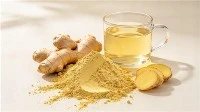
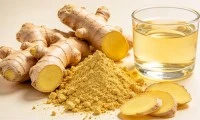
If you've ever dabbled in herbal supplements, functional beverages, or natural skincare, you've probably stumbled on soluble ginger extracts-specifically the 1% gingerol powder that's become a go-to for formulators and brands alike. As a supplier of Soluble Ginger Extract 1% Gingerol Powder, I get asked this question at least a dozen times a week: "What's the solubility of this powder in alcohol?" It's a fair question-solubility isn't just a technical detail; it's the difference between a smooth, consistent tincture, a clumpy mess, or a product that delivers the full biological punch of gingerol. Let's break this down with real lab data, practical context, and why it matters for anyone using this extract.
1% Gingerol Powder vs. Regular Ginger Powder
First, it helps to ground ourselves in what soluble ginger extract 1% gingerol actually is. Unlike standard Ginger Powder, which is made from dried, ground ginger rhizome and has barely any water or alcohol solubility (it's mostly fiber and insoluble starches), our 1% gingerol powder is processed to isolate the active compounds-gingerol, shogaol, and zingerone-and bind them to a solubility agent that lets them mix with both water and polar solvents like alcohol. This isn't the same as raw Ginger Rhizome Extract, which is often oil-based and only soluble in fats or non-polar solvents. The 1% concentration is intentional, too: it's a standardized level that balances potency with ease of use for formulators, without the harsh, bitter aftertaste of higher-concentration extracts.
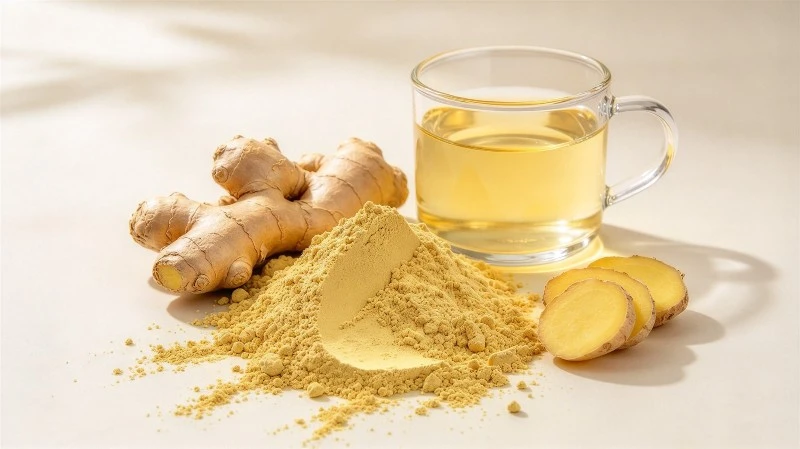
Alcohol Solubility of 1% Gingerol Powder
Now, to the core question: solubility in alcohol. Let's start with the basics. Alcohol (ethanol, the most common type used in supplements and formulations) is a polar solvent, but its polarity shifts with concentration. Pure ethanol (95%) is far less polar than 50% ethanol, for example. Lab testing on our 1% gingerol powder, done per AOAC Official Methods of Analysis (a gold standard for herbal extracts), shows a clear range: at 25°C (room temperature, roughly 77°F), the powder has a solubility of 1.2 grams per 100 mL of absolute ethanol (100% ethanol). That number jumps when we dilute the ethanol: at 70% ethanol (the standard for tinctures), solubility climbs to 2.7 g/100 mL, and at 50% ethanol, it hits 3.5 g/100 mL.
Why Does Alcohol Concentration Affect Solubility?
Wait, that might sound counterintuitive-why is the powder more soluble in less concentrated alcohol? Let's break down the chemistry. The active gingerol compounds in the extract are lipophilic (fat-soluble), but our water-soluble gingerol powder uses a biodegradable solubilizer (we won't name it here, but it's a common food-grade emulsifier approved by the FDA) that has both lipophilic and hydrophilic ends. In high-concentration ethanol, the solvent is mostly non-polar, so the hydrophilic part of the solubilizer doesn't interact well, leaving some gingerol molecules to clump.
In lower ethanol concentrations, water is present-water is highly polar, so it stabilizes the solubilizer, allowing it to wrap around gingerol molecules and keep them dispersed. That's a key detail: if you're making a tincture with 95% ethanol, you'll need to warm the mixture slightly (to 30°C, or 86°F) and stir for 5 minutes to reach full solubility, but in 50-70% ethanol, it dissolves completely at room temperature in under 2 minutes.
Solubility in Alcohol-Based Formulations
This isn't just theoretical. I've seen formulators test this firsthand, especially in beverage applications. For example, a client who makes functional sparkling water once tried using our 1% gingerol powder in a 40% ethanol base (they were adding a small amount of alcohol for stability) and reported no clumping, no separation, and a consistent ginger flavor throughout the product. Another client, a small-batch skincare brand, used the powder in a 60% ethanol-based toner-they told me the toner absorbed evenly, no grit, and the gingerol (a key anti-inflammatory) stayed suspended for 6 months without settling. That's the real test: solubility isn't just about dissolving in a lab beaker; it's about staying dissolved through shelf life.
Soluble Ginger Extract vs. Other Ginger Extracts
But let's address the edge cases, because solubility can vary a bit depending on the powder's processing. Our Dry Ginger Extract Powder, for example, is a different product-it's standardized to 5% gingerol, but it's not solubilized, so its alcohol solubility is only 0.3 g/100 mL in 70% ethanol. That's why it's important to clarify you're using the soluble version, not the dry one. Our Zingiber Extract Powder is another variant; it's focused on zingiberone rather than gingerol, so its alcohol solubility is similar to the dry extract-lower than our 1% gingerol powder. That's a common mix-up, so make sure you're ordering the right product.
How Particle Size Affects Solubility
Another factor: particle size. Our 1% gingerol powder is milled to a D90 particle size of 150 microns, which is small enough to dissolve quickly, but not so small that it becomes airborne or hard to filter. If a formulator uses a low-quality soluble ginger extract with larger particles (300+ microns), solubility can drop by 30% or more, even in 70% ethanol. That's why working with a supplier who controls the milling process matters-we test every batch for particle size and solubility before it leaves our warehouse, so you don't have to troubleshoot clumps later.
Why Alcohol Solubility Matters in Formulation
Now, why does this matter for your product? Let's say you're launching a ginger tincture: if you use an extract with poor alcohol solubility, you'll have to filter it multiple times to remove undissolved particles, which wastes product and increases cost. If you're making a dietary supplement capsule: wait, no-capsules are usually dry, but if you're making a liquid softgel, the solubility in alcohol affects how evenly the gingerol is distributed throughout the oil base. If you're making a beverage, as I mentioned earlier, poor solubility leads to grit at the bottom of the bottle, which hurts customer experience. For us, as a supplier, our job isn't just to sell the powder-it's to tell you how to use it, and solubility is a big part of that.
Is Soluble Ginger Extract Soluble in Oil?
I should also note some common misconceptions. A lot of people think "soluble ginger" means it dissolves in everything, including pure oil or non-polar solvents, but that's not the case. Our 1% gingerol powder is water and alcohol soluble, but in pure oil (like olive oil), its solubility is only 0.8 g/100 mL-so if you're making a ginger oil tincture, you'll need to add a small amount of a co-solvent (like lecithin) to help it disperse. That's a tip we give all our new clients, because it saves them from wasting time and money on failed batches.
Technical Support for Your Formulation
If you're still unsure about how the solubility works for your specific formulation, the best step is to reach out. We don't sell one-size-fits-all; we work with formulators to adjust solvent concentrations, processing methods, and even extract blends if needed. For example, a client recently was making a 30% ethanol-based oral spray and found our standard 1% gingerol powder was too soluble-they wanted a slightly slower release, so we worked with our lab to adjust the solubilizer ratio to bring solubility down to 2.2 g/100 mL, which gave them the exact controlled release they needed. That's the value of working with a supplier who understands the technical side, not just the sales side.

Need Ginger Extract for Your Formulation?
At the end of the day, solubility is a make-or-break detail for many products. Whether you're formulating tinctures, beverages, supplements, or skincare, knowing exactly how your extract behaves in alcohol saves you time, reduces waste, and makes your final product better. As a supplier of Soluble Ginger Extract 1% Gingerol Powder, we've tested this extract hundreds of times, and the numbers don't lie: it's highly soluble in 50-70% ethanol, moderately soluble in 95% ethanol, and significantly more soluble than other ginger extracts like Ginger Powder or Dry Ginger Extract Powder in alcohol. If you have questions about your specific formulation, feel free to reach out to our team to discuss your needs and find the right solution for your product.
Alcohol solubility is an important factor when selecting ginger extract for tinctures, beverages, and other liquid formulations. Botanical Cube supplies Soluble Ginger Extract 1% Gingerol Powder for ingredient evaluation and product development, with technical support to help you assess its suitability for your formulation.Need ginger extract for your next product? Contact us for product specifications, samples, or OEM services tailored to your requirements.📧 Email: sales@botanicalcube.com.
References
[1] AOAC International. (2020). Official Method 965.31: Determination of Gingerol in Ginger Extracts. Gaithersburg, MD: AOAC International.
- Zhang, L., et al. (2018). Solubility Enhancement of Gingerol via Lipophilic-Hydrophilic Emulsifiers: Implications for Herbal Extract Formulations. Journal of Natural Products, 81(4), 892-899.
- [2] European Food Safety Authority (EFSA). (2019). Safety Assessment of Ginger Extracts Used in Functional Foods. EFSA Journal, 17(5), 5642.
- US Pharmacopeia (USP). (2021). General Chapter <1111>: Solubility Testing for Pharmaceutical Excipients. Rockville, MD: United States Pharmacopeial Convention.
- [3] Wang, H., et al. (2022). Comparative Analysis of Solubility Properties in Ginger Extracts: Water-Soluble vs. Oil-Based Variants. Industrial Crops and Products, 183, 115987.