

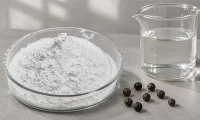
Yes. You can use ginger extract powder in cookies, cakes and fillings. For a commercial bakery, we'd choose the first sample according to where the ginger goes and what the customer should notice when they open the pack. A crisp biscuit that needs a warm ginger finish and a lemon cake that needs a fresh ginger aroma give us two different briefs. The same powder might work in both, but we'd ask the bakery to judge each in its own recipe.
Take a thin ginger biscuit. Suppose the first sample gives it exactly the right heat, yet the next morning the ginger is hard to smell when the pack is opened. We'd leave the inclusion rate alone for the next trial and compare a sample with a different aroma profile. Adding more of the first powder risks pushing the heat past the brand's limit. That decision is easier if the bakery has kept a few of its current biscuits as a reference.
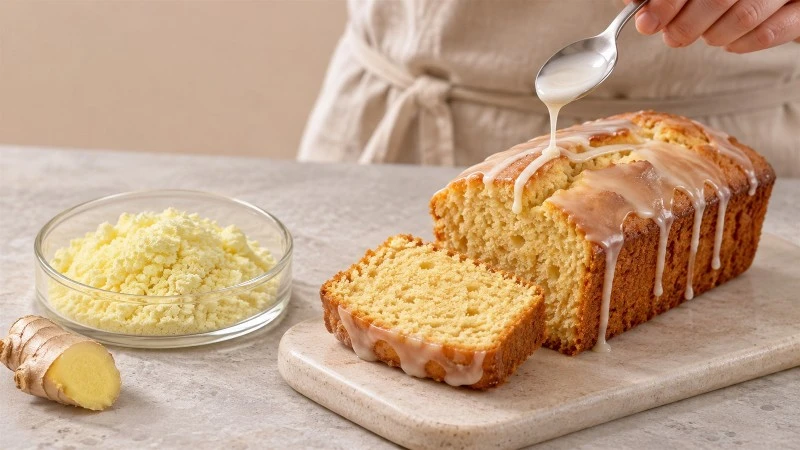
Which ginger extract should go into the first bake?
When a buyer asks us for "stronger ginger," we ask what stronger means. Is it the smell when the packet opens, the warmth of the first bite, or the finish after swallowing? We also ask where the ingredient will go. In a biscuit dough it goes through the oven. In an icing applied after cooling, the first questions are whether the powder disperses in the available liquid and whether it leaves specks or a gritty texture.
The commercial ingredient market offers several products under similar names. For example, MANE Kancor offers a dry ginger oleoresin for bakery use, made by depositing the extract on a food-grade carrier. A bakery buying that type of powder for flavor has a good reason to ask for an aroma sample and the complete ingredient declaration. The carrier matters if the brand has already approved the ingredient list for the pack. [1]
At Botanical Cube, we offer a 1% water-soluble grade and conventional 5%, 10% and 20% grades. We'd start with the water-soluble sample for an icing with a water-based mixing step, then check it in the actual icing at its normal sugar concentration. For a dry premix, we'd try a conventional grade if the customer specifies a gingerol target and has little room for extra powder. We'd also check that the plant can weigh and distribute the small quantity the higher grades may require. In either case, a buyer can narrow the first trial to one or two samples by sharing the recipe format and mixing method. [2]
What does the percentage on the sample actually measure?
Our published batch records illustrate why we ask this before quoting. Lot BCI20251015SJ1, a nominal 1% grade, reported 1.13% by high-performance liquid chromatography (HPLC). Lot BCI20260120SJ10, a nominal 10% grade, reported 10.08%. In that second lot, 6-gingerol alone was 5.65%. Our reported total combines specified gingerols and shogaols, two related groups of pungent compounds. [2]
If your customer specifies 6-gingerol alone, we'd use that individual result when reviewing the lot. If the brief specifies a combined total, we'd agree on which compounds count and whether the result is reported on a dry basis or for the powder as supplied. We'd ask to see those details on the batch certificate of analysis (COA), then use your reference biscuit to judge the warmth.
How much ginger extract powder should you add?
We'd write the trial recipe in grams of extract per kilogram of final dough. A percentage without a denominator can cause a surprisingly large weighing error. In a 10 kg dough that contains 6 kg flour, 1% of the flour is 60 g, while 1% of the dough is 100 g. Another supplier, OliveNation, gives a baking range of 1–1.5% by volume for its own organic ginger extract powder. We'd ask for guidance by weight before using a volume-based recommendation on a bakery production sheet. [3]
Here's a separate calculation for a buyer who needs to work from an assay. Suppose the powder contains exactly 1.00% of the agreed compounds by weight as supplied. Adding 10 g to 10 kg of final dough gives an ingredient inclusion of 0.1%. Those 10 g contribute 100 mg of the measured compounds to the whole batch, or 10 mg per kilogram of unbaked dough. These figures illustrate the arithmetic. We'd set the trial range from the specific sample and the bakery's flavor target, and measure the finished biscuit if the customer has a requirement per serving.
If you already use ground ginger, we'd keep that recipe as the control. Replacing a substantial amount of ground spice with a few grams of concentrated extract also changes the dry material in the dough. Record what replaces that weight. Otherwise, when the new biscuit spreads further or breaks differently, the team has changed two things at once.
What does a fair ginger biscuit trial look like?
We'd make four small batches, one with the current recipe and three with different levels of one candidate powder within the supplier's suggested range for that application. We'd weigh every addition, keep the piece weight and thickness consistent, and record the mixing sequence, oven settings, bake time and cooled batch weight. For a small addition in a dry process, we'd try blending the sample into a measured portion of the recipe's dry ingredients first. If the plant uses a liquid premix, we'd reproduce that step on the bench.
Published biscuit trials show why we'd keep texture on the scorecard. Yang and colleagues compared ground ginger at 0%, 1%, 3%, 5% and 7% by weight. At 1%, biscuit hardness and chewiness decreased relative to the control. At levels above 3%, both were significantly higher than the control. The direction of the texture change depended on how much ground ginger went in. These results apply to that ground-spice recipe. We use them to decide what to measure when replacing ground ginger with an extract. [4]
A second experiment gives us a useful way to read a tasting sheet. Arogundade and colleagues baked biscuits at 180°C for 20 minutes. Their ginger formulations used wheat, Bambara groundnut and plantain flours with 2.5% ground ginger in the flour blends. Ten semi-trained panelists scored the biscuits on a nine-point scale. The wheat control averaged 7.90 for overall liking and 8.50 for crispness. One ginger formulation averaged 7.20 and 7.30, respectively. The crispness difference was statistically significant, while the difference in overall liking was not. The flour blends also differed, so the scores describe the complete recipes. [5]
For a brand selling a thin ginger snap, that distinction matters. A team could approve the overall taste while missing a change in the very feature the customer buys it for. We'd give the snap its own line on the approval sheet.
What should you check after the biscuits cool?
We'd taste coded samples after cooling, then seal a second set in the intended packaging and open it 24 hours later. We use the second tasting as an early comparison. For a shelf-life commitment, we'd also evaluate samples over the intended storage period. At each tasting, we'd open one pack at a time, smell it before taking a bite, and score aroma, heat, aftertaste and crispness separately.
| What we observe | What we'd change in the next trial |
|---|---|
| Aroma and heat are both weak, but the biscuits taste consistent across the tray | Increase the inclusion by one trial step and repeat the same bake. |
| Heat is at the brand's limit, but the next-day aroma is faint | Try another aroma profile. If the product already has an icing, test some ginger there in a separate trial. |
| Some biscuits are much hotter than others | Hold the dose steady. Check weighing and premixing, then compare pieces from the beginning, middle and end of the run. |
| The tasting panel approves, and the customer also specifies gingerols per serving | Send representative finished biscuits for an assay using a method suitable for that recipe. |
In a controlled study of dried ginger powder, Jung and colleagues found that six hours of dry heat at 130°C reduced 6-gingerol from 6,288 to 2,265 mg/kg on a dry-weight basis. That exposure was far longer than a biscuit bake. We'd want a much closer match to your process before using any published figure to estimate retention. For your biscuit, we'd record baking time, piece weight and moisture loss, then compare the agreed compounds before and after baking on the same basis. A biscuit can lose water while the concentration per gram rises, even if the batch has lost some of the compound. [6]
Which quote gives you the better cost per 1,000 biscuits?
Suppose two samples have already passed the same flavor and texture brief. We'd compare the cost at each sample's approved inclusion rate. Here's an illustrative purchase calculation for a 10 kg batch yielding 500 saleable biscuits. The prices and use levels are assumptions for the example.
| Ginger Extract Cost and Usage | Sample A | Sample B |
|---|---|---|
| Delivered price per kg of extract | $40.00 | $64.00 |
| Extract used per 10 kg batch | 20 g | 10 g |
| Ginger ingredient cost per batch | $0.80 | $0.64 |
| Ginger ingredient cost per 1,000 saleable biscuits | $1.60 | $1.28 |
Sample B costs more per kilogram and saves $0.16 per batch at the assumed use levels. If both samples run through the same process, we'd choose B on ingredient cost. If B requires an extra premixing step that costs more than $0.16 each batch, A becomes the lower-cost choice overall, all else being equal. For a short seasonal run, we'd also check the smallest pack available and how much powder will be left when the order is finished.
How to Order Ginger Extract Powder After a Bake Trial
Once the brand approves a biscuit, we'd keep the sample code, ingredient declaration, trial recipe and tasting record together. For the first commercial lot, we'd match the COA to the agreed specification and run a comparison bake against the retained reference. The person signing off that first order should be able to identify which biscuit the brand approved, how much extract went into it and which results the next lot needs to reproduce.
If you're developing a ginger biscuit, cake, filling or icing, email us at sales@botanicalcube.com. Tell us what you're baking, when you add the ginger and what you want the customer to notice on the first bite. We can suggest a Botanical Cube sample, share its specification and available batch COA, and discuss bulk pricing or a custom formulation for your process. If you already have a reference product or pilot quantity, include it so we can make the first sample more relevant.
References
[1] MANE Kancor. PlatOR Ginger. Plated ginger oleoresin, product composition and bakery applications. Accessed 9 November 2026. Manufacturer's product page.
[2] Botanical Cube Inc. Ginger Extract & Gingerol Powder. Grade specifications and manufacturer-issued batch records for BCI20251015SJ1 and BCI20260120SJ10. Accessed 9 November 2026. Specifications and batch records.
[3] OliveNation. Organic Ginger Extract Powder. Product-specific baking and cooking guidance. Accessed 9 November 2026. Product application guidance.
[4] Yang H, Li L, Yin Y, Li B, Zhang X, Jiao W, Liang Y. Effect of ground ginger on dough and biscuit characteristics and acrylamide content. Food Science and Biotechnology. 2019;28(5):1359–1366. DOI 10.1007/s10068-019-00592-x.
[5] Arogundade TJ, Oluwamukomi MO, Dada MA. Nutritional qualities and antioxidant properties of ginger-flavored biscuits developed from wheat, bambara groundnut, and plantain flour blends. Food Frontiers. 2023;4(1):407–419. See baking methods and Table 8. DOI 10.1002/fft2.203.
[6] Jung MY, Lee MK, Park HJ, et al. Heat-induced conversion of gingerols to shogaols in ginger as affected by heat type (dry or moist heat), sample type (fresh or dried), temperature and time. Food Science and Biotechnology. 2018;27(3):687–693. DOI 10.1007/s10068-017-0301-1.