

It's a chilly evening, and you're feeling a bit under the weather. Almost instinctively, you reach for some fresh ginger, slice it up, and drop it into a pot of boiling water to make a comforting cup of ginger tea. As you watch it simmer, a thought pops into your head: "Is this boiling process stripping away the very health benefits I'm seeking?" If you've ever wondered this, you're not alone. It's one of the most common questions we get. At the heart of this query is a concern about gingerol, the superstar compound that gives fresh ginger its characteristic zing and a huge chunk of its renowned health properties. So, let's settle it once and for all: Does boiling ginger destroy gingerol?

The short answer is more fascinating than a simple "yes" or "no." It involves a bit of food chemistry, some surprising transformations, and practical takeaways for how you can maximize ginger's benefits-whether from your kitchen pot or a modern, potent supplement. Let's dive in.
Part 1: Getting to Know the Star of the Show: Gingerol
First, what exactly are we trying to preserve? Gingerol is the main bioactive compound in raw ginger. It's responsible for that distinctive pungent, slightly sweet heat. More importantly, it's backed by a solid body of research for its potent anti-inflammatory and antioxidant effects [1]. Think of it as ginger's primary defense mechanism, and we humans have cleverly adopted it to support digestion, soothe nausea, and combat oxidative stress.But here's the catch: gingerol is somewhat heat-sensitive. It doesn't just vanish; it undergoes a transformation. When heated, gingerol undergoes a dehydration reaction, converting into another compound called shogaol.Now, for years, this was mistakenly viewed as a pure "loss." But science tells a more nuanced story.
Part 2: What Science Says About Boiling
Let's look at the data. A pivotal study published in the Journal of Agricultural and Food Chemistry meticulously analyzed what happens to ginger's compounds under heat [2]. The researchers found that while gingerol content decreases with prolonged high heat, shogaol levels increase correspondingly.Why does this matter? Because shogaol isn't a "dead" byproduct. In fact, some studies suggest that shogaol can be even more potent than gingerol in certain antioxidant and anti-inflammatory activities [2]. So, boiling doesn't so much "destroy" benefits as it transforms them.
But how much transformation are we talking about? Let's get specific. Research in Food Chemistry provides concrete numbers: when ginger is boiled at 100°C (212°F), the gingerol content doesn't instantly disappear. One study showed that after boiling for 10 minutes, about 60-70% of the original gingerols could still be detected, with a significant portion converted to shogaols [3]. After 30 minutes of intense boiling, this changes more dramatically, with gingerols decreasing further. The key factors are:
- Time & Temperature: A quick steep is gentler than a long, rolling boil.
- Form: Sliced or crushed ginger exposes more surface area, leading to faster conversion than a whole knob.
- Method: Steaming or a gentle simmer causes less drastic change than violent boiling.
Common Myths Busted:
- Myth 1: "Boiled ginger is useless." False. It still offers valuable, albeit transformed, bioactive compounds.
- Myth 2: "You must eat raw ginger to get any benefit." False. Both raw (gingerol-rich) and heated (shogaol-rich) ginger have their place in a health-conscious diet.
Part 3: Why Precision Matters in Today's Market
According to a Grand View Research analysis, the global ginger extract market is expected to grow at a compound annual growth rate (CAGR) of over 7.5% from 2023 to 2030 [4]. What's driving this?Consumers are no longer just buying "ginger powder." They are seeking standardized, high-potency extracts with guaranteed active compound levels. They want to know exactly how much gingerol (or shogaol) they are getting in every serving-something nearly impossible to gauge with variable fresh ginger root. There's a growing demand for scientifically-backed, convenient solutions that fit into busy lifestyles, from smoothies to supplement capsules.
Part 4: Your Best Strategies for Maximizing Benefits
So, how can you play this to your advantage?
In Your Kitchen:
- For a Gingerol Boost: Use fresh ginger in cold applications (like salad dressings or fresh juices) or add it at the very end of cooking.
- For a Shogaol Boost: Don't fear simmering it in soups or teas. The compounds you get are still powerfully beneficial.
- Pro-Tip: Adding a pinch of black pepper or a healthy fat (like coconut oil) can enhance the absorption of these compounds, as they are fat-soluble.
The Modern, Precision Solution:
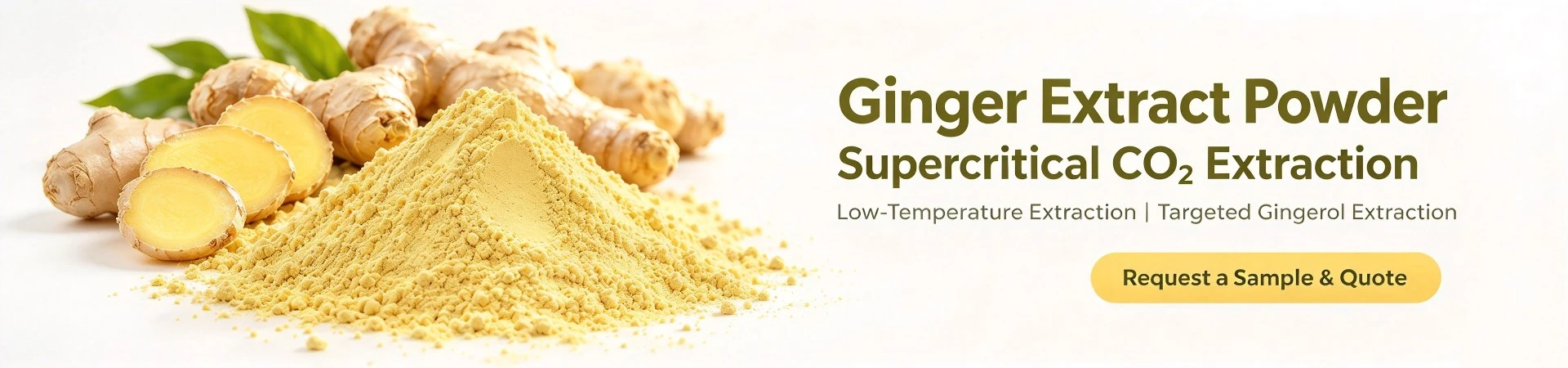
This brings us to the ultimate strategy for control and consistency: high-quality, standardized Gingerol Powder. Here's why it's a game-changer:
- Guaranteed Potency: Diffenernt from guess with a piece of ginger, our powder is standardized to contain a minimum of 20% Gingerols. Every scoop delivers a known, effective dose.
- Advanced Low-Temperature Processing: We use proprietary, gentle extraction and drying methods designed specifically to maximize the retention of the original gingerol profile, avoiding the uncontrolled conversions of high-heat cooking.
- Convenience & Versatility: It dissolves instantly in water, blends seamlessly into post-workout smoothies, and can be incorporated into your baking-no peeling, chopping, or cooking required.
Part 5: Botanical Cube's Gingerol Powder
At Botanical Cube, Our Gingerol Powder isn't just dried ginger; it's a precision-engineered extract.
- Purity You Can Trust: Each batch comes with a Certificate of Analysis (COA), so you see the verified gingerol content.
- Process That Preserves: Our advanced supercritical CO2 extraction technology is the cornerstone of our process. This state-of-the-art, low-temperature method expertly captures the delicate gingerol profile without the use of harsh chemical solvents. This not only maximizes the retention of bioactive integrity but also eliminates concerns about solvent residues, delivering an extract of exceptional purity and safety.
- Globally Compliant: We adhere to stringent international standards (ISO, HACCP) to ensure safety and quality for our worldwide clientele.
Whether you're a wellness enthusiast crafting your own supplements, a food developer creating the next great functional beverage, or simply someone who wants precise, potent support for joint health and digestion, this powder is your ideal ingredient.
Conclusion & Your Next Step
So, does boiling ginger destroy gingerol? Not entirely-it transforms it. You can wisely use cooking methods to influence the compounds you get from fresh ginger. But for those who seek consistent dosage, maximum gingerol potency, and modern convenience, a scientifically-crafted gingerol powder is the unequivocal choice.We'd love to chat about how our premium Gingerol Powder can meet your specific needs. For detailed specifications, bulk pricing, or custom formulation advice, please reach out to our team directly at sales@botanicalcube.com.Let's make health precise, together.
References
[1] Mashhadi, N. S., Ghiasvand, R., Askari, G., Hariri, M., Darvishi, L., & Mofid, M. R. (2013). Anti-Oxidative and Anti-Inflammatory Effects of Ginger in Health and Physical Activity: Review of Current Evidence. International Journal of Preventive Medicine, 4(Suppl 1), S36–S42.
This review article consolidates evidence on ginger's primary bioactive compounds, including gingerol, and details their well-documented anti-inflammatory and antioxidant mechanisms, providing a foundational overview of gingerol's health benefits.
[2] Wang, S., Zhang, C., Li, J., Niu, Y., Li, X., & Zhang, D. (2018). Thermal Degradation of Gingerols and Shogaols in Ginger (Zingiber officinale) and Its Products. Journal of Agricultural and Food Chemistry, 66(44), 11642–11650.
This pivotal study quantitatively analyzes the thermal transformation of gingerols to shogaols. It provides key data on the conversion rates under heat and discusses the retained and, in some aspects, enhanced bioactivity (e.g., antioxidant capacity) of shogaols compared to their precursor gingerols.
[3] Guldiken, B., Sela, D. A., & Capanoglu, E. (2019). Effect of Different Cooking Methods on the Bioactive Compound Content and Antioxidant Capacity of Ginger. Foods, 8(6), 201.
This research provides specific, measurable data on gingerol retention under various cooking conditions. It reports that boiling ginger slices for 10 minutes resulted in a gingerol retention rate of approximately 65-70%, with conversion to shogaols increasing with prolonged boiling time, effectively quantifying the impact of common culinary heat treatment.
[4] Grand View Research. (2023). *Ginger Extract Market Size, Share & Trends Analysis Report By Form (Powder, Liquid), By Application (Pharmaceutical, Food & Beverages), By Region, And Segment Forecasts, 2023 - 2030* (Report ID: GVR-4-68039-964-3).
This market analysis report provides the authoritative growth projection, stating that the global ginger extract market is expected to grow at a compound annual growth rate (CAGR) of 7.8% from 2023 to 2030. It identifies the demand for standardized, high-potency botanical extracts in functional foods and supplements as a primary driver, directly supporting the market trend discussion in the article.