



The global nutraceutical landscape is undergoing a massive shift. Today's consumers no longer just look at the front of a supplement bottle; they scrutinize the back. The surge in demand for Clean Label products and plant-based ingredients has forced formulators to look beyond synthetic alternatives and find multi-functional, natural raw materials that deliver documented efficacy.
Among botanical ingredients, beetroot powder has gradually shifted from a natural coloring agent to a functional active ingredient. With its naturally high dietary nitrate content, it is now widely used in sports nutrition and cardiovascular health formulas where performance matters more than appearance. At Botanical Cube Inc., we've spent nearly two decades working with botanical extracts and have seen how quickly formulation needs are evolving. In this article, I'll briefly explain how beetroot powder is used in modern formulas, the science behind its benefits, and the key technical challenges manufacturers need to consider in real production.
Rising Global Demand for Beetroot Ingredients
The shift toward beetroot powder isn't just a passing trend; it is backed by robust global market numbers. According to recent market analysis from Grand View Research, the global beetroot extract market was valued at approximately USD 5.1 billion in 2024 and is projected to expand at a compound annual growth rate (CAGR) of 6.8% from 2025 to 2030.

This growth is driven largely by the North American and European markets, where the demand for nitric oxide (NO) boosters and natural endurance enhancers is at an all-time high. When we look at how this raw material is actually being utilized across new product launches in the commerical sector, the distribution highlights its versatility:
- Pre-Workout & Sports Performance Powders: 45%
- Cardiovascular & Blood Pressure Formulas: 30%
- Functional Beverages & Ready-to-Drink (RTD): 15%
- Clean-Label Colorants & Natural Sweetener Matrix: 10%
From this data, it is clear that formulators are leveraging beetroot powder primarily for its physiological benefits rather than just its visual appeal.
How Beetroot Powder Is Used in Real Formulation Systems
Integrating beetroot powder into a commercial product requires a firm understanding of ingredient synergy. You cannot simply throw a botanical powder into a mix and expect it to perform optimally. Here is how we approach the formulation matrix across different health applications.
1. Sports Nutrition & Endurance Formulas
The metabolic pathway of beetroot powder in sports performance is elegant and well-documented. The dietary inorganic nitrates (NO3-) present in the powder are reduced to nitrites (NO2-) by oral bacteria, and subsequently converted into Nitric Oxide (NO) in the stomach and blood vessels [1]. Nitric oxide acts as a potent vasodilator, relaxing vascular smooth muscle, improving blood flow, and optimizing muscle oxygen utilization during intense physical exertion.
To maximize this effect in a pre-workout or endurance supplement, beetroot powder should be paired with amino acids that utilize the classic L-arginine-nitric oxide pathway.
The Synergy: Beetroot Powder + L-Citrulline / L-Arginine.
- The Science: While L-citrulline works as an endogenous precursor to arginine, increasing systemic NO over a sustained period, the dietary nitrates from beetroot powder offer a parallel, oxygen-independent pathway to elevate NO levels rapidly. This creates a dual-phase release of nitric oxide, maximizing both immediate power output and long-term endurance.
- Clinical Evidence: A landmark study published in the Journal of Applied Physiology investigated the impact of dietary nitrate supplementation on exercise tolerance. The researchers found that subjects consuming standardized beetroot juice containing approximately 11.2 mmol of nitrate experienced a 16% increase in time-to-exhaustion during high-intensity severe cycling [1]. Furthermore, the oxygen cost of submaximal exercise was reduced, meaning the muscles became significantly more efficient.

2. Cardiovascular & Blood Pressure Management Formulas
Beyond sports, the vasodilatory properties of nitric oxide play a crucial role in maintaining endothelial health and healthy blood pressure levels.
The Synergy: Beetroot Powder + Coenzyme Q10 (CoQ10) / Grape Seed Extract (Proanthocyanidins).
- The Science: While beetroot-derived nitrates actively relax the blood vessels, grape seed extract helps protect the endothelium from oxidative stress, preventing the premature breakdown of the newly formed nitric oxide. CoQ10 further supports cellular energy production within the cardiac muscle.
- Clinical Evidence: In a comprehensive meta-analysis published in Hypertension, researchers pooled data from several randomized controlled trials to evaluate the precise impact of beetroot on blood pressure. The data revealed that daily ingestion of beetroot (providing a standardized dose of nitrates between 3 to 10 mmol) resulted in a significant reduction in systolic blood pressure by an average of 4.4 mmHg, and diastolic pressure by 1.1 mmHg across the treated cohorts [2]. This confirms its viability as a primary active ingredient in heart-health supplement lines.
3. Natural Flavoring & Clean-Label Color Masking
Formulators often struggle with the bitter, earthy notes of functional botanical ingredients like Ashwagandha (South African Ginseng) or medicinal mushrooms (such as Reishi and Cordyceps).
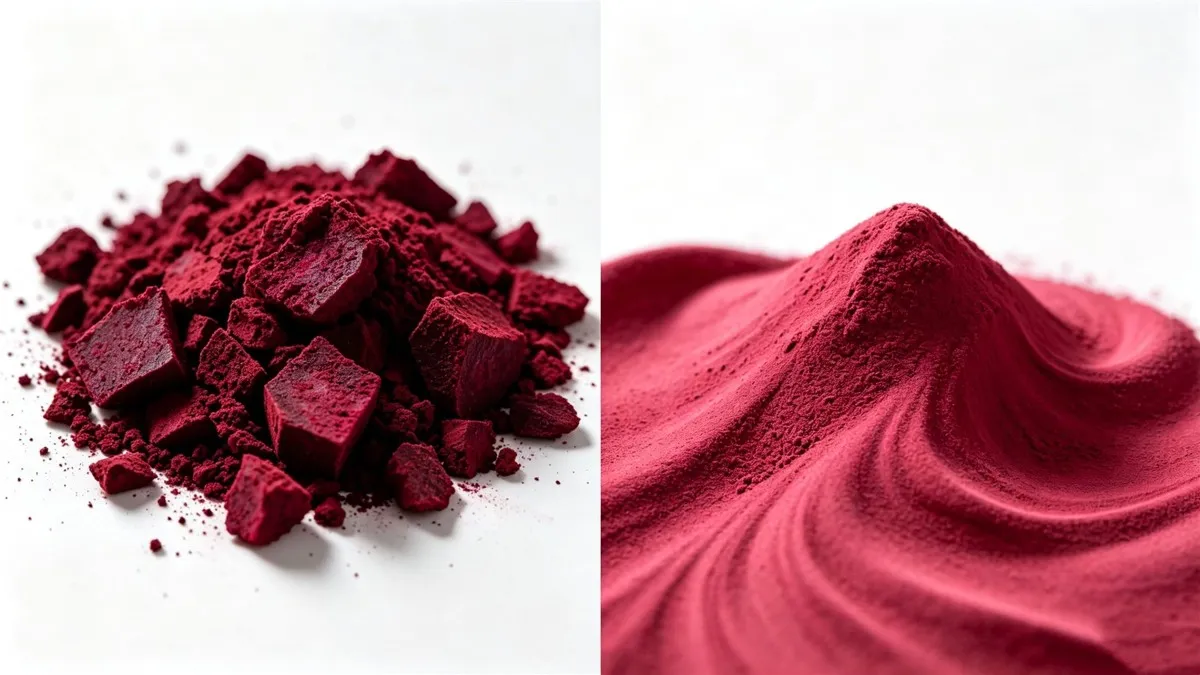
Beetroot powder offers a built-in technical advantage here. It contains natural sugars and a distinct, deep pink-to-red pigment. By incorporating beetroot powder at a specific percentage of your dry blend, you can naturally mask the bitter notes of these adaptogens without relying on synthetic masking agents or excessive artificial sweeteners. This allows you to check off both the "Natural Color" and "Clean Label" boxes on your product packaging.
Key Manufacturing Challenges and Practical Solutions
While the benefits of beetroot powder are clear, implementing it into a scalable production line comes with specific manufacturing obstacles. Understanding these challenges is what separates a failed pilot batch from a successful commercial run.
Challenge 1: Hygroscopicity and Caking in Powder Blends
Because beetroot naturally contains high levels of fruit sugars, the raw powder is highly hygroscopic-it aggressively draws moisture from the surrounding environment. In free-flowing powder applications like pre-workout tubs or stick packs, this frequently leads to severe clumping, caking, and reduced shelf-life.
Our Solution:
To overcome this, the water activity (Aw) of the final formulation must be strictly regulated and kept below 0.3. When blending, we recommend pairing beetroot powder with natural anti-caking agents such as high-purity bamboo silica or organic rice hull concentrate. Furthermore, specifying a precise mesh size (typically between 60 to 80 mesh) ensures uniform particle distribution, reducing the surface area contact that accelerates moisture absorption during high-speed packaging runs.
Challenge 2: Thermal Degradation of Nitrates and Color Uniformity
Standard agricultural dehydration methods often rely on high-heat prolonged drying cycles. This thermal stress degrades the delicate betalain pigments (causing the powder to turn a dull brown) and severely reduces the active nitrate content, leaving you with an unstandardized material that cannot deliver predictable clinical outcomes.
Our Solution:
At Botanical Cube Inc., we utilize an advanced full-enzyme method paired with low-temperature spray drying technology. By treating the plant matrix enzymatically before dehydration, we break down the tough cellular walls of the beet without using harsh chemical solvents. The subsequent low-temperature flash drying ensures that the native molecular structure of the dietary nitrates remains intact and fully standardized, while preserving a vibrant, stable red hue that eliminates the need for batch-to-batch color corrections.
Quality You Can Trust Globally
Securing a high-performing formula means nothing if your raw material cannot clear international regulatory hurdles or if your supply chain experiences seasonal fluctuations. For international brands catering to discerning markets, quality parameters must be absolute.
When sourcing beetroot powder for your manufacturing line, look for full traceability from the field to the factory door. Our processing facilities operate under strict quality management systems, ensuring that every batch is completely free from chemical synthesis, heavy metal contamination, and pesticide residues.
Furthermore, to seamlessly enter global distribution channels, the raw material must carry verified certifications. Ensure your source complies with:
- USDA Organic / EU Organic for clean label claims.
- Kosher and Halal certifications for global consumer inclusivity.
- Non-GMO Project Verified documentation to meet strict retail compliance guidelines in North America and Western Europe.
By utilizing raw materials that already carry these credentials, you significantly reduce the time-to-market for your new product lines and protect your brand from costly regulatory delays.
Conclusion: Beetroot Powder as a Functional Ingredient, Not Just a Colorant
The evolution of beetroot powder proves that nature and rigorous science can coexist beautifully in a single commercial formulation. It is no longer just a colorant; it is a high-performance active ingredient capable of elevating both the nutritional profile and the consumer appeal of your product catalog.
"In the future of clean-label formulation, the best ingredients don't just fill the capsule-they power the outcome."
Navigating the nuances of moisture control, active standardization, and ingredient synergy can be complex. If you are looking to refine your existing product line, troubleshoot an active formula, or develop a completely custom clean-label solution tailored to your target market's specific demands, we are here to collaborate.
Let's discuss how our standardized, enzyme-processed beetroot powder can optimize your next manufacturing run. Contact our technical sales and formulation team directly at sales@botanicalcube.com to request technical data sheets, active samples, or tailored OEM/ODM formulation support.
References
[1] Bailey, S. J., Winyard, P., Vanhatalo, A., Blackwell, J. R., Dimenna, F. J., Wilkerson, D. P., ... & Jones, A. M. (2009). Dietary nitrate supplementation reduces the O2 cost of low-intensity exercise and enhances tolerance to high-intensity exercise in humans. Journal of Applied Physiology, 107(4), 1144-1155.
[2] Siervo, M., Lara, J., Ogbonmwan, I., & Mathers, J. C. (2013). Inorganic nitrate and beetroot juice supplementation reduces blood pressure in adults: a systematic review and meta-analysis. Hypertension, 62(3), 566-580.