





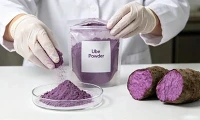

When sourcing 🟣bulk Ube Powder, many buyers face the same challenge: several suppliers may offer products under the same name, but the actual quality, raw material source, and production control behind them can be very different.
A lower quotation may look attractive at first, but price alone does not always reflect the true value of a botanical ingredient. For food manufacturers and brands, the more important questions are: Where does the Ube come from? How is each batch controlled? And can the supplier provide reliable documentation when quality issues occur?
How can procurement teams verify that the raw material is authentic Dioscorea alata without hidden extenders? What prevents unexpected batch-to-batch color shifts from halting automated packaging lines? If a quality deviation occurs mid-production, how quickly can the root cause be isolated?
In commercial food manufacturing, traceability is no longer just a narrative about agricultural origins; it is a foundational component of risk mitigation, cross-border regulatory compliance, and operational stability. With the implementation of strict global frameworks like the FDA Food Traceability Rule (FSMA 204) in the United States [1] and the strict tracing mandates under the EU General Food Law (Regulation EC No 178/2002) [2], undocumented structural gaps in a ingredient's journey can result in immediate border rejections, costly product recalls, and severe damage to a brand's reputation.
1. Why Traceability Has Become a Key Purchasing Factor for Bulk Ube Powder Buyers
Many commercial ingredient profiles rely on general industry statements like "traceability ensures quality." However, from a practical sourcing and operations perspective, understanding the precise economic and functional risks before issuing a commercial purchase order is essential.
1.1 What risks can poor traceability create for Ube Powder buyers?
When an ingredient vendor operates without a validated, batch-level tracing system, industrial buyers face several operational and financial liabilitie:
✔ Raw Material Origin Uncertainty: Without verifiable documentation, a powdered ingredient can be blended across multiple unmonitored farms, exposing the final product to uncontrolled agricultural variables.
✔ Batch Inconsistency and Color Variation: Natural ingredients naturally exhibit fluctuations. However, a complete absence of tracking means processing parameters are rarely standardized, leading to major aesthetic discrepancies in final retail goods.
✔ Contamination Investigation Bottlenecks: If a pathogenic or chemical contaminant is flagged during quality assurance, an untraceable supply chain forces the manufacturer to reject entire inventory runs rather than isolating a single, specific production lot.
✔ Regulatory Compliance and Complaint Handling Failures: Missing upstream documentation means technical teams cannot swiftly answer formal consumer complaints or provide state regulators with the necessary compliance paperwork during routine audits.
1.2 Why is traceability especially important for natural color ingredients like Ube Powder?
Natural botanical ingredients are inherently vulnerable to environmental seasonality, geographic soil differences, and processing variations. True Ube (Dioscorea alata) requires precise growing conditions to develop its characteristic rich purple hue, which is driven by natural anthocyanins.
Because global demand for authentic Ube flavor and color profiles has risen significantly, the market faces a growing challenge with adulteration and mislabeling. Without a clear tracking system, buyers frequently receive substitute root crops, distinct Dioscorea varieties with lower color intensity, or standard sweet potato powders artificially adjusted with synthetic colorants like FD&C Red No. 40 and Blue No. 1 to mimic authentic Ube.

2. What Information Should a Reliable Ube Powder Traceability System Provide?
A robust B2B tracking framework must rely on verifiable data points rather than verbal commitments. When auditing an ingredient manufacturer, their record-keeping should clearly answer specific operational questions.
2.1 Can the supplier verify the original source of Ube raw materials?
An established industrial processor must provide clear documentation showing exactly where the root crops were cultivated, the specific botanical variety used, and whether the harvest originated from organized agricultural bases or fragmented, unmanaged smallholders.

2.2 Can every production batch be linked to a specific manufacturing record?
If your factory processes a 1,000 kg order and encounters a functional issue on the production line, the supplier should be able to instantly link that specific delivery to its original manufacturing log. A professional tracing system uses unique lot numbers to transparently connect production dates, raw material input lots, specific machinery settings, and internal analytical laboratory outcomes.

2.3 Does the supplier provide documentation to prove traceability?
A reliable vendor does not ask you to take their tracking on faith. They provide an organized technical documentation packet with every commercial shipment. This packet must contain a batch-specific Certificate of Analysis (COA), corresponding packaging labels showing matching lot numbers, technical specification sheets, and verified compliance statements regarding non-GMO and allergen status.
3. How Can Bulk Buyers Evaluate a Supplier's Traceability Capability Before Purchasing?
Many supplier websites mention traceability, but few explain how buyers can actually verify it before placing an order. Instead of relying on general claims, purchasing teams should ask the right questions and review key documents during supplier evaluation.
3.1 What questions should buyers ask Ube Powder suppliers?
To assess whether a vendor possesses a true operational tracing architecture, consider using the following specific evaluation framework:
| Verification Metric | Targeted Procurement Inquiry | Acceptable Form of Evidence |
| Origin Verification | "Can you provide the geographical sourcing records and verified botanical identification for this specific harvest?" | Official signed manufacturer declarations, localized crop input logs, and botanical taxidermy/identification certificates. |
| Batch Tracking | "Walk us through your lot assignment process. Can you map a finished powder batch number directly back to its processing day?" | Master manufacturing batch records, internal material tracking sheets, and packaging line logs. |
| Quality Analytics | "Does every individual container ship with a batch-specific Certificate of Analysis matching the container label?" | Fully executed, batch-specific technical COAs signed by the controlling Quality Assurance manager. |
| Contaminant Safety | "What independent, third-party laboratory verification can you provide covering heavy metals and pesticide residues?" | Current, unedited analytical testing reports from accredited third-party institutions (such as SGS, Eurofins, or Intertek). |
| Data Retention | "How long do you maintain physical reference samples and corresponding production records for each lot?" | Confirmed Standard Operating Procedures (SOPs) showing a minimum 3-year retention policy for documents and retain samples. |
3.2 What certifications indicate stronger traceability control?
While individual documents are highly valuable, third-party global food safety and quality management certifications provide clear evidence of systematic compliance. These frameworks directly lower specific operational risks for commercial buyers:
✔ FSSC 22000 / ISO 22000: Validates a comprehensive food safety management architecture, substantially reducing the risk of cross-contamination and system-wide tracking gaps [3].
✔ HACCP Compliance: Ensures critical control points-such as dehydration temperatures and metal detection protocols-are continuously monitored and recorded.
✔ Kosher / Halal Certifications: Verifies rigorous facility segregation and cleaning protocols, completely eliminating potential exposure to unapproved processing process aids.
3.3 Can third-party testing verify product authenticity and consistency?
An authentic COA must look beyond general sensory traits like appearance and color. True industrial verification relies on quantifiable physical and chemical parameters. For a high-purity, natural Ube powder, the analytical values should consistently align with established, safe industry baseline ranges:
✔ Moisture Content: ≤ 8.0% (Higher values directly increase microbial activity and accelerate powder compaction/clumping in storage).
✔ Total Heavy Metals: Lead (Pb) ≤ 1.0 ppm, Arsenic (As) ≤ 0.5 ppm [4] (Crucial for root crops, which naturally accumulate minerals from the surrounding soil).
✔ Microbial Thresholds: Total Plate Count ≤10,000 CFU/g, Yeast & Mold≤100 CFU/g, with absolute zero tolerances for E. coli and Salmonella.
3.4 Example Case Study: How a Professional Ube Powder Supplier Manages Traceability
To see how these principles work in practice, we can look at the operational processes of specialized ingredient manufacturers like Botanical Cube Inc.
At Botanical Cube, we focus on making Ube Powder sourcing more transparent and reliable. With nearly 20 years of experience in plant-based ingredients, we combine controlled production processes with quality testing to monitor key parameters such as color consistency, moisture, particle size, and safety standards. Through batch records, COA support, and quality documentation, we help buyers better understand the ingredients they purchase and maintain stable supply across different production cycles.

4. How Traceability Helps Buyers Maintain Consistent Ube Powder Quality Across Orders
Long-term commercial success depends heavily on the ongoing stability of your supply chain over extended production timelines.
4.1 How does traceability reduce batch-to-batch variation?
When a factory runs large-scale, automated food or beverage lines, slight variations in an ingredient's physical properties can cause significant issues. For instance, if an incoming powder's moisture level increases by even 2% or its particle size changes, it can lead to clumping in feeding hoppers, uneven blending, or distinct color variations in the final consumer product.
A fully traceable manufacturing process controls these variables at every step. By matching new production lots with historical analytical baselines, technical teams ensure that critical metrics remain uniform across multiple orders.

4.2 How does traceability support private label and food manufacturing compliance?
Consider an illustrative commercial scenario: A national beverage brand experiences unexpected variations in the final color presentation of a retail product line and receives consumer feedback.
If the brand uses an untraceable supply chain, identifying the source of the issue could take weeks of cross-departmental investigation, potentially requiring a complete hold on all active inventory. Conversely, with a batch-traceable ingredient system in place, the brand's quality team can coordinate with the vendor to trace the specific lot number back to its exact production hours within 24 hours. Reviewing the controlled manufacturing logs quickly confirms that the native anthocyanin structure was fully preserved, allowing the team to rule out raw material defects and identify downstream beverage processing temperatures as the actual cause. This speed of resolution saves valuable time, protects vendor relationships, and maintains regulatory compliance.
5. What Should Bulk Buyers Expect From a Traceable Ube Powder Supplier?
Navigating commercial ingredient procurement requires balancing competitive cost structures with dependable risk management.
5.1 A reliable supplier should provide transparency before price discussion
In an optimized procurement workflow, technical transparency should always precede commercial negotiations. Evaluating a vendor's quality documentation, raw material sourcing structures, and analytical verification capabilities first ensures that any subsequent pricing discussions are based on a reliable, compliant product.

5.2 What capabilities should buyers evaluate beyond traceability?
While comprehensive tracing documentation is vital, a strategic supply partner must also deliver the operational capacity necessary to support your business growth:
✔ Scalable Commercial Volume: The manufacturing facility must possess scalable processing lines capable of meeting sudden increases in purchase volumes without lengthening delivery timelines.
✔ Advanced OEM Customization: The engineering team should be able to adjust specific technical attributes-such as modifying particle sizes from 80 mesh to ultra-fine 200+ mesh, or tailoring moisture levels-to align perfectly with your unique product formulations.
✔ Responsive Global Communication: Technical and logistics specialists should provide clear, rapid updates, ensuring that required compliance documents and shipping details are delivered well ahead of your production deadlines.
For food manufacturers, beverage brands, and dietary supplement companies seeking to secure their raw material pipelines, partnering with an analytical processor who prioritizes transparent quality management is essential for long-term stability. Botanical Cube Inc. provides🟣high-purity bulk Ube powder backed by complete batch-level tracing records, thorough COA documentation, and reliable third-party testing verification. Our team is dedicated to delivering consistent, compliant ingredients tailored to your precise industrial specifications.
Need a reliable Ube Powder supplier with documented traceability and quality control support? Contact our team at 🟣sales@botanicalcube.com to discuss your bulk requirements, custom specifications, and documentation needs.
References
[1] U.S. Food and Drug Administration (FDA): FSMA Final Rule on Requirements for Additional Traceability Records for Certain Foods (Rule 204). Established under comprehensive federal safety initiatives for industrial ingredient tracking.
[2] European Parliament and Council: Regulation (EC) No 178/2002 - General Food Law Traceability Mandates. Outlining mandatory one-step-forward, one-step-back ingredient recording for all EU food networks.
[3] Foundation FSSC: FSSC 22000 Scheme Version 6 - Food Safety Management System Requirements. Global Food Safety Initiative (GFSI) recognized standard focusing on manufacturing transparency and audit tracking.
[4] World Health Organization (WHO) & FAO: Codex Alimentarius General Standard for Contaminants and Toxins in Food and Feed (CXS 193-1995). Defining safe international thresholds for heavy metal exposure in tuber and root crops.