


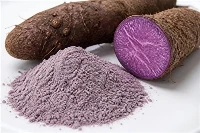


If Your Ube Powder Turns Brown When Heated: Is It the Ingredient, Process, or Formulation? When an industrial baking batch or beverage trial loses its vibrant purple hue and fades into a dull grey-brown, the immediate reaction on the factory floor is often to blame the raw material. As a supplier working closely with food scientists and procurement managers across global markets, I have seen this exact scenario derail product launches.
However, evaluating Ube (Dioscorea alata) powder purely by its initial appearance in a dry pouch is one of the most common pitfalls in industrial sourcing. The real question is not simply "Why does Ube turn brown?" but rather: Is this browning caused by raw material degradation, processing thermal load, formulation pH interactions, or improper supplier quality control-and how do you verify this before committing to a bulk purchase?
This guide breaks down the root causes of thermal discoloration, outlines step-by-step application testing, and provides clear criteria to qualify your supplier before placing a bulk order.
1. What Does "Brown" Actually Mean in Industrial Processing?
Before adjusting your formulation or filing a vendor rejection claim, it is essential to diagnose the precise visual transformation taking place during production.

Is the Ube Powder Turning Brown, or Is the Purple Color Simply Fading?
In large-scale production, color shifts generally fall into distinct categories:
- Purple to Lighter Purple (Color Fading):
Indicates anthocyanin concentration loss without secondary pigment formation. This typically points to mild thermal degradation or excessive dilution within the food matrix [1].
- Purple to Dull Grey/Blue:
Often driven by pH interaction rather than pure heat damage. Anthocyanins act as natural pH indicators; shifting from an acidic to a neutral or slightly alkaline environment moves the pigment structure away from the stable red/purple flavylium cation toward neutral quinonoid species [2].
- Purple to Muddy Brown:
Represents structural breakdown of native pigments accompanied by secondary browning reactions (such as Maillard reactions with reducing sugars or residual enzymatic oxidation) [3].
Why Dry Powder Color Does Not Equal Finished Product Performance
A common procurement mistake is judging raw material quality based on the dry powder's visual vibrancy. High-temperature spray drying can preserve initial surface color, yet the underlying pigment stability under secondary thermal processing (e.g., baking at 180°C or UHT pasteurization) depends on moisture content, particle size, and thermal history. A raw material that looks bright purple in the bag can easily fail in an acidic or high-heat matrix if its heat stability profile was never verified.
2. The Science Behind Heat-Induced Discoloration
Understanding the biochemical drivers of discoloration helps sourcing teams distinguish between uncontrollable process limits and controllable raw material variations.
How Heat Degrades Anthocyanins
The signature purple shade of true Ube (Dioscorea alata) comes from acylated cyanidin and peonidin glycosides [1]. While acylation grants these specific anthocyanins higher heat resistance than those found in berries, prolonged exposure to high temperatures ruptures the glycosidic bonds. This thermal cleavage transforms vibrant chromophores into colorless or brownish chalcone structures [2].
| Factor | What Happens at the Molecular Level | Procurement Implication |
| Temperature | Accelerates anthocyanin ring-opening and chalcone conversion | Request thermal stability retention data at your specific process temperature. |
| Heating Duration | Cumulative thermal exposure degrades acylated structures | Test color retention across time intervals rather than peak temperature alone. |
| Matrix pH | Alters structural equilibrium (Flavylium Cation $\rightarrow$ Anhydrobase) | Match raw material specifications to your target product pH (e.g., pH 3.5–5.5). |
| Raw Material Quality | Varies in native enzyme retention and anthocyanin profile | Verify cultivar purity (Dioscorea alata) and pre-drying inactivation steps. |
Enzymatic Browning: The Overlooked Variable
Many industry buyers assume that all browning stems from heat-sensitive anthocyanins. However, native Ube tubers contain active Polyphenol Oxidase (PPO) and Peroxidase (POD) enzymes alongside phenolic substrates [3].
If a manufacturer fails to properly blanch or thermally inactivate these enzymes prior to dehydration, residual PPO/POD activity will rapidly oxidize phenolics into brown quinones during the early stages of heating or moist storage[3].
Phenolic Compounds →[PPO / POD + O₂] Quinones → Brown Polymeric Pigments
This enzymatic mechanism explains why two Ube powders with identical initial anthocyanin levels can behave completely differently under low-heat processing: one stays vibrant purple because the enzymes were fully inactivated, while the other turns muddy brown [3].
3. Is Brown Ube Powder Always a Sign of Poor Raw Material Quality?
Determining accountability requires separating raw material flaws from formulation dynamics.

When Browning Stems from the Raw Material or Supplier
- Cultivar Substitution:
Substituting true Dioscorea alata with cheaper purple sweet potato (Ipomoea batatas) or taro blends alters the acylated anthocyanin ratio, significantly reducing heat tolerance[1, 4].
- Inadequate Enzyme Inactivation:
Skipping standardized blanching before drying leaves active PPO/POD enzymes in the powder [3].
- High Moisture Content:
Excess residual moisture (above 7%) accelerates non-enzymatic browning during storage before the powder even reaches your factory.
When Browning Stems from Your Finished Product Formula
- Neutral/Alkaline Systems:
Formulations containing baking soda or dairy ingredients often raise the system pH above 6.0, shifting purple anthocyanins into dull grey-brown shades [2].
- High Reducing Sugar Content:
Combined with amino acids in baking dough, high heat triggers Maillard browning, overriding the natural purple hue regardless of powder quality.
4. Key Questions to Ask Suppliers Before Ordering in Bulk
To eliminate guesswork, require your supplier to provide clear technical data before approving commercial quantities.
1. Can You Provide Anthocyanin and Color Specifications?
Do not accept vague descriptions like "100% Natural Purple Yam." Request quantified specifications:
- Total Anthocyanin Content:
Tested via pH differential spectrophotometry or HPLC (typically>= 0.5% - 1.5% depending on extract concentration) [1].
- Spectrophotometric Color Value:
Standardized E 1% 1cm values at lambda max (~530 nm).
- Particle Size (Mesh):
Uniformity (e.g., 80 mesh vs 200 mesh) impacts hydration rate and local heat distribution during processing.
2. What Processing Parameters Are Used During Dehydration?
Ask your vendor about their thermal management during production:
Was a blanching step included to fully inactivate native enzymes (PPO/POD)?
What dehydration technology was applied (Spray Drying, Freeze Drying, or Drum Drying)?
3. Do You Provide Batch-Specific Analytical Documentation?
A reliable commercial partner should supply comprehensive documentation per lot:
- Certificate of Analysis (COA): Verifying physical, chemical, and microbiological parameters.
- Technical Data Sheet (TDS) & Specification Sheet: Outlining standard operational thresholds.
- Pesticide & Heavy Metal Screening: Ensuring compliance with destination market standards (EU/US FDA).
5. How to Conduct a Standardized Application Test
Evaluating a sample in your actual formulation is far more valuable than reviewing a dry powder photo.

Recommended Heat‑Stability Test Protocol
To reliably compare vendors, run this laboratory protocol:
- Base Preparation: Reconstitute Ube powder samples at 3.0% w/w in distilled water or your base matrix.
- pH Alignment: Standardize the solution pH to match your target product (e.g., pH 4.5 using citric acid).
- Thermal Exposure: Subject the sealed containers to a controlled heat bath at 90°C for 30 minutes, or execute a benchtop bake test at 180°C for 20 minutes.
- Cooling & Observation: Cool to room temperature (25°C) and observe color stability immediately, at 24 hours, and at 48 hours.
- Recording Color Parameters (L*a*b*)
If you utilize a spectrophotometer or colorimeter, record the L*a*b* coordinates to quantify color retention using total color difference (ΔE):
ΔE = sqrt((L*₂ - L*₁)² + (a*₂ - a*₁)² + (b*₂ - b*₁)²)
A lower ΔE value indicates superior color retention under heat stress. If a colorimeter is unavailable, use standardized photography under fixed 6500K lighting against a Pantone color reference card.
6. Process Conditions Across Industrial Applications
Matching raw material characteristics to your specific processing environment prevents costly manufacturing failures.
| Application | Primary Thermal Risk | Recommended Formulation Adjustment | Key Evaluation Metric |
| Industrial Bakery | Extended dry heat exposure (180℃-200℃) | Maintain internal dough pH below 5.5; consider microencapsulated options | Post-baking crust/crumb color retention |
| Hot Beverages / RTD | UHT / HTST pasteurization (121℃ short hold) | Optimize thermal hold times; protect against light exposure | Spectrophotometric absorbance retention at 530 nm |
| Dairy / Ice Cream | Neutral pH interaction with heat treatment | Adjust pH balance slightly or utilize standardized extracts | Color retention post-pasteurization and during frozen storage |
| Confectionery / Jellies | High sugar concentration and high cooking temperatures | Ensure acidulants (citric/malic acid) are added early to buffer anthocyanins | Transparency and color clarity post-cooling |
Ube Powder vs. Concentrated Ube Extracts
If your manufacturing process involves extreme thermal profiles where standard Ube powder consistently shifts in shade, consider whether a natural Ube extract powder rich in standardized acylated anthocyanins is more appropriate. While natural whole powder provides authentic flavor and bulk solids, standardized extract powders offer stronger color intensity and higher thermal tolerance at lower dosage rates.
7. Supplier Evaluation Checklist
Use this comparison matrix when auditing prospective vendors for heat-sensitive botanical ingredients:
| Evaluation Criteria | Standard Commercial Vendor | High-Spec Manufacturer Benchmark |
| Raw Material Verification | Generic "Purple Yam" declaration | Authenticated Dioscorea alata species via DNA / TLC testing |
| Enzyme Control | Unspecified dehydration process | Standardized blanching step for total PPO/POD inactivation [3] |
| Batch Consistency | Visual color matching only | Analytical HPLC / Colorimeter (L*a*b) testing per lot |
| Technical Documentation | Basic specification sheet | Full TDS, COA, Heavy Metal, Pesticide, and Micro-testing per batch |
| Application Support | Standard sample distribution | Tailored mesh sizing, dosage guidance, and thermal protocol alignment |
8. Troubleshooting Production Discoloration
If you encounter color degradation on your manufacturing line, use this decision tree to isolate the cause:

- Powder is brown inside the fresh pouch:
Direct raw material failure. High residual moisture, poor packaging barrier, or improper drying temperature. Reject batch based on COA specifications.
- Powder is purple in the pouch but turns brown in processing:
Review system pH and heating duration. If your formulation pH is acidic (pH <= 4.5) and heating is reasonable, the supplier's raw material lacks adequate enzyme inactivation or native acylated anthocyanin density.
- Batch‑to‑batch color variance under identical processing:
Indicates uncontrolled raw material sourcing by the supplier. Require strict color value and anthocyanin minimum thresholds on future POs.
9. Sourcing Reliable Ube Solutions with Botanical Cube
At Botanical Cube Inc., we view raw material supply as an engineering partnership rather than a commodity transaction. Backed by nearly two decades of botanical extraction and process optimization experience, we help food manufacturers, beverage formulators, and brand owners navigate heat-stability challenges before scaling up production.

How We Support Your Application Testing
- Authenticated Species Sourcing:
We utilize verified Dioscorea alata raw materials with transparent supply chain traceability, ensuring high acylated anthocyanin retention [1].
- Enzyme-Inactivated Processing:
Our controlled pre-treatment and spray-drying protocols fully inactivate residual PPO and POD enzymes, preserving stability under secondary thermal processing [3].
- Custom Mesh & Specification Matching:
From standard 80 mesh powders for bakery applications to ultrafine 200 mesh powders for seamless beverage solubility, we tailor physical parameters to your processing lines.
- Full Lot Transparency:
Every bulk order (MOQ 25 kg) includes batch-specific COA, TDS, microbiological, heavy metal, and pesticide screening reports. OEM packaging and private labeling options are available.

Ready to Verify Heat Stability for Your Formulation?
If your team is developing an industrial bakery line, beverage, or functional dessert, avoid evaluating Ube powder by dry appearance alone.Contact our technical support team to discuss your process parameters, target color, heating conditions, and required specifications. We are ready to provide sample kits and batch technical documentation to support your benchtop evaluations.
Technical & Sales Direct Email: sales@botanicalcube.com
Inquire For: Free Ube Powder Samples, Custom Mesh Specifications, Batch COAs & Thermal Testing Protocols.
References
[1] Tang, Y., & Cai, W. (2014). Thermal Degradation Kinetics of Anthocyanins in Purple Yam (Dioscorea alata L.) and Color Loss During Processing. Journal of Food Process Engineering, 37(4), 398–406.
[2] Santos, R. C., & Silva, L. M. (2019). Structural Transformation and pH-Dependent Stability of Acylated Anthocyanins in Food Matrices. Food Chemistry, 278, 482–491.
[3] Champagnac, A., & Bourseal, M. (2018). Enzymatic Browning Kinetics and Polyphenol Oxidase (PPO) Inactivation in Tuber Crops During Dehydration. LWT - Food Science and Technology, 92, 215–223.
[4] Zheng, J., & Zhang, X. (2021). Comparative Analysis of Pigment Stability and Thermal Degradation Profiles Between Dioscorea alata and Ipomoea batatas Extracts. European Food Research and Technology, 247(8), 1889–1899.