


When you walk down the aisles of a modern supermarket or browse the latest health supplements online, you cannot miss the shift toward vibrant green packaging and "all-natural" ingredient lists. Global consumer brands are rapidly replacing synthetic additives with plant-based alternatives to satisfy the growing demand for clean labels.
At the center of this movement is Arthrospira platensis, commonly known as Spirulina. Long celebrated as a retail superfood, this microscopic alga has evolved into a highly valued industrial raw material. The scale of this shift is evident in commercial data: the global spirulina market reached USD 836.2 million in 2025 and is projected to expand from USD 904.5 million in 2026 to nearly USD 2.0 billion by 2034, growing at a compound annual growth rate (CAGR) of 10.39%.
A few years ago, spirulina powder was mostly associated with health food stores and dietary supplements. Today, it's showing up in a much wider range of products - from functional drinks and protein blends to natural blue color applications and pet nutrition. As clean-label formulations continue to grow, more manufacturers are treating spirulina as a practical formulation ingredient rather than just a "superfood" trend.

The Industrial Application Map
The ways manufacturers process spirulina powder vary by industry, with each sector requiring specific particle sizes, purity levels, and functional qualities.
1. Nutraceuticals & Dietary Supplements
Representing approximately 45% of the global market, this sector is the largest consumer of bulk spirulina powder. Manufacturers generally process the raw powder into three distinct delivery forms:
- Tableting: Compressing raw powder into dense, easily swallowable tablets.
- Capsule Filling: Enclosing fine powder into hard vegetarian or gelatin capsules.
- Powder Blends: Mixing spirulina with pea proteins, greens, or prebiotics for functional drink mixes.

During large-scale tableting, production managers frequently encounter manufacturing challenges such as "capping" (where the top of the tablet separates) or high friability (crumbly tablets). To prevent these issues, raw spirulina must meet strict physical specifications.
Our internal testing shows that maintaining a consistent particle size of 80 to 100 mesh, combined with a moisture content below 7.0%, provides optimal powder flowability. This prevents the powder from sticking to mechanical punches, ensuring uniform weight and structural integrity across millions of tablets.
2. Functional Food & Beverages
Food scientists use spirulina powder not only for its deep green appearance but also for its exceptional nutritional profile, which includes over 60% complete protein by dry weight.
- Protein Fortification: Plant-based meat manufacturers use spirulina at inclusion rates between 0.1% and 1.0% to add amino acids to products like plant-based salmon and protein bars.
- Baking and Moisture Retention: In bakery production, spirulina interacts uniquely with water. Research published in the journal Foods [1] demonstrates that the extracellular polysaccharides and proteins in fresh microalgae improve dough viscoelasticity. This enhanced water binding capacity slows down starch retrogradation (staling), effectively extending the shelf life of baked goods.
- Flavor Masking in Beverages: A common challenge in beverage formulation is masking the natural "grassy" or earthy smell of algae. Industrial formulators resolve this by pairing spirulina with natural citrus or mint flavors, or by using microencapsulation techniques that coat the algae particles to protect the consumer's palate without altering the nutritional value.
3. Natural Color Extraction (Phycocyanin)
The food industry is actively seeking clean-label alternatives to synthetic blue dyes like Brilliant Blue FCF (FD&C Blue No. 1). This search has created a high-value sector focused on extracting Phycocyanin, the pigment-protein complex responsible for spirulina's blue-green color.
Following regulatory updates like the FDA Final Rule (21 CFR Part 73) [2], manufacturers can legally use spirulina extract as a natural blue colorant in various applications, including non-alcoholic beverages, confections, ice creams, and pharmaceutical coatings.
Extracting phycocyanin requires precise processing. The raw spirulina powder must undergo water-based extraction under strict temperature controls (always below 20°C) to prevent the protein from denaturing. The liquid extract is then concentrated and dried into a water-soluble blue powder that remains stable in neutral-pH formulations.

4. Premium Pet Food & Aquaculture
The pet and aquaculture industries use spirulina powder to improve both animal health and product appearance. In ornamental fish farming and poultry production, the natural carotenoids (primarily zeaxanthin and beta-carotene) in spirulina accumulate in tissues, enhancing the skin coloration of tropical fish and increasing the yolk color score of commercial eggs.
Furthermore, veterinary trials confirm that adding 0.5% to 1.0% spirulina to animal feed supports immune function by stimulating macrophage activity and improving gut microbiome diversity.
Three Technical Criteria for Manufacturers
When purchasing raw materials for large-scale manufacturing, procurement and R&D teams evaluate suppliers based on specific quality standards rather than general health claims.
1. Purity and Ash Content Control
In mass production, mineral and inorganic purity directly affect product stability. High ash content often indicates inadequate washing or the presence of environmental silt from cultivation ponds.
To meet global regulatory standards, manufacturers look for spirulina with a total ash content below 8.0%. Achieving this requires thorough filtration and washing stages prior to drying, ensuring the final powder remains free from heavy metal contamination.
2. Microbiological Integrity and Spray Drying Temperatures
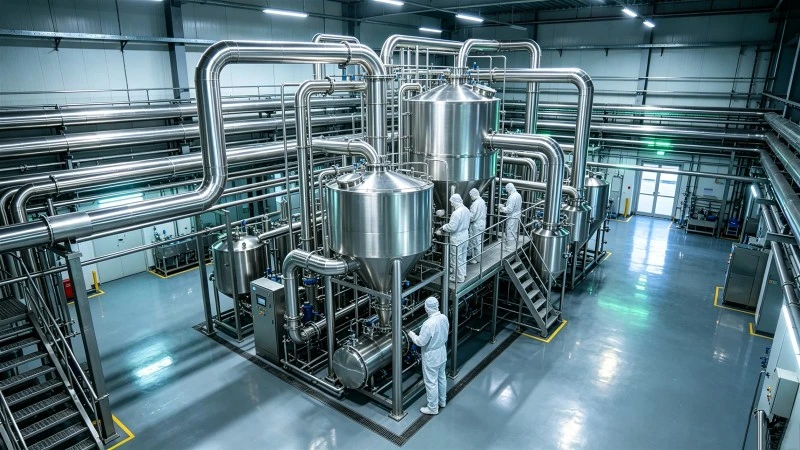
Spirulina grows in warm, alkaline water, making strict microbiological monitoring essential. Industrial suppliers use automated spray drying systems to manage microbial levels without degrading heat-sensitive nutrients.
The slurry passes through a spray dryer with an inlet temperature of approximately 180°C and a brief outlet temperature of 75°C. This rapid moisture removal eliminates microbial pathogens while preserving sensitive active components like phycocyanin and beta-carotene.
3. Global Certification and Traceability
Exporting consumer products to Europe, North America, and Asia requires compliant documentation. Commerical buyers expect raw material suppliers to provide a comprehensive package of international certifications, including:
- Food Safety Management: FSSC 22000 and ISO 9001
- Dietary Compliance: Kosher and Halal
- Market Access: USDA Organic and EU Organic certifications
Market Trends and Commercial Data
To help evaluate the economic viability of new product formulations, the table below outlines the market size and primary industrial uses across major application segments.
| Application Segments | 2025 Global Value (USD Million) | Primary Commercial Uses |
| Nutraceuticals | 363.08 | Immune capsules, multivitamin tablets, plant-based protein blends |
| Food & Beverages | 310.45 (Est.) | Functional juices, baking ingredients, plant-based meat analogs |
| Natural Colorants | High-Margin Revenue | Confectionery colors, ice cream glazes, pharmaceutical coatings |
| Animal Feed | 210.12 (Est.) | Aquaculture pigment enhancers, premium pet food formulations |
Partner With Botanical Cube Inc.
As clean-label product development continues to expand, spirulina powder is increasingly viewed as a functional ingredient rather than a niche supplement.For manufacturers, the real challenge is not only choosing spirulina, but ensuring it performs consistently across large-scale production - whether in tableting, blending, or natural color applications.
This is where reliable sourcing and stable processing standards become critical. At Botanical Cube Inc., we focus on supplying spirulina powder that is designed for industrial use - with stable powder performance, controlled drying conditions, and full batch traceability to support global manufacturing requirements.If you are exploring spirulina for your formulations or looking for a consistent bulk supply partner, you can reach our team at sales@botanicalcube.com for technical specifications or customized solutions.
References
To support your formulation planning, you can review the specific regulatory updates and peer-reviewed studies referenced throughout this article:
[1] Academic Reference: "Manufacturing processes and versatile food applications of fresh microalgae Spirulina," published in the MDPI journal Foods (and archived in the PMC national database). This study details how the extracellular polysaccharides and specific protein fractions within the microalgae matrix alter starch structure, increasing dough elasticity and delaying moisture loss in commercial baking applications.
[2] Regulatory Reference: U.S. FDA Final Rule (21 CFR Part 73). This regulation outlines the approved expansion of spirulina extract as a safe, natural colorant for confectionery products, frostings, ice cream, ready-to-eat cereals, and alcoholic beverages containing less than 20% alcohol by volume (ABV).