


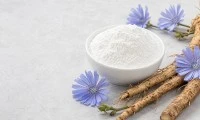


Choosing chicory inulin for a gut health supplement is not simply a matter of selecting a high-purity powder. The right grade needs to fit the finished product, processing conditions, dosage, and sensory requirements.For procurement and formulation teams, several factors can change how an inulin performs in production: degree of polymerization (DP), particle size, solubility, purity, moisture, and the intended application. A specification that works well in a capsule may not be the best choice for gummies, powder drinks, or functional foods.
These differences can affect processing, texture, dispersion, stability, and consumer tolerance. Choosing based only on price or purity may create problems later in production.This guide takes a practical procurement approach-from defining the application and selecting the right inulin grade to checking specifications, testing samples, and evaluating the supplier before scale-up.
1. Start With the Finished Supplement, Not the Inulin Specification
Too many procurement decisions start with a generic query for "high-purity chicory inulin." However, raw material specifications should always be derived backwards from your finished product format and intended market positioning.

1.1 What form of supplement are you making?
Every delivery system presents unique mechanical and thermodynamic constraints that dictate the physical parameters of the inulin powder you buy:
| Finished Product Format | Core Procurement Concern | Critical Inulin Requirement |
| Powder Drink / Ready-to-Mix | Solubility, dispersion, clarity, mouthfeel | Native/Standard inulin; low turbidity; instantized or micro-milled mesh size. |
| Hard Gelatin/HPMC Capsules | Bulk density, die filling, flowability | High bulk density (0.55-0.65 g/cm3); low dustiness; controlled moisture (<5%). |
| Tablets / Chewables | Compressibility, binding force, hardness | Direct compression grade; controlled particle size distribution (80-100 mesh). |
| Pectin / Gelatin Gummies | Solids concentration, texture, moisture stability | High-polymer/long-chain inulin; low monosaccharide content to prevent browning and unwanted gelling during cook. |
| Synbiotic / Prebiotic Blend | Moisture activity (Aw), probiotic viability | Low moisture activity (Aw < 0.20); non-hygroscopic packaging to prevent moisture transfer to active probiotic strains. |
1.2 What is the actual role of inulin in your formulation?
Before requesting quotes, clarify the primary functional objective:
- Active Prebiotic Component
Requires a validated dosage (typically 3-5 g/serving) and controlled chain length to optimize beneficial bacterial fermentation [1].
- Dietary Fiber Fortification
Focuses on meeting specific fiber claim thresholds per serving under target market regulations.
- Bulking Agent / Excipient
Prioritizes cost-efficiency, flowability, and compressibility over specific prebiotic chain lengths.
- Sugar or Fat Replacer
Requires specific gel-forming capabilities, where high-DP inulin forms micro-crystalline networks that mimic the mouthfeel of fat at 15-30% hydration levels [2].
1.3 Pre-RFQ Checklist
Before issuing a Request for Quotation (RFQ) to any raw material vendor, ensure your internal team has agreed on these baseline constraints:
[ ] Target finished product format and net weight per serving
[ ] Target inulin inclusion rate (g per serving)
[ ] Maximum allowable moisture content (Aw and H2O %)
[ ] Thermal exposure limits during processing (Peak Temperature x Time)
[ ] Target pH of the wet formulation (if liquid or paste)
[ ] Geographic target market (dictates dietary fiber claim rules and pesticide limits)
2. Decide Whether Chicory Inulin Is the Right Fiber for the Formula
Before locking in your supply chain, verify that chicory inulin is indeed the optimal soluble fiber for your specific product parameters compared to alternative prebiotic fibers.

2.1 When does chicory inulin make sense?
Chicory-derived inulin is the gold standard when your target formulation requires:
- A globally recognized, clean-label plant ingredient with high consumer trust.
- Dual functionality as both a prebiotic fiber source and a structural texture builder.
- Synergy with probiotic strains (forming a true synbiotic matrix).
- Caloric reduction (1.5-2.0 kcal/g) alongside fiber enrichment.
2.2 Commercial Soluble Fiber Comparison
Different soluble fibers exhibit distinct trade-offs in processing and digestive tolerance:
| Ingredient | Primary Advantage | Processing Limitation | Typical Commercial Trade-off |
| Chicory Inulin | Excellent prebiotic evidence; versatile gel-forming; neutral taste profile. | Hydrolyzes under high heat (>100°C) in low-pH (<4.0) liquid environments. | GI tolerance limits maximum single-dose inclusion (<10 g/day). |
| Short-Chain FOS (Fructooligosaccharides) | Highly soluble; rapid fermentation rate by Bifidobacteria. | Very hygroscopic; zero gel-forming capacity; provides slight sweetness. | Fast fermentation can lead to gas formation at lower doses than long-chain inulin. |
| Resistant Dextrin (Corn/Wheat) | Extreme stability across wide temperature (>120°C) and pH ranges (>2.5). | Higher viscosity at elevated concentrations; minimal texture/fat-mimicking behavior. | Perceived as more heavily processed compared to native plant extractions. |
| Isomaltooligosaccharides (IMO) | Low cost; easy processing in syrups and bars. | Incomplete fiber status in certain regulatory regions (e.g., US FDA fiber definition). | Higher caloric yield due to partial enzymatic digestion in the small intestine. |
2.3 Red Flags: When using the wrong fiber grade causes batch failures
Selecting an unsuited fiber specification can cause costly downstream issues:
- Beverage Cloudiness & Sedimentation
Using high-DP inulin in cold-water instant sachets causes slow dissolution and chalky precipitation.
- Gummy De-shaping & Sticky Surfaces
Using native inulin with high residual sugars (>8% fructose/glucose/sucrose) lowers the glass transition temperature, causing gummies to absorb ambient moisture and melt.
- Capsule Caking & Weight Variation
Using low-density, fine-mesh native powder in automatic capsule fillers creates static buildup and uneven pocket filling.
3. Choose the Right Inulin Type for Your Gut Health Supplement
The degree of polymerization (DP)-which measures the number of fructose units linked together-is the most critical parameter defining how inulin behaves in your production equipment and in the human gut.

3.1 Standard / Native Inulin vs. High-DP Inulin
Chicory root naturally contains a blend of fructan chains. Industrial processing yields three main commercial categories:

- Native / Standard Inulin (Average DP approximately 10-12)
Contains short, medium, and long chains.
Offers moderate solubility (12-15% at 25°C) and slight natural sweetness (6-10% relative to sucrose).
Best For: General dietary fiber enrichment, sachets, and standard synbiotic capsule formulations.
- High-Polymer / Long-Chain Inulin (Average DP >= 23)
Produced by removing short-chain sugars and low-DP oligomers.
Low solubility (<2% at 25°C), high thermal stability, zero sweetness, and strong micro-crystalline gelation properties.
Best For: Moisture-sensitive gummies, fat-replacement matrices, low-hygroscopic capsule mixes, and slow-release prebiotic targeting in the distal colon [3].
- Oligofructose / Short-Chain Inulin (Average DP < 10)
Highly soluble (>75% at 25°C), quick-dissolving, with around 30% the sweetness of sugar.
Best For: Fast-dissolving RTD beverages and syrup matrices where clarity and sweetness contribution are desired.
3.2 Translating DP profile into your RFQ specifications
Do not simply specify "High Purity Inulin >= 90%" in your purchasing documents. Purity alone does not indicate chain length distribution.
Instead, specify DP requirements based on application physics:
"Supplier must provide High-Polymer Chicory Inulin with an average DP >= 23, containing <1.5% residual free sugars (fructose + glucose + sucrose), with batch-to-batch DP distribution verified via HPLC-PAD."
3.3 Myth: Higher purity always means a better ingredient
A common procurement mistake is assuming a 98% purity specification is universally superior to a 90% grade.
Purity measures the total percentage of fructan molecules versus non-inulin solids. A 90% native inulin containing 10% naturally occurring chicory sugars may be ideal for a chocolate-flavored protein powder, providing natural bulking and mild sweetness at a lower cost per kilogram.
Paying a premium for 98% high-DP inulin is only cost-effective when specific physical traits-such as zero sweetness, high thermal resistance, or low moisture activity-are strictly required by your manufacturing process.
4. Match the Inulin Grade to Processing Conditions
Inulin is a carbohydrate polymer connected by beta(2->1) fructosyl-fructose bonds. While resistant to human digestive enzymes, these bonds can undergo thermal hydrolysis when exposed to specific processing conditions.
High Heat (>80°C) + Acidic pH (<4.0) + Time ==> Hydrolysis ==> Breaks down into Free Fructose
4.1 Thermal & pH Degradation Risks
When subjected to high temperatures in acidic aqueous solutions, long-chain inulin molecules hydrolyze into short-chain oligomers and free fructose.
This structural degradation causes three major commercial problems:
- Loss of Fiber Content
Analytical testing of the finished product will report lower total dietary fiber than calculated on the batch record.
- Unwanted Moisture Attraction
Released free fructose increases the hygroscopicity of the matrix, causing gummies or tablets to sweat and degrade over time.
- Viscosity Breakdown
Gel-forming structures break down, ruining the mouthfeel of functional food products.
4.2 Processing Decision Matrix

4.3 Dissolution & Dispersion Performance
For powder formulations intended to be mixed into cold liquids by consumers:
- Aggregated / Granulated Inulin
Undergoes fluid-bed agglomeration to increase particle size (150-250 microns), preventing the formation of dry, hydrophobic lumps ("fish eyes") when added to water.
- Standard Fine Powder (80-100 mesh)
Highly effective for dry-blending into capsule matrices or industrial bakery mixes, but requires high-shear mechanical agitation to dissolve quickly in cold liquids.
5. Set Specifications Before Comparing Supplier Quotes
Comparing raw material quotes without a standardized specification sheet risks purchasing an incompatible ingredient. Ensure all competing vendors quote against identical parameters.
5.1 Comprehensive Inulin RFQ Parameter Checklist
When drafting your technical dossier for suppliers, require explicit limits on the following parameters:

5.2 Mandatory vs. Application-Dependent Parameters
Not every specification carries the same weight for every application. Divide your incoming Quality Assurance (QA) requirements into core vs. specific priority tiers:
| Parameter | Core / Mandatory Priority | Application-Dependent Priority | Procurement Focus Area |
| Inulin & Fiber Assay | Core | - | Verified via AOAC 997.08 or AOAC 999.03 testing standards. |
| Heavy Metals (Pb, As, Cd, Hg) | Core | - | Must comply strictly with target market regulations (e.g., US Prop 65, EU 1881/2006). |
| Microbiological Limits | Core | - | Critical for cold-process products; requires strict pathogen-free release. |
| Moisture & Water Activity (Aw) | Core | - | Vital to prevent clumping in storage and protect probiotic strains in synbiotics. |
| DP Profile & Free Sugars | - | High Priority | Critical for gummy stability, digestive tolerance, and viscosity control. |
| Particle Size (Mesh Size) | - | High Priority | Vital for capsule filling speed, tableting compression, and instant beverage dissolution. |
| Organic / Low-FODMAP Certs | - | Market-Specific | Driven entirely by front-of-pack labeling strategy and target consumer niche. |
6. Evaluate Digestive Tolerance as a Formulation Risk
In gut health supplements, individual consumer tolerance is a primary driver of repeat purchases. Because chicory inulin is rapidly fermented by colonic microflora, excessive gas or bloating can trigger negative product reviews and customer churn.
6.1 Understanding GI Tolerance Dynamics
Chicory inulin is a fermentable substrate for beneficial gut flora, particularly Bifidobacterium species [4]. As these bacteria metabolize the beta(2->1) fructan chains, they produce short-chain fatty acids (acetate, propionate, butyrate) alongside metabolic gases (CO2, H2).
[ Short-Chain Inulin (Low DP) ] --> Rapid Proximal Colon Fermentation --> Higher Bloating Risk
[ Long-Chain Inulin (High DP) ] --> Slow Distal Colon Fermentation --> Balanced Gas & High Tolerance
Clinical studies demonstrate that human gastrointestinal tolerance varies based on chain length:
- Short-chain oligofructose
Ferments rapidly in the proximal colon, which can trigger localized gas accumulation and discomfort at single doses above 5 g [5].
- Long-chain high-DP inulin
Ferments more slowly along the length of the colon, yielding a smoother gas evolution profile and better tolerance at higher single doses up to 10-15 g/day [6].
6.2 Designing Formulas for Improved Tolerance
To minimize customer complaints regarding digestive discomfort:
- Balance the DP Spectrum
Combine short-chain and long-chain inulin to distribute fermentation activity evenly throughout both the proximal and distal colon.
- Cap Single-Serving Doses
Limit single-serving inclusion rates to 2.5-5.0 g per portion, recommending gradual dose titration on your consumer packaging.
- Formulate with Complementary Fibers
Blend inulin with non-fermentable or slower-fermenting fibers (such as soluble acacia fiber or resistant dextrin) to reach total dietary fiber claims without overloading colonic fermentation capacity.
7. Verify Quality, Safety, and Regulatory Documentation
Before issuing supplier approval, your Regulatory Affairs and Quality Assurance teams must audit batch-level documentation. Certificates of Analysis (COAs) must be verified against independent laboratory benchmarks.

7.1 Key Elements of a Valid Batch COA
Reject generic specification sheets presented as COAs. A true batch-specific COA must include:
- Unique lot number matching the physical container labels.
- Standardized test methods (e.g., AOAC, Ph. Eur., USP, or HPLC-PAD).
- Absolute numerical test values (e.g., Lead: <0.02 mg/kg), rather than generic statements like "Conforms" or "Pass."
- Authorized sign-off from an accredited Quality Assurance Manager or independent laboratory.
7.2 Regulatory Clearance by Target Market
Regulatory compliance varies by jurisdiction. Ensure your vendor provides region-appropriate documentation:

8. Audit Supplier Capabilities, Not Just Product Specs
A compliant sample and an attractive price per kilogram are meaningless if the supplier cannot deliver batch-to-batch consistency or maintain supply continuity during seasonal shortages.

8.1 Critical Supplier Audit Questions
During vendor assessment, evaluate these supply chain parameters:
- Upstream Traceability
Can the supplier trace a specific finished batch back to the chicory root farm origin and processing lot?
- Seasonal Supply Buffer
Chicory roots are harvested seasonally (typically autumn). Does the manufacturer hold adequate inventory reserves to fulfill year-round contract volumes during crop variations?
- Lot-to-Lot Consistency
Does the supplier manage incoming root fructan variations to maintain uniform DP distribution, moisture limits, and bulk density across different production runs?
- Technical Support & Troubleshooting
Can the supplier assist your R&D team if inulin degrades during pasteurization or causes clumping in high-speed packaging equipment?
9. Calculate Total Cost of Ownership (TCO) Over Price Per Kilogram
Purchasing decisions based strictly on quoted FOB price per kilogram often result in higher total manufacturing costs due to operational waste, low fiber assays, and high moisture absorption.
Total Inulin Cost = Quoted Price + Yield Loss (Moisture) + Rejection Risk + Downtime Risk
9.1 The Hidden Costs of Low-Grade Inulin
- Moisture Weight Penalty
A raw material with 6% moisture content delivers less net fiber per ton than a premium grade with <3% moisture, increasing the effective cost per active serving.
- Production Line Downtime
High-hygroscopic fine powders with poor flowability can cling to dosage hoppers and cause fill-weight variance, slowing down automated packaging runs.
- Re-testing & Cargo Clearing Delays
Material shipped without complete pesticide residue screening can be detained at customs, resulting in expensive demurrage fees and missed production windows.
9.2 Supplier Evaluation Matrix
Use this weighted scorecard to compare competing raw material vendors objectively:
| Evaluation Criteria | Weight | Supplier A Score (1-10) | Supplier B Score (1-10) | Supplier C Score (1-10) |
| Specification & DP Match | 25% | |||
| Documentation & QA Integrity | 20% | |||
| Sample Bench Test Performance | 20% | |||
| Supply Stability & Lead Time | 15% | |||
| Technical Support Availability | 10% | |||
| Commercial Price & Payment Terms | 10% | |||
| Weighted Total Score | 100% |
10. Run a Pilot Sample Trial Before Approving Bulk Orders
Never approve a raw material vendor based solely on bench-top COA reviews. Always execute a structured pilot run on your actual manufacturing equipment.

10.1 Key Metrics to Evaluate During Sample Testing
- Physical Handling
Does the powder flow freely into capsule dies or tableting presses without excessive dusting or bridging?
- Organoleptic & Sensory Impact
Does the inulin introduce unwanted off-flavors, grittiness, or discoloration into the target matrix?
- Storage Stability
Place finished product samples into accelerated stability chambers (40°C / 75% RH) for 30 to 90 days. Check for moisture uptake, gummy softening, or loss of dietary fiber content.
11. Practical Chicory Inulin Purchasing Checklist
This quick reference summary outlines the complete procurement workflow:
Phase 1: Pre-RFQ Definition
[ ] Define finished product format (gummy, capsule, powder, RTD).
[ ] Establish target inulin inclusion per serving (e.g., 3g/dose).
[ ] Determine target DP requirements (Native vs. High-Polymer).
[ ] Identify target market regulatory and labeling requirements.
Phase 2: Supplier & Spec Qualification
[ ] Issue RFQ with comprehensive technical parameters.
[ ] Require batch-specific COAs with explicit analytical test values.
[ ] Verify regional regulatory clearances (FDA GRAS, EU compliance).
[ ] Audit manufacturer capacity, root sourcing, and year-round availability.
Phase 3: Sample Verification & Commercial Execution
[ ] Inspect pilot samples for bulk density, particle size, and moisture.
[ ] Conduct pilot scale manufacturing run on production equipment.
[ ] Run accelerated stability testing on finished product samples.
[ ] Finalize commercial terms based on Total Cost of Ownership (TCO).
12. Technical Solutions Provided by Botanical Cube Inc.
When your formulation team has finalized its product format and targeted technical parameters, finding a supply partner who can reliably meet exact physical specifications becomes the next priority.
At Botanical Cube Inc., we bring nearly 20 years of research, development, and industrial extraction experience to the global health supplement market. Rather than offering one-size-fits-all raw materials, we align our chicory inulin production capabilities with your specific manufacturing needs:
[ Instant Drink Application ] --> Aggregated Quick-Dissolve Granules
[ Hard Capsule Application ] --> High-Density, Low-Moisture Fine Powder
[ Functional Gummy Application] --> High-DP, Low-Sugar, Low-Hygroscopic Powder
- Tailored DP Profiles
We offer high-polymer, low-sugar inulin grades (average DP >= 23) to reduce moisture absorption in gummies and capsules, alongside standard native grades for dietary fiber enrichment.
- Particle Size Engineering
Options range from instantized, quick-dispersing aggregated granules for powder drinks to high-density, low-dust powders for high-speed capsule encapsulation.
- Strict Quality Control Standards
Every batch undergoes testing for dietary fiber content, heavy metals, microbial limits, and low moisture activity (Aw), accompanied by comprehensive documentation for QA sign-off.
- Global Supply Continuity
We provide stable, year-round volume planning, rapid sample dispatch, and complete lot traceability from root extraction through final export packaging.

13. Request Your Inulin Sample & Technical Dossier
If you are developing a new gut health supplement or optimizing an existing supply chain, our technical team can help you select the precise inulin specification for your formula.
How to Request Support:
Send your project requirements to our technical team at sales@botanicalcube.com with the following details:
- Target Finished Product Format (e.g., Gummy, Hard Capsule, Powder Drink, Synbiotic).
- Target Inulin Dosage per Serving (e.g., 2 g, 5 g).
- Required Specifications & Certifications (e.g., High-DP, Organic, Non-GMO, Specific Mesh Size).
- Target Geographic Market & Estimated Annual Volume.
Our team will prepare a tailored Technical Dossier (including COAs, Specification Sheets, and Stability Data) alongside a 200g Pilot Sample Kit configured specifically for your lab trial.
References
[1] Gibson, G. R., Hutkins, R., Sanders, M. E., Prescott, S. L., Reimer, R. A., Salminen, S. J., ... & Reid, G. (2017). Expert consensus document: The International Scientific Association for Probiotics and Prebiotics (ISAPP) consensus statement on the definition and scope of prebiotics. Nature Reviews Gastroenterology & Hepatology, 14(8), 491-502.
[2] Meyer, D., Bayarri, S., Tárrega, A., & Costell, E. (2011). Inulin as texture modifier in dairy products. Food Hydrocolloids, 25(8), 1881-1890.
[3] Mensink, M. A., Frijlink, H. W., van der Voort Maarschalk, K., & Hinrichs, W. L. (2015). Inulin, a flexible oligosaccharide II: Review of its pharmaceutical applications. Carbohydrate Polymers, 134, 418-428.
[4] Roberfroid, M. B. (2007). Inulin-type fructans: functional food ingredients. The Journal of Nutrition, 137(11), 2493S-2502S.
[5] Carabin, I. G., & Flamm, W. G. (1999). Evaluation of the safety of inulin and oligofructose as food ingredients. Regulatory Toxicology and Pharmacology, 30(3), 268-282.
[6] Bonnema, A. L., Kolberg, L. W., Thomas, W., & Slavin, J. L. (2010). Gastrointestinal tolerance of chicory inulin products. Journal of the American Dietetic Association, 110(6), 865-868.