




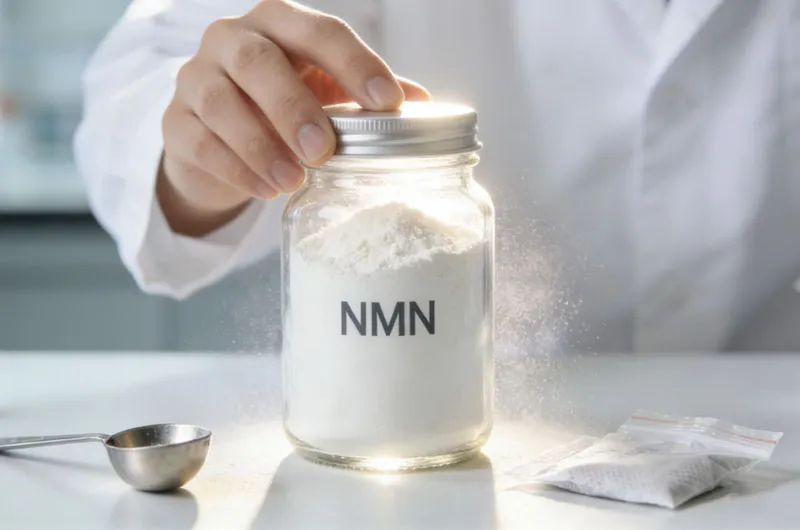
In the rapidly growing longevity supplement industry,NMN powder has become one of the most valuable nutraceutical ingredients. As a precursor of NAD+, NMN is widely used in anti-aging supplements, energy formulas, and cellular health products.However, because NMN is a bioactive compound, its stability can be affected by environmental conditions such as temperature, humidity, light, and oxygen exposure.For supplement manufacturers, distributors, and raw material buyers, understanding how to store NMN correctly is essential to maintaining product purity, stability, and shelf life.
What Is NMN Powder?
NMN (Nicotinamide Mononucleotide) is a naturally occurring molecule that serves as a precursor to NAD+ (Nicotinamide Adenine Dinucleotide), a coenzyme essential for cellular energy metabolism, DNA repair, mitochondrial function, and activation of longevity-related enzymes. Since NAD+ levels naturally decline with age, NMN supplementation has gained popularity in anti-aging and longevity nutrition products.
High-purity NMN powder is widely used in dietary supplements, anti-aging capsules, NAD+ booster formulas, and functional nutrition products. To maintain its effectiveness, it is important to follow proper storage conditions during handling and formulation.
Why Proper Storage of NMN Powder Is Important
NMN powder is relatively stable when handled correctly, but exposure to heat, moisture, or sunlight can cause gradual degradation. Improper storage may result in reduced purity, lower active ingredient content, clumping, and shorter shelf life.
For supplement brands and manufacturers, maintaining stable and high-quality NMN raw materials is essential to ensure consistent product performance, efficacy, and compliance with regulatory standards. Proper storage helps safeguard the bioactivity and reliability of NMN in finished products.
Key Factors That Affect NMN Powder Stability
Several environmental factors can influence the stability of NMN:
1
Temperature plays a major role in chemical stability. High temperatures can accelerate degradation reactions.
Recommended storage conditions include:
2–8°C refrigeration for long-term storage
Below 25°C for short-term storage
Avoid storing NMN in areas with heat exposure or temperature fluctuations.
2
NMN powder can absorb moisture from the air, which may affect its physical and chemical stability.
High humidity can cause:
Powder clumping
Reduced stability
Degradation of the active compound
To prevent moisture damage, Nicotinamide Mononucleotide should be stored in dry and sealed containers.
3
Exposure to UV light or direct sunlight may degrade sensitive compounds over time.
Therefore, NMN powder should be stored in:
Dark environments
Opaque containers
UV-protective packaging
4
Oxygen can lead to oxidation and gradual degradation of certain compounds.
To minimize oxidation risks:
Use airtight containers
Reduce unnecessary exposure to air
Reseal packaging immediately after opening
This helps preserve NMN stability for longer periods.
Tips for Maintaining NMN Powder Stability
Industry experience and stability studies show that the following storage practices help maintain NMN powder quality.
Keep NMN in a Cool Environment
For long-term storage, refrigeration is preferred. A stable and cool environment helps slow down degradation reactions.
01
Use Airtight and Moisture-Proof Packaging
High-quality packaging is essential to prevent moisture absorption.
Common packaging options include:
Aluminum foil vacuum bags
Double-layer moisture-proof packaging
Food-grade sealed containers
02
Protect the Product From Light
Always store NMN powder away from direct sunlight and strong lighting sources.
Dark storage conditions help maintain compound stability.
03
Reduce Air Exposure
Frequent opening of the container may introduce moisture and oxygen.
04
Packaging Solutions for NMN Powder
Professional NMN manufacturers use specialized packaging to protect purity, stability, and bioactivity. Common solutions include vacuum-sealed aluminum foil bags, nitrogen-filled packaging, moisture-proof inner liners, and temperature-resistant containers, which help prevent oxidation, humidity damage, and degradation during handling.
These packaging methods ensure NMN powder remains high-quality and stable throughout international shipping, warehouse storage, and formulation processes, supporting consistent product performance and reliability for supplement and functional beverage applications.
Shelf Life of NMN Powder
When stored under proper conditions, high-purity NMN powder typically maintains its stability and bioactivity for up to 24 months. Actual shelf life may vary depending on factors such as manufacturing process, packaging quality, and storage environment.
Reputable suppliers provide supporting documentation to ensure product reliability, including Certificates of Analysis (COA), stability testing reports, and batch traceability information. These measures help manufacturers and brands maintain consistent product quality and regulatory compliance.
Storage Recommendations for Supplement Manufacturers
To maintain the quality and stability of NMN powder, manufacturers should store raw materials in temperature-controlled areas and use humidity monitoring systems to prevent degradation. Proper inventory rotation (FIFO) ensures that older stock is used first, maintaining consistent product performance. Regular quality inspections help detect any changes in purity or bioactivity, supporting stable and reliable supplement production. Following these practices helps manufacture
NMN Powder Raw Material Supply for Supplement Brands
For companies developing longevity and anti-aging supplements, sourcing high-quality, reliable NMN raw materials is essential. BOTANICAL CUBE is a professional NMN manufacturer, providing premium NMN powder to help supplement brands create capsules, tablets, and functional longevity formulas with consistent efficacy for the global market.
OEM, ODM, and private label supplement services
Bulk supply for supplement manufacturers
Stable packaging for global shipping
High purity NMN powder (≥99%)
FAQ
Q1: Does NMN powder need to be refrigerated?
A1: Refrigeration is recommended for long-term storage. Keeping NMN powder at 2–8°C helps maintain stability and extend shelf life.
Q2: Can NMN powder be mixed into beverages?
A2: Yes. High-purity Nicotinamide Mononucleotide dissolves easily in water and beverage bases. Liposomal or enzyme-stabilized powders improve stability and absorption.
Q3: What is the shelf life of NMN powder?
A3: Most high-purity NMN powder have a shelf life of about 24 months when stored under recommended conditions.
Q4: How should NMN powder be stored?
A4: Store in a dry, airtight container at room temperature, away from sunlight and moisture, to maintain purity and stability.
Q5: Do suppliers offer OEM/ODM services?
A5: Yes. Reputable suppliers provide custom formulations, bulk supply, and private label solutions to support global B2B brands.
Q6: How can I ensure NMN quality?
A6: Request COA (Certificate of Analysis), third-party testing reports, and choose suppliers with ISO22000, Halal, or EU Organic certifications.
Conclusion
Proper storage is essential to maintain the purity, stability, and effectiveness of NMN powder. To ensure optimal quality, Nicotinamide Mononucleotide should be kept in a cool, stable environment, stored in airtight, moisture-proof containers, protected from direct light, and exposed to minimal air and humidity. Following these guidelines helps supplement brands and manufacturers preserve high-quality NMN raw materials throughout their shelf life, supporting consistent product performance and efficacy. Any questions you can contact us at sales@botanicalcube.com.
Reference
[1] Irie J, Inagaki E, Fujita M, et al. Ingestion of β‑nicotinamide mononucleotide increases blood NAD⁺ levels, maintains walking speed, and improves sleep quality in older adults: a randomized, placebo‑controlled, double‑blind study. PubMed. 2024. Available from: https://pubmed.ncbi.nlm.nih.gov/38789831/
[2] Sato T, Sakurai T, Nakagawa T, et al. Chronic nicotinamide mononucleotide supplementation elevates blood nicotinamide adenine dinucleotide levels and alters muscle function in healthy older men. npj Aging. 2022;8:5. Available from: https://www.nature.com/articles/s41514-022-00084-z
[3] Yoshino J, et al. Nicotinamide adenine dinucleotide metabolism and arterial stiffness after long‑term nicotinamide mononucleotide supplementation: a randomized, double‑blind, placebo‑controlled trial. Scientific Reports. 2023;13:xxxxx. Available from: https://www.nature.com/articles/s41598-023-29787-3