


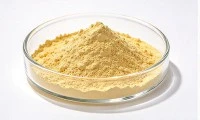


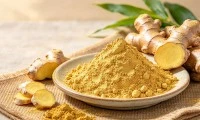
Before placing a bulk order for ginger extract, it's worth taking a closer look at the sample you're evaluating. The gingerol content may match your requirements, but there are other details to consider: how the powder behaves in your formulation, whether the flavor is suitable, and whether the quality data gives you enough confidence to move forward.
As a ginger extract manufacturer, we see these as important parts of the evaluation process. The right checks will depend on the intended application, the extract specification, and the requirements of your finished product. A few straightforward tests before ordering can help you make a more informed decision and avoid unexpected problems during production.Here's what to check before approving a ginger extract for bulk supply.
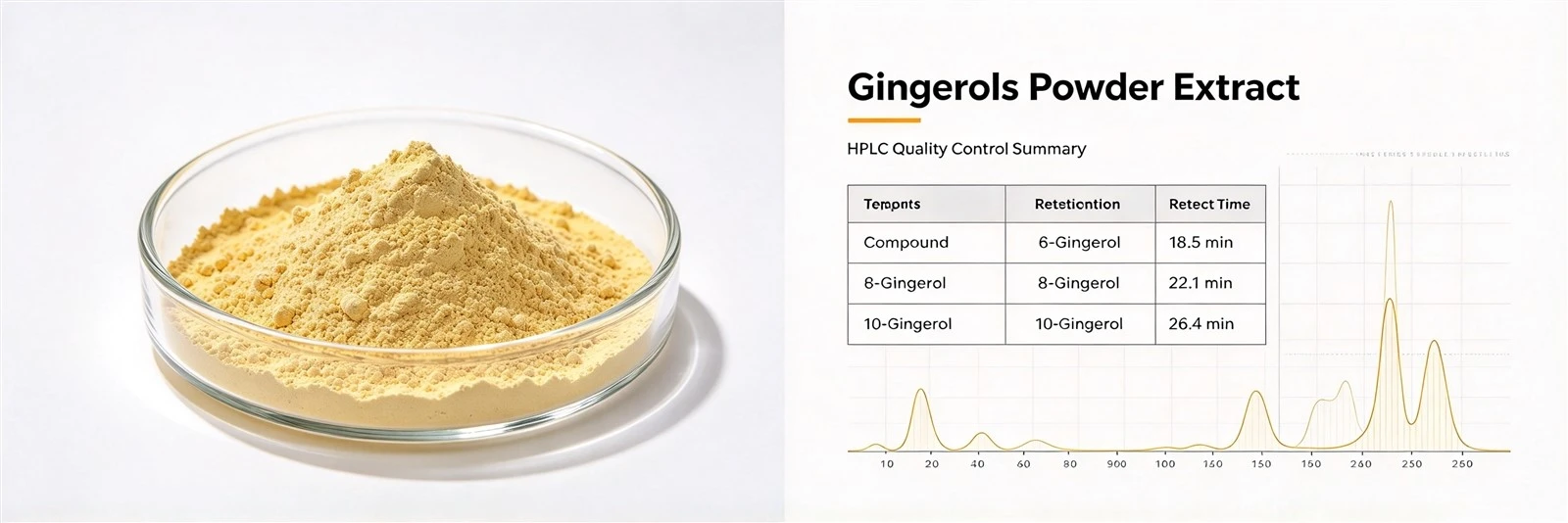
Step 1: Identify Key Risks Before Testing (Pre-Sampling Check)
Before you even request a sample or look at a lab report, you need to understand where ginger extract sourcing usually goes wrong. Many buyers assume that all ginger powders or extracts behave the same way, but minor differences in processing can lead to major formulation failures.
The most common quality pitfalls include gingerol degradation caused by improper drying, solvent residues from extraction, unnatural flavor profiles caused by synthetic adulterants, and heavy metal accumulation from soil. For instance, customs and food safety regulatory data from the US and Europe frequently highlight import rejections due to pesticide residues (such as ethylene oxide or unauthorized agrochemicals) and heavy metal exceedances in root extracts [1]. Knowing these risks upfront allows your team to build a targeted testing checklist rather than wasting budget on irrelevant assays.
Step 2: Laboratory Assay & Purity Testing (Analytical Protocol)
Once your sample arrives, your quality control team needs to verify its chemical identity and active compounds. But how do you read the numbers correctly?
How to Verify Bioactive Compounds (Gingerols & Shogaols) Accurately?
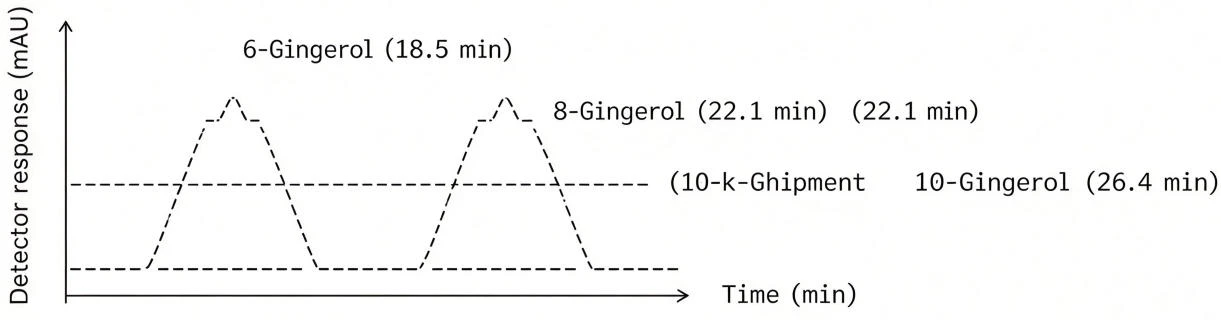
When testing ginger extracts using High-Performance Liquid Chromatography (HPLC), you are typically looking at 6-gingerol, 8-gingerol, 10-gingerol, and 6-shogaol. A common trap is relying on a generic "gingerols" percentage without checking the ratio of gingerols to shogaols. Fresh ginger is rich in gingerols, while dried or heat-treated ginger converts gingerols into shogaols (which are sharper and more pungent).
Figure 1: HPLC Chromatographic Profile of Standard Ginger Extract (Simulated Dark-Mode Laboratory Output)
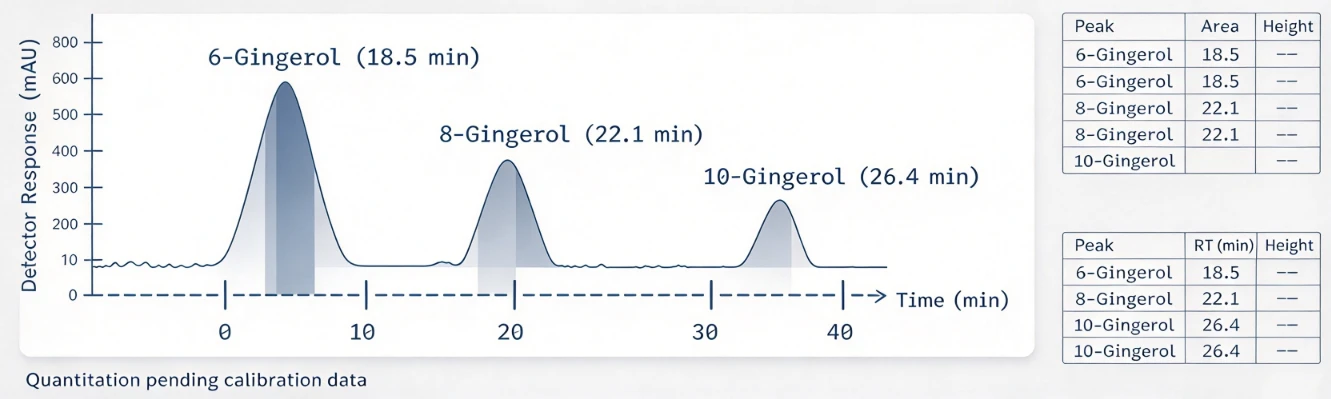
- Lab Data Insight: According to USP/EP pharmacopeial guidelines, standard reference chromatograms must be used to calibrate these retention windows accurately [2].
Which Safety & Compliance Screening Cannot Be Skipped?
Never skip safety screening. For botanical extracts, your lab should screen for:
- Heavy Metals: Lead (Pb < 3.0 mg/kg), Cadmium (Cd < 1.0 mg/kg), Arsenic (As < 2.0 mg/kg), and Mercury (Hg < 0.1 mg/kg).
- Pesticides: Multi-residue screening adhering to USP or EU maximum residue limits (MRLs).
- Microbiology: Total plate count, yeast, mold, E. coli, and Salmonella.
For example, when working with verified material, our internal testing at Botanical Cube aligns with ISO/IEC 17025 accredited third-party labs like SGS or Eurofins [3], ensuring that every batch CoA matches independent verification data down to the decimal.
Step 3: Application & Performance Testing (Lab-to-Production Feasibility)
This is the step most generic guides skip. An ingredient can pass every chemical test in a lab, yet completely fail in your actual factory formulation [4].
How to Test Water Solubility, Heat Stability, and Clarity in Beverages?If you are formulating a functional beverage or liquid shot, standard ginger extract will often cause heavy sedimentation or cloudiness due to insoluble essential oils and fibers.
- Lab Trial Data: When testing a water-soluble ginger extract, mix a 1% solution in distilled water at room temperature. A truly high-grade cold-water-soluble extract should achieve complete dissolution within 3 minutes, showing a light yellow-to-amber hue with a transmittance of >90% at 650 nm, and zero sediment after centrifugation at 3000 rpm for 10 minutes. Furthermore, subjecting the solution to UHT pasteurization (85°C for 15 minutes) should result in less than a 5% loss in total gingerols.
- Formulation Insight Water-Soluble Ginger Extract for Beverages: Sediment, poor dispersion, and an overly sharp ginger taste can all affect the quality of a functional beverage. Botanical Cube's water-soluble ginger extract offers an option for beverage formulations that require good water dispersibility and a natural ginger flavor. When evaluating the ingredient, dispersion, sediment formation after standing, and performance during filling are key factors to consider.
How to Evaluate Pungency and Flavor Masking for Dietary Supplements?
For gummies, softgels, or chewable tablets, flavor is everything. Prepare a benchtop trial batch at your target dosage. Evaluate the flavor profile using a sensory panel: does it have a clean, warming ginger bite, or does it leave a bitter, chemical, or soapy aftertaste? If the extract is too harsh, work with your R&D team to test masking agents or request a standardized lower-pungency extract grade.
Step 4: Evaluating Batch-to-Batch Consistency & Supply Chain Reliability
A great sample is easy to send; maintaining identical quality across multi-ton bulk orders is where suppliers separate themselves.
How to Ensure the Bulk Order Matches the Approved Sample?
Always request that the supplier set aside a "Retention Sample" from the exact batch sent to you, sealed and signed. In your supply contract, specify that the HPLC fingerprint overlap between the trial sample and commercial bulk shipments must not deviate by more than ±5%.
Figure 2: HPLC Fingerprint Overlap Comparison Plot (Batch Consistency Verification)
- Factory Control Data: Reliable manufacturers utilize automated extraction tanks and standardized concentration parameters, ensuring that high-performance liquid chromatography (HPLC) fingerprint profiles overlap seamlessly across seasonal harvests [5].
What Traceability and Documentations Should Be Verified Prior to Contract Signing?
Before signing a purchase agreement, make sure your QA file contains:
- ISO, cGMP, Kosher, and Halal certificates (where applicable) [6].
- A clear supply chain traceability diagram showing the origin of the raw ginger rhizomes.
- Safety Data Sheets (SDS) and Technical Data Sheets (TDS).
Step 5: Actionable Protocol for Your Trial Order (Sourcing Checklist)
To bring everything together, use this practical checklist before pulling the trigger on your first bulk order.
| Evaluation Dimension | Key Verification Item | Target Standard / Criteria | Action / Status |
| Identity & Assay | Active Compound (HPLC) | Matches specified % (e.g., 5% Gingerols) with clean chromatogram peaks | [ ] Pass / [ ] Review |
| Safety & Compliance | Heavy Metals & Pesticides | Within USP/EU limits; certified by ISO 17025 lab | [ ] Pass / [ ] Review |
| Application Test | Solubility & Clarity | Clear solution in water, no precipitation or ring formation | [ ] Pass / [ ] Review |
| Supply & Batch | Retention Sample & CoA | Batch-specific CoA provided; retention sample secured for bulk comparison | [ ] Pass / [ ] Review |
Need a Ginger Extract Sample Before Placing a Bulk Order?
The best way to evaluate a ginger extract is to test it in the product you're developing. Whether you're working on a functional beverage, gummy, or dietary supplement, the right specifications will depend on your formulation and processing requirements.
At Botanical Cube, we supply ginger extracts in different specifications, including water-soluble options for beverage applications. You can request a free sample to assess the material before bulk purchasing, along with the relevant COA, HPLC test results, and available technical information to support your evaluation.Contact our team at sales@botanicalcube.com to discuss your ginger extract requirements and request a sample.
References
[1] U.S. Food and Drug Administration (FDA) & European Commission Rapid Alert System for Food and Feed (RASFF). Import Safety and Border Rejection Reports: Heavy Metals, Ethylene Oxide, and Agricultural Chemical Residues in Botanical Extracts. Washington, D.C. & Brussels, 2024.
[2] United States Pharmacopeial Convention. USP Monographs: Ginger (Zingiber officinale Rhizome) and Powdered Ginger Extract. USP-NF. Rockville, MD: United States Pharmacopeia; 2023.
[3] International Organization for Standardization. ISO/IEC 17025:2017 General requirements for the competence of testing and calibration laboratories. Geneva: ISO; 2017.
[4] Institute of Food Technologists (IFT). Guidelines for the Sensory Evaluation and Physical-Chemical Stability Testing of Botanical Ingredients in Functional Food Formulations. Chicago, IL: IFT Press; 2022.
[5] Botanical Cube Inc. Standard Operating Procedure (SOP-QA-042): Quality Assurance Protocol for Chromatographic Fingerprint Overlap and Batch-to-Batch Consistency in Rhizome Extraction. Xi'an, China: Quality Control Department; 2025.
[6] Global Food Safety Initiative (GFSI) & U.S. FDA Center for Food Safety and Applied Nutrition. Current Good Manufacturing Practice (cGMP) in Manufacturing, Packaging, Labeling, or Holding Operations for Dietary Supplements (21 CFR Part 111). Silver Spring, MD: U.S. FDA; 2023.