




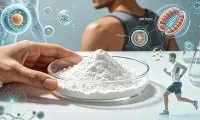
A few years ago, hardly anyone outside research circles talked about autophagy or healthspan. Now, these ideas are everywhere-from podcasts to supplement labels.As interest in cellular health grows, spermidine has become one of the most frequently discussed compounds in this space.
"If wheat germ naturally contains spermidine, is increasing dietary intake enough, or is there a more reliable approach?" Rather than relying on assumptions, it's worth looking at the actual research, the variability in food sources, and the practical limits of dietary intake. That's exactly what I want to explore here.

Why is Spermidine Suddenly a Global "Longevity Superstar"?
A few years ago, Spermidine was a niche term known only to molecular biologists. Today, it's a cornerstone of the multi-billion dollar longevity supplement market. According to recent market analysis, the global Spermidine market is projected to grow at a CAGR of over 12% through 2030, driven largely by aging populations in North America and Europe who are moving away from "multivitamins" toward "cellular performance enhancers."
The buzz isn't just marketing hype. It's rooted in the concept of Autophagy-the body's internal recycling program. Think of your cells like a kitchen; over time, waste accumulates. Spermidine acts as the signal that tells the cell to "take out the trash," recycling old, damaged proteins into fresh, functional components.
Why Your Cells Crave Spermidine
To understand why we are talking about Wheat Germ, we have to understand what Spermidine actually does. Spermidine is a naturally occurring polyamine. As we age, the concentration of Spermidine in our tissues and blood declines significantly. This drop is closely linked to the hallmarks of aging.
The scientific breakthrough that put Spermidine on the map was a landmark study published in Nature Medicine in 2016 [1]. Researchers found that dietary Spermidine intake was directly associated with increased lifespan in mice and improved cardiac function. But it didn't stop there. Subsequent epidemiological studies on human populations in Europe showed that individuals with higher dietary intake of Spermidine had a significantly lower risk of all-cause mortality, particularly cardiovascular-related deaths.
By triggering autophagy, Spermidine helps maintain mitochondrial function (the cell's power plant) and protects DNA from oxidative stress. This is why it's now referred to as a "Dietary Longevity Factor."
Where Does It Come From?
Spermidine is found in many foods, but the concentrations vary wildly. The problem for consumers and manufacturers isn't just finding the source-it's the stability and dosage. Many foods lose their polyamine content during high-heat cooking or long-term storage.If you look at the "Top Sources" list, you'll usually see:
- Fermented Foods: Natto (Japanese fermented soybeans) is incredibly high.
- Fungi: Certain mushrooms, like Shiitake.
- Legumes: Lentils and chickpeas.
- Whole Grains: And right at the top of this list, we find Wheat Germ.
The Truth About Wheat Germ: Data and Reality
1. What is Wheat Germ, exactly?
Wheat germ is the "embryo" of the wheat kernel. It's the most nutrient-dense part, packed with Vitamin E, folate, and minerals. Because it is the site of rapid cell division and growth for the plant, it naturally requires high levels of polyamines like Spermidine.
2. The Numbers: How much Spermidine is in there?
Based on comprehensive food chemistry analysis published in the journal Nutrients [2], Wheat Germ stands out as the premier plant-based source.
Wheat Germ contains approximately 243 mg/kg to 350 mg/kg of Spermidine.Compare this to Soybeans (approx. 167 mg/kg) or Beef (less than 5 mg/kg).However, these numbers aren't static. In a detailed study by Food Chemistry [3], researchers noted that the variety of wheat and the milling process can cause a 30% to 50% fluctuation in final Spermidine content. Furthermore, because Wheat Germ is high in unsaturated fats, it goes rancid very quickly. Once the oils oxidize, the delicate bioactive compounds-including Spermidine-can degrade.
3. The Verdict
Is Wheat Germ rich in Spermidine? Yes. It is arguably the best raw food source available. But is eating raw wheat germ the best way to fix a cellular deficiency? That's where things get complicated.
The "Toast" Challenge: Why Food Isn't Enough
Let's look at the math. Most clinical studies suggesting longevity benefits in humans target a supplemental dose of 1 mg to 6 mg of pure Spermidine per day.
If you rely on raw Wheat Germ (at an average of 250 mg/kg):To get just 2 mg of Spermidine, you would need to consume roughly 8 to 10 grams of wheat germ every single day.While 10 grams sounds small, Wheat Germ is heavy in gluten and calories. For the "Gluten-Free" demographic-which is a massive segment of the premium health market in the US and UK-this is a total dealbreaker.Furthermore, you'd have to ensure the wheat germ is "ultra-fresh" to avoid consuming oxidized fats, which actually increase inflammation-the very thing you're trying to fight.
The Global Shift to Spermidine Supplements
This "dosage gap" is why the supplement market has exploded. In 2023, Amazon's "Spermidine" category saw a 40% year-over-year increase in search volume. Consumers are moving away from bulky food sources and toward Standardized Extracts and High-Purity Powders.
The market is currently divided into three tiers:
| Category | Typical Spermidine Content | Key Characteristics | Limitations |
|---|---|---|---|
| Basic Wheat Germ Powder | Naturally low and variable | Whole-food origin, minimally processed | Requires large daily intake, low dosage efficiency, contains gluten |
| Wheat Germ Extracts | ~1% spermidine | More concentrated than raw wheat germ, widely used in early supplements | Still contains wheat allergens, dosage variability remains |
| High-Purity Spermidine Powder (Synthetic or Fermentation-Derived) | Precisely standardized (mg/g level) | High purity, accurate dosing, gluten-free, formulation-friendly | Higher raw material cost, typically used in premium products |
Why Brands are Choosing High-Purity Spermidine Powder
As a supplier, I've seen a massive shift in what commercial partners are asking for. Why are they moving away from raw Wheat Germ?
- Standardization: If you're a brand, you can't have a product that has 2mg of active ingredient in Batch A and 0.5mg in Batch B. High-purity powder offers consistency.
- Gluten-Free Compliance: By using a high-purity extract or fermented powder, brands can offer a "Gluten-Free" claim, which is essential for the premium longevity market.
- Formulation Flexibility: You cannot put 10g of wheat germ into a single capsule. But you can put 5mg of 98% pure Spermidine into a tiny capsule, leaving room for other synergistic ingredients like NMN, Resveratrol, or Urolithin A.
Our Solution: The Science-First Spermidine Powder
At Botanical Cube, we didn't just stop at "Wheat Germ." We looked at the clinical data and realized that for a supplement to be effective, it must be bioavailable and concentrated.
Our Spermidine Powder is engineered for the modern formulator:
- Concentration: We provide standardized high-purity options (up to 98%) that allow for micro-dosing in premium "Longevity Stacks."
- Purity: Through advanced molecular distillation and extraction, we remove the gluten and the unstable fats found in raw wheat germ.
- Stability: Our powder is treated to resist oxidation, ensuring a shelf life that raw wheat germ could never achieve.
- Compliance: Every batch comes with a full COA (Certificate of Analysis) and meets rigorous heavy metal and microbiological standards for the US and EU markets.
Advice for Product Developers and Brand Owners
If you are building a brand in the longevity space, here is my "insider" advice:
- Identify your Audience: If you are targeting the "Whole Food" crowd, a 1% Wheat Germ Extract is a great story.
- Target the Biohackers: If your customers follow people like Dr. David Sinclair or Bryan Johnson, they want purity. Use our 98% Spermidine Powder to provide a concentrated, science-backed dose without the calories or gluten.
- Synergy is Key: Spermidine works best when paired. Consider a "Cellular Energy" formula combining our Spermidine with NMN to target both Autophagy and NAD+ levels.
So, is Wheat Germ rich in Spermidine? Absolutely. It is one of nature's most fascinating "superfoods." But just as we don't eat 50 oranges to get a therapeutic dose of Vitamin C, we shouldn't rely on raw wheat germ to fuel our cellular recycling.The future of anti-aging is precision. By moving from the "raw grain" to the "active molecule," we can give our bodies exactly what they need to stay young at a cellular level.If you're looking to elevate your product line with a reliable, high-purity Spermidine source that meets international standards, I'd love to help you formulate your next bestseller.Let's discuss your next formulation. Email me at: sales@botanicalcube.com.Let's build the future of longevity together.
References
[1] Eisenberg, T., et al. (2016). "Cardioprotection and lifespan extension by the natural polyamine spermidine." Nature Medicine, 22(12), 1428-1438.
[2] Kiechl, S., et al. (2018). "Higher spermidine intake is associated with lower mortality: a prospective population-based study." The American Journal of Clinical Nutrition, 108(2), 371-380.
[3] Atiya Ali, M., et al. (2011). "Polyamines in foods: development of a food database." Food & Nutrition Research, 55(1), 5572.
[4] Madeo, F., et al. (2018). "Spermidine in health and disease." Science, 359(6374), eaan2788.
[5] Soda, K. (2010). "The mechanisms by which polyamines maintain blood pressure, prolong lifespan, and reduce the incidence of cancer." Plant Physiology and Biochemistry, 48(7), 513-521.