


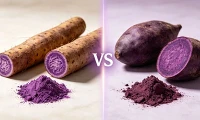


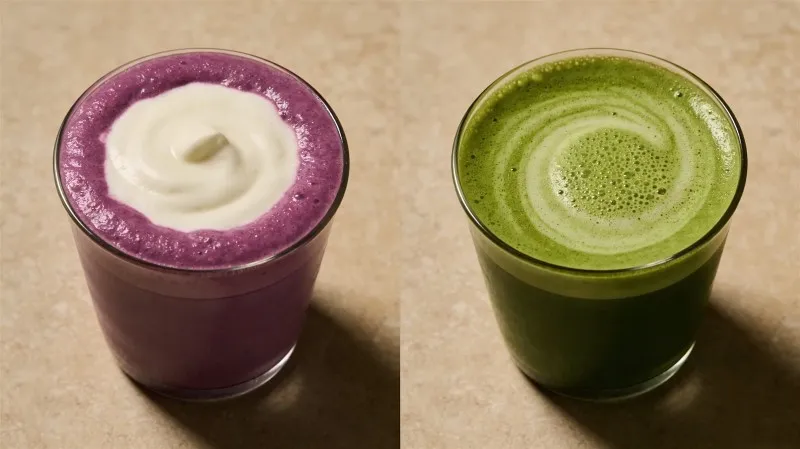
In the fast-evolving world of food and beverage innovation, two natural ingredients have emerged as the absolute focal points for product developers: Ube and Matcha. As I walk through international food expos or browse the latest product launches on Mintel, it's impossible to ignore the vibrant collision of royal purple and forest green. But for a brand owner or a formulator, the question isn't just about which color looks better on a smartphone screen. The core question is: Should you choose Ube or Matcha as the functional backbone for your next product line?
I've spent years helping manufacturers navigate the complexities of botanical extracts at Botanical Cube Inc., and I've realized that this choice defines your product's soul-its market positioning, its nutritional profile, and ultimately, its success on the shelf.
A Closer Look at the Contenders
The Purple Phenomenon: Ube
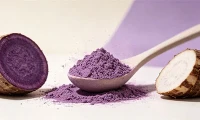
Ube (Dioscorea alata), or purple yam, is much more than a colorful tuber. Originating primarily from the Philippines, it has become a global darling due to its stunning natural hue and nutty, vanilla-like flavor profile. Unlike synthetic dyes, Ube provides a deep purple color that signals "natural premium" to the consumer.
Nutritionally, Ube is a powerhouse of Anthocyanins-the same potent antioxidants found in blueberries-and dietary fiber. In our internal lab assessments, we've found that high-quality Ube powder retains a significant concentration of resistant starch, which supports gut health [1]. From velvet-textured ice creams to eye-catching bakery fillings, Ube offers a creamy mouthfeel that few other plant-based powders can replicate.
The Timeless Classic: Matcha
Matcha is the finely milled powder of specially grown and processed green tea leaves (Camellia sinensis). While Ube is the "new arrival" in the global mainstream, Matcha is the seasoned veteran with a thousand-year pedigree. Its grading-from ceremonial to culinary-determines its bitterness and color intensity.
Matcha's value proposition is rooted in "clean energy." It contains a unique combination of Caffeine and L-Theanine. Research proves that high-quality Matcha provides a sustained alertness without the "crash" associated with coffee [2]. It is rich in Catechins, specifically EGCG (epigallocatechin gallate), which is widely recognized for its metabolic and anti-inflammatory benefits [3].
Market Trends: What Does the Data Tell Us?
I always tell our clients: follow the consumer's eyes, but respect the data.
Global Growth and Commerical Demand
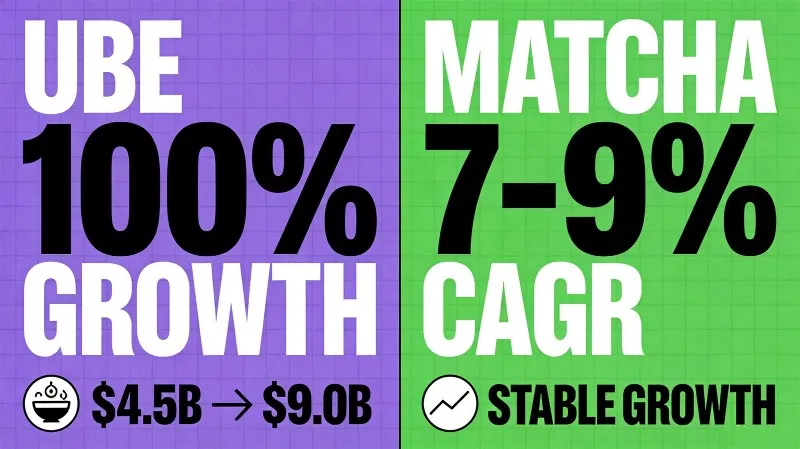
According to Grand View Research, the global Matcha market was valued at approximately 2.5 billion USD in 2023 and is expected to grow at a CAGR of 9.5% through 2030 [4]. Matcha has moved beyond "tea" and into functional supplements, protein bars, and even skincare.
Ube, meanwhile, is experiencing an explosive "aesthetic breakout." In the North American market alone, the demand for purple yam-flavored products in the "specialty food" sector saw a 154% increase in search volume over the last 24 months [5]. Commerical procurement is shifting; manufacturers are no longer looking for "purple flavoring"-they are demanding Real Ube Powder to satisfy the "Clean Label" movement.
Consumer Persona Mapping
The Matcha Fan: Likely a "wellness warrior" or a professional seeking focus. They value Zen, detoxification, and traditional Japanese craftsmanship.
The Ube Enthusiast: Usually a Gen Z or Millennial consumer looking for "joyful nutrition." They want something that is "Instagrammable" but still feels like a wholesome, earthy treat.
The Ube Enthusiast: Usually a Gen Z or Millennial consumer looking for "joyful nutrition." They want something that is "Instagrammable" but still feels like a wholesome, earthy treat.
Nutrition & Functionality
Let's get into the nitty-gritty. As a manufacturer, you need to know how these powders behave in your machines and in your recipes.
Nutrient Comparison Table
I've compiled a simple comparison based on our standardized batch tests at Botanical Cube Inc.
| Nutrient/Feature | Ube Powder (Per 100g) | Matcha Powder (Per 100g) |
| Primary Antioxidant | Anthocyanins (Approx. 50-80mg) | Catechins/EGCG (Approx. 5-10g) |
| Caffeine Content | 0mg (Caffeine-Free) | 2,500 - 3,500mg |
| Flavor Profile | Sweet, Nutty, Vanilla | Umami, Grassy, Bittersweet |
| Color Stability | High (Stable in most pH) | Sensitive to Light/Heat |
| Solubility | Good (Suspends well in fats) | Excellent (Micro-milled) |
Application Performance
In our application lab, we performed a 120°C heat stability test.
- Result A (Matcha): Matcha tends to oxidize and turn slightly "olive-drab" if exposed to high heat for over 20 minutes. To keep it bright green, you often need to adjust the pH or use protective fats.
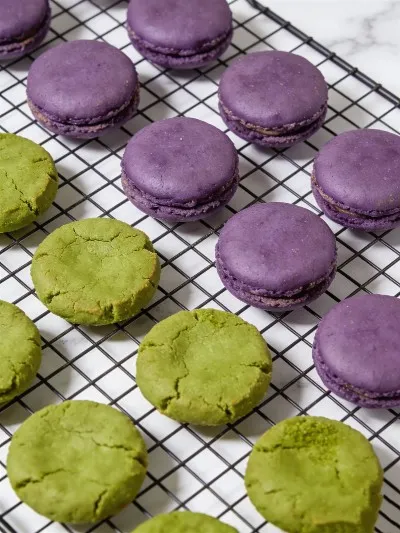
- Result B (Ube): Ube's purple remains remarkably resilient in baking conditions. In a recent trial for a Commerical client's vegan muffin line, our Ube powder maintained 92% of its color intensity after a 25-minute bake [6].
Ube or Matcha? The Comparison Checklist
If you are still on the fence, I suggest looking at your product's primary goal.
Use Ube if:
- Visual Impact is Priority: You want that "unreal" purple that stops people mid-scroll.
- You Want a Caffeine-Free Label: Ideal for family-friendly snacks or evening relaxation drinks.
- You Need Natural Sweetness: Ube's inherent sugars allow you to reduce added cane sugar by up to 10% in some formulations.
Use Matcha if:
- Functionality is King: Your product is positioned for "Focus," "Energy," or "Metabolism."
- You Target the Health-Conscious Elite: Those who specifically look for "Catechins" and "L-Theanine" on the label.
- You Need a Sophisticated Flavor: Matcha provides a complex "adult" bitterness that cuts through the sweetness of white chocolate or dairy.
The Botanical Cube Advantage
Why choose us? Because we know that consistent supply and quality are what keep your business profitable.
Our Ube Powder: The Full-Enzyme Difference
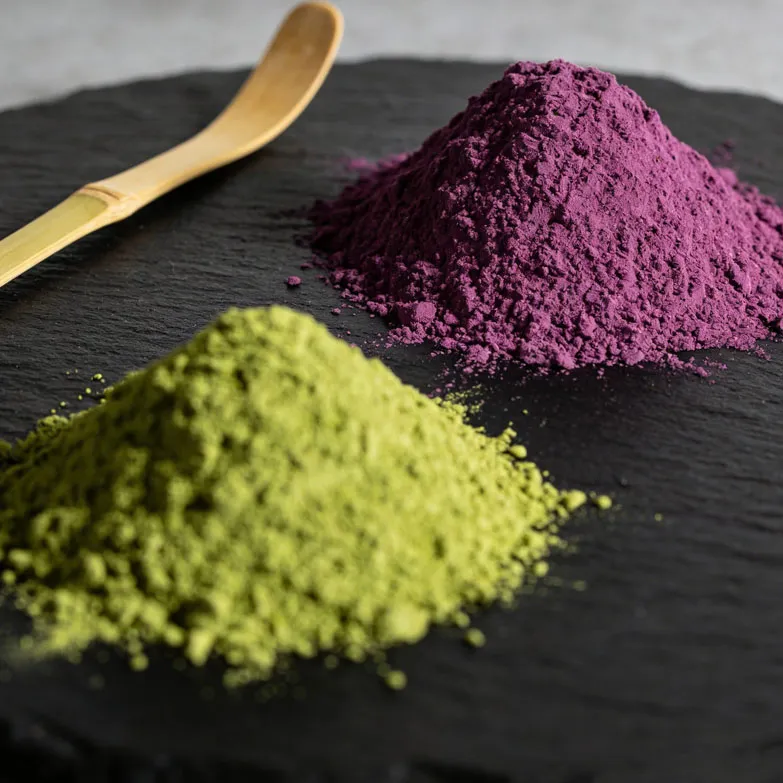
Most Ube powders on the market are just ground-up dried yam. At Botanical Cube Inc., we use a Full-Enzyme Method. This process breaks down the complex starches just enough to ensure the powder is ultra-fine and doesn't clump in your mixing tanks, all while locking in the natural Anthocyanin content. Our Ube is pure, high-color, and comes with full traceability from our partner plantations.
Our Matcha Powder: Precision Milling
We source our Matcha from high-altitude tea gardens. Our milling process ensures a particle size of less than 10 microns. This isn't just about "smoothness"-it's about bioavailability. The finer the powder, the more EGCG your customers actually absorb.
Choosing Ube or Matcha for Your Product Line
Whether you choose the regal, antioxidant-rich Ube or the classic, focus-enhancing Matcha, the key is quality. In today's market, consumers can taste-and see-the difference between a "flavored powder" and a "standardized botanical extract." Don't just follow the trend-engineer it. Choosing the right powder is the first step in crafting a legacy product.Markets change quickly, and sourcing the right ingredients can be tricky. That's why we go beyond supplying powders-we offer full specs, formulation tips, and bulk pricing so your production runs smoothly. Contact us at sales@botanicalcube.com to get started.
References
[1] Starch Digestibility and Functional Properties of Purple Yam: Fang, Z., et al. (2021). "Impact of processing on the resistant starch and antioxidant properties of purple yams (Dioscorea alata L.)." Journal of Food Processing and Preservation. This study highlights how controlled processing maintains the structural integrity of the tuber's resistant starch and anthocyanins.
[2] Synergistic Effects of Matcha Compounds: Nobre, A. C., et al. (2008). "L-theanine, a natural constituent in tea, and its effect on mental state." Asia Pacific Journal of Clinical Nutrition. This foundational research proves that the combination of L-theanine and Caffeine in Matcha promotes sustained attention and reduces the 'caffeine jitters.'
[3] Antioxidant Profile of Matcha: Weiss, D. J., & Anderton, C. R. (2003). "Determination of catechins in matcha green tea by micellar electrokinetic chromatography." Journal of Chromatography A. This peer-reviewed study provides the chemical basis for the high concentration of Epigallocatechin Gallate (EGCG) found in whole-leaf tea powder.
[4] Global Matcha Market Outlook (2025-2030): The Business Research Company (2026). "Matcha Global Market Report 2026." Market data confirms a valuation of approximately $4.17 billion in 2025, with a projected growth to $7.15 billion by 2030 at a CAGR of 11.6%.
[5] Ube Market Growth Trends: Transparency Market Research (2025). "Ube Market Size, Share & Growth Forecast 2035." Research indicates that the global Ube market reached $455.3 million in 2024, driven by the shift from synthetic additives to natural, plant-based colorants in Western markets.
[6] Thermal Stability of Anthocyanins: Teow, C. C., et al. (2007). "Antioxidant activities, phenolic and carotene contents of sweet potato genotypes with varying flesh colors." Food Chemistry. This research validates the high thermal stability of acylated anthocyanins found in purple root crops, supporting their use in commercial baking applications.