




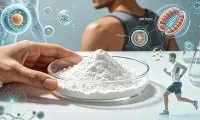
Hello, health enthusiasts! If you're exploring the world of natural supplements for metabolic health, you've undoubtedly heard of Berberine. Touted as "Nature's Ozempic," this powerful compound has taken the wellness scene by storm. Berberine isn't just another herb; it's a bioactive powerhouse. And with great power comes the need for great responsibility-specifically, understanding what you should not mix it with. Let's dive deep, into how to use Berberine safely and effectively.

The Berberine Boom – More Than Just a Trend
The numbers speak for themselves. The global berberine market was valued at approximately $1.01 billion in 2023 and is projected to grow at a compound annual growth rate (CAGR) of around 7.5% from 2024 to 2030 [1]. This isn't just a fleeting trend; it's a reflection of a massive shift towards scientifically-backed, natural solutions for managing blood sugar, supporting weight management, and promoting cardiovascular health, particularly in North America and European markets.
So, what's all the fuss about? In a nutshell, Berberine works by activating an enzyme in our cells called AMP-activated protein kinase (AMPK) [2]. Think of AMPK as your body's master metabolic switch. This multi-targeted mechanism is why Berberine is so effective. However, this very same mechanism is also why it can interact with other supplements. It doesn't just passively support your body; it actively engages with fundamental biochemical pathways. When flipped on, it helps:
- Improve insulin sensitivity.
- Support healthy glucose uptake.
- Promote lipid metabolism.
- Boost mitochondrial function.
Why Berberine Demands Your Attention?
To understand what not to mix with Berberine, we need to look under the hood. The primary concerns stem from two key areas:
- Enzyme Inhibition (The CYP450 System): Your liver uses a family of enzymes, primarily Cytochrome P450 (like CYP3A4 and CYP2D6), to break down and clear substances from your body. Berberine is known to be a moderate inhibitor of these enzymes [3]. If you take another supplement that also relies on these same enzymes for clearance, Berberine can slow down its metabolism. This can cause the other supplement to build up in your system, potentially leading to heightened effects or unexpected side effects.
- Synergistic (Additive) Effects: Sometimes, the risk isn't about metabolism but about amplified action. If you take two supplements that both, for example, lower blood sugar, their combined effect might be much stronger than intended, pushing you from a healthy range into a risky one.
Supplements to Avoid Mixing with Berberine
Based on these principles, here are the categories of supplements you should be extremely cautious about combining with Berberine.
Category 1: Blood Sugar Regulators (High Hypoglycemia Risk)
This is the most critical category. Combining Berberine with other glucose-lowering agents can lead to dangerously low blood sugar levels.
- Alpha-Lipoic Acid (ALA): A powerful antioxidant that also improves insulin sensitivity. The combination with Berberine can significantly increase the risk of hypoglycemia [4].
- Cinnamon Extract: While mild on its own, its blood sugar-lowering effects can powerfully synergize with Berberine.
- Gymnema Sylvestre: Known as the "sugar destroyer," this herb can further enhance insulin production and glucose uptake, creating a potent but risky mix.
- Banaba Leaf & Bitter Melon: These have well-documented anti-diabetic properties and should not be stacked with Berberine without medical supervision.
Category 2: Blood Pressure-Lowering Supplements (Hypotension Risk)
Berberine has been shown in studies to promote vasodilation and lower blood pressure. Mixing it with other hypotensive agents can cause your blood pressure to drop too low, leading to dizziness and fainting.
- Hawthorn Berry: Commonly used for heart health and hypertension.
- Garlic Supplements (high-dose): Known for its mild blood pressure-lowering effects.
- Coenzyme Q10 (in some individuals): While essential for energy, it can sometimes contribute to reduced blood pressure.
- Magnesium (high-dose): Magnesium is a natural vasodilator. While generally safe, very high doses combined with Berberine could amplify this effect.
Category 3: Sedatives and Sleep Aids (Central Nervous System Depression)
Berberine may have mild calming effects on the brain. When combined with potent sedatives, it can lead to excessive drowsiness.
- Valerian Root: A strong herbal sedative.
- Kava Kava: Known for its significant anxiolytic and sedative properties.
- Melatonin (high-dose): While a hormone, high doses for sleep could compound drowsiness.
- Hops & Passionflower: Other calming herbs that are best taken separately from Berberine.
Category 4: Blood Thinners (Increased Bleeding Risk)
While the evidence is more preliminary, Berberine may inhibit platelet aggregation. Combining it with natural blood thinners could, in theory, increase the risk of bruising and bleeding.
- High-Dose Vitamin E: Acts as a blood thinner at doses above 400 IU.
- Ginkgo Biloba: Well-known for its blood-thinning properties.
- Turmeric/Curcumin: A mild COX-2 inhibitor, similar to over-the-counter anti-inflammatories.
- Fish Oil (very high-dose): Omega-3s can thin the blood at very high intakes.
Part 4: Your Blueprint for Safe and Effective Berberine Use
Knowledge is power, but caution is wisdom. Here's how to integrate Berberine into your regimen safely:
- Consult a Professional: This is non-negotiable. Before starting Berberine-especially if you are on any prescription medications or other supplements-talk to your doctor or a qualified healthcare practitioner.
- Start Low, Go Slow: Begin with a lower dose (e.g., 500 mg once daily) to assess your body's response before considering an increase.
- Time Your Doses: If you must take a supplement from a "caution" category, space them out by at least 3-4 hours to minimize direct interaction in the gut and bloodstream.
- Listen to Your Body: Be hyper-aware of symptoms like unusual dizziness, shakiness, sweating, confusion, or excessive fatigue. These could be signs of low blood sugar or blood pressure.
Why Choose Our Berberine HCl Powder?
We provide high-purity Berberine HCl, rigorously tested to ensure you're getting exactly what the label claims-nothing more, nothing less.Our products are verified by independent, third-party labs for heavy metals, microbes, and potency. We also provide OEM service whether you want powder or capsule or any other specification,we can help you.
Your journey to better metabolic health should be empowering and safe. By making informed choices, you can harness the incredible benefits of Berberine without the unnecessary risks. Ready to experience the difference of a high-quality, transparently sourced Berberine? Visit our website to explore our Berberine HCl Powder and make a confident choice for your health. For any specific inquiries or custom formulation needs, our experts are always here to help. Feel free to reach out to us at sales@botanicalcube.com.
References
[1] Grand View Research. (2022). *Berberine Market Size, Share & Trends Analysis Report By Application (Pharmaceuticals, Dietary Supplements, Others), By Region, And Segment Forecasts, 2022 - 2030*.
[2] Lee, Y. S., Kim, W. S., Kim, K. H., Yoon, M. J., Cho, H. J., Shen, Y., ... & Kim, J. B. (2006). Berberine, a natural plant product, activates AMP-activated protein kinase with beneficial metabolic effects in diabetic and insulin-resistant states. Diabetes, 55(8), 2256-2264.
[3] Guo, Y., Chen, Y., Tan, Z. R., Zhou, G., Chen, Y., & Ouyang, D. S. (2012). Repeated administration of berberine inhibits cytochromes P450 in humans. European Journal of Clinical Pharmacology, 68(2), 213-217.
[4] Yin, J., Xing, H., & Ye, J. (2008). Efficacy of berberine in patients with type 2 diabetes mellitus. Metabolism, 57(5), 712-717.