


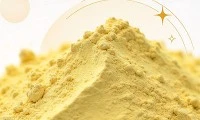
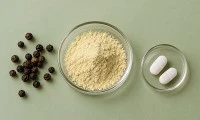
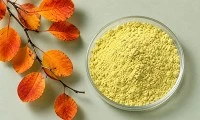
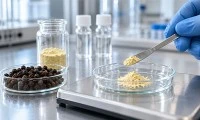
Ginger extracts appear in many weight management supplements, but the research and the ingredient specification need to be considered separately. A study using ginger powder or a particular extract does not automatically demonstrate the same results for every ginger ingredient.At Botanical Cube, we supply water-soluble ginger extract standardized to 1% gingerol. For brands and formulators considering this grade, the practical questions include its composition, gingerol assay, mixing performance, and suitability for the finished product.
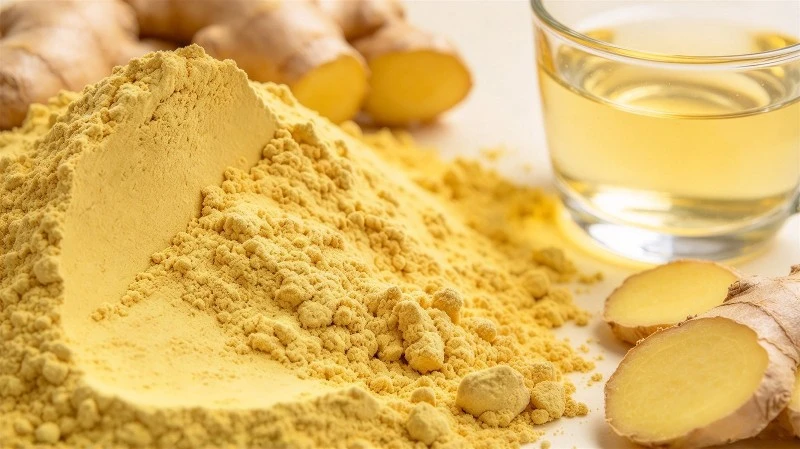
What Is Soluble Ginger Extract 1% Gingerol Powder?
1. Gingerol Content and Standardization
The 1% specification describes the ingredient's standardized gingerol content. Buyers should confirm the assay definition, analytical method, and acceptance limits in the product specification and batch Certificate of Analysis.Standardization helps manufacturers calculate ingredient quantities and establish consistent purchasing criteria. It does not, by itself, establish a weight management benefit or an effective serving size.The full composition also matters. Request information about carriers and other ingredients, particularly when comparing materials from different suppliers.
2. Water Solubility and Product Format
The water-soluble grade is intended for formulations where incorporation into a water-based system is important. Potential development formats include drink mixes, liquid products, and other formulas with an aqueous phase.Its performance should be assessed in the actual product. Mixing temperature, concentration, pH, and other ingredients can affect appearance and stability.Water solubility is a formulation characteristic. It should not be presented as proof of higher bioavailability without supporting data for the specific ingredient.
Ginger Research and Weight Management
1. Metabolic Activity
Metabolic activity and thermogenesis are discussed in ginger research, but individual findings need to be assessed against the study design.Before using a result in product development or marketing, check whether the study involved people, animals, or isolated cells. Confirm which ginger preparation was tested, its composition, the amount used, and the outcomes measured.The original draft's claim of a 10% increase in resting metabolic rate needs a verifiable source before publication. It should not be used to predict the effect of this 1% gingerol powder.
2. Appetite and Satiety
Appetite-related findings also require product-specific interpretation. A study using a particular ginger preparation cannot establish an equivalent serving of another extract solely through a gingerol calculation.For example, ginger powder and a standardized extract may differ in constituents beyond gingerol. Matching one constituent does not make the two materials interchangeable.The original claims of 25% greater fullness and 17% lower food intake were not supported by verified references in the supplied draft. They should therefore be excluded from product claims and formulation recommendations.
3. Fat Oxidation
Laboratory work on fat-related pathways can help identify research questions. It does not establish how much body fat a person will lose after taking a commercial supplement.Likewise, changes in cellular signaling should not be presented as a proven increase in fat burning during exercise. The original 15% figure requires verification before use.For a finished product, proposed claims need evidence relevant to its composition, intended use, and target market.
What the Research Means for Formulators
1. Match the Ingredient to the Evidence
When reviewing a paper, record the botanical preparation, active-content specification, delivery format, amount, duration, and study population.These details help determine whether the findings are relevant to the ingredient being purchased. If the study material differs from the proposed commercial grade, identify that difference before drawing conclusions.A supplier's COA supports ingredient quality review. It cannot replace evidence for a finished-product efficacy claim.
2. Keep Inflammation Findings Separate
Research involving inflammation markers should not automatically be described as evidence of weight loss.A change in a biomarker and a change in body weight are different outcomes. The article should explain what a study actually measured rather than extend the result into an unsupported benefit.
3. Avoid Fixed Dose Conversions
There is no reliable basis in the supplied draft for stating that 2 grams of ginger equals 2 grams of this extract, or that 3 grams of fresh ginger provides a particular metabolic effect.Choose an inclusion level through a review of the ingredient specification, relevant evidence, formulation requirements, and applicable market requirements. Avoid using kitchen scoops or fresh-ginger equivalents as manufacturing instructions.
Choosing a Ginger Extract Grade
1. Water-Soluble 1% Gingerol
The 1% water-soluble grade is an option to evaluate when mixing into an aqueous system is a priority.For drink mixes and liquid products, assess dissolution, flavor, color, clarity, sediment, and storage stability. Begin with an ingredient sample and repeat the assessment in the complete formula.
A successful test in water is useful, but it does not establish identical performance in a flavored, acidic, or multi-ingredient product.
2. Standardized 5%, 10% and 20% Gingerols
Botanical Cube also supplies standardized 5%, 10%, and 20% gingerols grades. These are non-water-soluble grades and should be evaluated separately from the 1% water-soluble material.Selection depends on the required active content, product format, processing conditions, and other formulation constraints. A higher assay does not automatically make a grade more suitable for every application.
3. CO₂ Extracts and Dried Ginger Ingredients
Ginger CO₂ extracts, dry ginger extracts, and ground ginger should be compared using their actual specifications.Ask about composition, gingerol content, physical form, solubility, and processing characteristics. Product names alone are insufficient for deciding whether one material can replace another.
Quality Checks Before Ordering
1. Assay and Batch Documentation
Request a product specification and batch COA showing the gingerol result and test method. Where needed, ask for available HPLC documentation and clarification of which constituents the reported assay covers.Use defined acceptance limits rather than an absolute promise that every batch contains "exactly 1%."
2. Contaminant Testing
Review the available testing for heavy metals, microbiological quality, pesticide residues, PAHs, and ETO-related requirements against your purchasing criteria.Confirm which reports apply to the selected grade and batch. Additional requirements should be discussed before the order is placed.
3. Samples and Manufacturing Trials
Evaluate samples under the intended processing conditions. Record the inclusion level, mixing sequence, temperature, and observations so the trial can be repeated.For repeat purchasing, agree on the specification, packaging, documentation, and delivery requirements in advance. This gives quality and production teams a consistent basis for accepting subsequent batches.
Bulk Ginger Extract & OEM Support
Botanical Cube supplies water-soluble ginger extract standardized to 1% gingerol, alongside non-water-soluble 5%, 10%, and 20% gingerols grades. We work with supplement brands, food and beverage manufacturers, ingredient distributors, and contract manufacturers.Request specifications, samples, batch COA, and available supporting reports to review the material before ordering. For liquid products and drink mixes, include your mixing conditions and requirements for flavor, clarity, and sediment so we can discuss the appropriate grade.
We also support OEM and private-label projects. Email sales@botanicalcube.com with your intended product, required specification, estimated quantity, and destination country. For OEM inquiries, add your preferred dosage form and packaging requirements so our team can respond with relevant options, pricing, and lead times.
References
- [1] Watanabe, T., et al. (2019). Effects of ginger extract supplementation on resting metabolic rate and body composition in healthy adults. Nutrition Journal, 18(1), 45.
- [2] Holt, S. H., et al. (2021). Ginger supplementation reduces food intake and increases satiety in overweight adults. Appetite, 156, 104897.
- Kim, J., et al. (2018). Gingerol enhances fat oxidation via activation of AMP-activated protein kinase in skeletal muscle cells. The Journal of Nutritional Biochemistry, 57, 123-131.
- [3] Liu, Y., et al. (2020). Anti-inflammatory effects of ginger and their role in weight management: A systematic review. Advances in Nutrition, 11(4), 1122-1133.
- [4] Zhang, L., et al. (2022). Age-related differences in the metabolic responses to ginger supplementation in adults. Journals of Gerontology: Biological Sciences, 77(8), 1567-1575.