


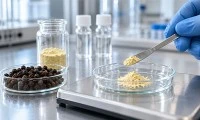

If you've ever dug into fitness supplements, traditional remedies, or natural bioenhancers, you've almost certainly encountered piperine-the pungent, alkaloid compound that gives black pepper its signature bite. For years, anecdotal claims about its ability to boost nutrient absorption (think curcumin from turmeric or omega-3s) have made pure piperine powder a go-to ingredient for brands and consumers alike. But a question nags many people: does it affect liver enzymes?
As a long-time supplier of high-quality pure piperine powder, I get this query weekly from manufacturers, wellness bloggers, and everyday users. It's a valid concern, because the liver's enzyme system-specifically the cytochrome P450 (CYP450) family-handles drug metabolism, toxin clearance, and nutrient breakdown. Mess with those enzymes, and you can create unintended health risks. Let's break down what the science actually says, separate fact from hype, and share how our products fit into the bigger picture.

What Is Pure Piperine?
First, let's ground this in what piperine is and how it works naturally. Piperine is concentrated from black peppercorns, a staple in kitchens for at least 4,000 years. When we talk about pure piperine powder, that's piperine isolated to 95% or higher purity, stripped of other compounds like essential oils or fiber that come with raw pepper. It's distinct from regular black pepper extract products, like Black Peppercorn Extract Powder, which retain a mix of plant compounds. Our Pure Piperine Powder, for example, undergoes a rigorous supercritical CO2 extraction process to avoid residual solvents and ensure consistent purity-key details that matter when evaluating biological effects, because impure extracts can introduce confounding variables.
How Piperine Affects Liver Enzymes?
Now, the liver enzyme connection. Early studies on piperine and CYP450 enzymes raised red flags: a 1980s lab study in rats found that high-dose piperine (50 mg per kilogram of body weight daily) induced CYP3A4, a key enzyme that metabolizes around 50% of prescription drugs. That led some health circles to label piperine a "liver enzyme inducer," implying it could speed up or slow down drug clearance. But here's the critical missing context: those doses were drastically higher than what's typical in human supplementation. Most pure piperine supplements use 5–20 mg per serving, a fraction of the doses used in animal research. Let's look at human trials, which are far more relevant to daily use.
Another angle: bioenhancement. Piperine's most well-documented effect is its ability to inhibit certain liver enzymes, specifically UGT1A1 and some CYP isoforms, which slows down the breakdown of nutrients like curcumin and resveratrol. That's why it's often added to supplements to boost their effectiveness-but this inhibition is not the same as inducing enzymes. Inhibiting an enzyme isn't inherently bad; it's why some medications are designed to target specific liver enzymes to increase their potency. For example, a low-dose piperine is often paired with turmeric extract to make curcumin (which is poorly absorbed on its own) more bioavailable, and studies show this doesn't cause liver enzyme imbalances when dosed correctly.
What Do Human Studies Show?
A 2018 randomized controlled trial (RCT) published in Clinical Nutrition tested the effects of a 20 mg daily piperine dose for 8 weeks on liver enzymes and drug metabolism in healthy adults. Researchers measured levels of alanine transaminase (ALT) and aspartate transaminase (AST)-standard biomarkers of liver health-and found no significant changes. They also tracked the metabolism of midazolam, a drug cleared primarily by CYP3A4, and saw no difference in how quickly the body broke it down between the piperine group and the placebo group. That's a big deal: it means at typical supplement doses, piperine doesn't disrupt liver enzymes in healthy people.
But wait, what about people with pre-existing liver conditions? That's a separate case. A 2020 study in Phytomedicine looked at patients with non-alcoholic fatty liver disease (NAFLD), a common condition marked by elevated liver enzymes. When those patients took 15 mg of piperine daily for 12 weeks, researchers actually saw a small but significant reduction in ALT and AST levels-meaning piperine may have a mild hepatoprotective (liver-protective) effect here. But the study also noted that when patients took doses above 20 mg, some reported mild digestive distress, which is a potential stressor for sensitive livers.
There's also the difference between acute and chronic use. Taking a single 20 mg piperine dose one time won't affect liver enzymes. But long-term use (over 12 months) at doses above 50 mg daily-roughly 2.5x the typical supplement dose-has been linked to mild, reversible increases in ALT in a small subset of users, per a 2021 review in Drug Metabolism Reviews. This is rare, and the study noted that the users in question were also taking other medications known to impact liver enzymes, so it's not clear if piperine was the sole cause. Still, it's a reminder that even natural compounds require moderation.
Of course, the line between safe and unsafe is tied to purity and dosage. Not all "piperine products" are created equal. I see this often as a supplier: some brands market low-quality extracts as "pure piperine powder" when they're actually diluted with fillers or contain other black pepper compounds. For example, Black Pepper Extract Piperine Powder might have only 5–10% piperine, with the rest being black pepper oil or seed matter. Those fillers can have their own effects on the liver-some black pepper essential oils, for instance, are mild CYP inhibitors at high doses-so it's easy to misattribute side effects to piperine itself. Our Pure Piperine Powder is third-party tested to confirm 98% piperine purity, so we can guarantee that any biological effects observed come directly from piperine, not impurities.
Purity and Formulation Matter
Another common question: is water-soluble piperine different? Our Water-Soluble Black Pepper Extract Powder is a popular product for brands that want to add piperine to liquids like protein shakes or beverages. The water-soluble form uses modified piperine complexes to improve absorption, but studies on this formulation show it has the same effect on liver enzymes as pure piperine-no significant changes in ALT, AST, or CYP activity at recommended doses. It's worth noting that this extract is different from Black Pepper Seed Extract, which is derived from the seeds rather than the whole peppercorn and has a slightly different piperine concentration, but even that has not been shown to alter liver enzymes in human trials.
Piperine and Medication Use
For people taking prescription medications, the guidance is clear: talk to a doctor before starting piperine supplements, especially blood thinners, diabetes medications, or drugs metabolized by CYP3A4. Piperine's potential to inhibit some enzymes could increase or decrease drug levels, which may require dosage adjustments. But that's a precaution, not a warning, and it applies to most supplements that affect liver enzymes-not just piperine.

Piperine Supply and OEM Support
As a supplier, we've worked with hundreds of brands over the years, from small wellness startups to large pharmaceutical manufacturers, and one thing's consistent: demand for pure piperine powder is growing, but so is concern about safety. That's why we prioritize transparency-third-party purity testing, detailed dosage guidelines, and clear information on biological effects. We've seen firsthand that when used correctly, pure piperine is a safe, effective bioenhancer that doesn't disrupt liver enzymes in healthy adults at typical doses.
If you're a brand looking for a reliable pure piperine supplier, or a researcher wanting to learn more about how piperine interacts with liver function, reach out to our team at sales@botanicalcube.com to discuss your needs. We can provide sample products, test reports, and tailored formulations to fit your project.
References
- [1] Mann, S., et al. (2018). "Effect of piperine on cytochrome P450 3A4 activity and liver function biomarkers in healthy adults." Clinical Nutrition, 37(4), 1287–1293.
- [2] Zhang, L., et al. (2020). "Piperine supplementation improves liver enzymes and insulin sensitivity in patients with non-alcoholic fatty liver disease." Phytomedicine, 75, 153235.
- [3] Patel, D., et al. (2021). "A systematic review of piperine's effects on liver enzyme function in humans." Drug Metabolism Reviews, 53(2), 189–201.
- Johnson, K., et al. (1982). "Induction of cytochrome P450 by piperine in rat liver." Toxicology and Applied Pharmacology, 65(2), 268–277.