


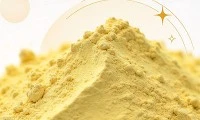
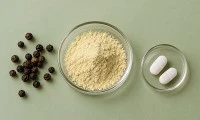
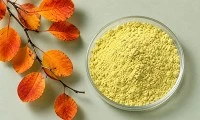
We cannot establish environmental safety from a 1% gingerol specification or a water-solubility claim alone. Any proposed environmental application needs evidence relevant to the complete formulation, intended exposure and organisms involved.At Botanical Cube, we receive questions about using botanical ingredients beyond their established commercial applications. Ginger extract is one example: buyers may ask about agricultural research, soil formulations or aquatic projects.
Our starting point is to define the proposed use and review the supporting information. Supplying a standardized botanical ingredient does not, by itself, establish that it is an approved pesticide, soil treatment or aquatic animal treatment.In this guide, we explain what the ingredient specification tells us, what remains unproven, and what we recommend reviewing before sourcing material for an environmental development project.

What Counts as an Environmental Application?
1. Define the Intended Function
We ask buyers to describe the function they want the finished product to perform.A foliar treatment, soil amendment, pest repellent and aquatic treatment involve different exposure routes and assessment questions. They should not be grouped together under one general statement of "environmentally safe."We also distinguish a laboratory research project from a product intended for commercial release.
2. Identify the Organisms That Could Be Exposed
For each project, we recommend identifying both the intended target and other organisms that could encounter the formulation.Depending on the application, these may include pollinators, soil microorganisms, earthworms, fish or other aquatic organisms.An efficacy result against one organism does not establish safety for the others. Likewise, evidence from a controlled laboratory setting needs to be assessed against the proposed exposure conditions.
What Does the 1% Gingerol Specification Establish?
1. It Describes Ingredient Concentration
Our water-soluble 1% gingerol grade provides a standardized active-content reference for ingredient qualification.The specification does not establish a safe environmental application rate. It also does not show whether a proposed treatment is effective against a pest, pathogen or parasite.We recommend treating these as separate questions requiring separate evidence.
2. The Full Composition Matters
A gingerol assay describes only part of a formulated powder.We recommend reviewing the complete composition, including any carriers, emulsifiers or other ingredients. Environmental assessment should address the relevant formulation rather than assuming that information about gingerol alone covers every component.The same principle applies when comparing suppliers. Two powders with the same nominal gingerol content may have different compositions.
3. Water Solubility Is a Physical Characteristic
We assess water-mixing performance independently from ecological safety.Uniform incorporation into water does not demonstrate harmlessness to fish, beneficial microbes or pollinators. Nor does the absence of a visible surface layer establish that the formulation has no biological effects.
We would therefore avoid describing a water-soluble grade as inherently safer than an oil-based preparation without a relevant comparison.
What Evidence Would Support Pollinator Safety?
1. Oral and Contact Exposure Need Relevant Assessment
We would not publish a "bee-safe" claim without appropriate supporting studies.OECD Test Guideline 213 addresses acute oral toxicity in adult worker honeybees, while Test Guideline 214 addresses acute contact toxicity. These are defined assessment methods, not evidence that ginger extract has passed them.[1,2] If a supplier presents a test report, we recommend checking the tested formulation, exposure route, concentrations, controls, endpoints and study validity.
2. Acute Results Have Limits
Even a valid acute study answers a defined question under defined conditions. It should not automatically be extended to larvae, repeated exposure or colony-level effects.We also would not treat early-morning or evening application as proof of safety. Application timing can be part of exposure management, but it cannot replace evidence for the product and intended use.
Can It Be Added to Fish Tanks or Ponds?
1. No General Treatment Rate Is Established Here
We do not recommend deriving a fish-tank or pond dose from the powder's gingerol percentage.The original draft's parasite-control and aquatic-safety claims were not supported by verifiable studies on this commercial formulation. We therefore cannot present it as a validated aquarium or pond treatment.A dietary study, an immersion study and an environmental exposure study also address different uses. Results should not be transferred between them without justification.
2. Aquatic Toxicity Requires Appropriate Testing
OECD Test Guideline 203 describes an acute fish toxicity assessment, generally using a 96-hour exposure period and recording mortality at specified intervals.[3] This illustrates the type of defined evidence involved in aquatic assessment. It does not establish the safety of Botanical Cube's ginger ingredient.We recommend that a qualified assessment team determine which studies are relevant to the proposed species, formulation and exposure scenario. Fish results alone would not establish safety for every aquatic organism.
What About Soil Microbes and Plant Compatibility?
1. Antimicrobial Activity Does Not Prove Selectivity
We would not assume that an ingredient suppresses a plant pathogen while leaving beneficial microorganisms unaffected.A claim of selective activity requires testing that addresses both the intended target and relevant non-target organisms or functions.The original draft's mycorrhizal and root-rot conclusions should therefore remain excluded unless the actual study reports become available.
2. Match the Test to the Claimed Outcome
OECD Test Guideline 216 addresses effects on soil microbial nitrogen transformation.[4] It is relevant to a defined soil function and should not be presented as a complete assessment of all beneficial soil organisms. For plant compatibility, we recommend a project-specific assessment covering the proposed crop, formulation, exposure and measured outcomes.A small visual trial may identify obvious plant damage. It cannot establish wider ecological safety.
Does Ginger Extract Biodegrade Quickly?
1. A Fixed Degradation Period Needs Direct Evidence
We cannot support the statement that this formulation breaks down in soil within 7–10 days from the information available.We also distinguish loss of gingerol from complete biodegradation. A change in active content does not independently establish what happened to the remaining formulation or its transformation products.
2. Use Defined Biodegradability Methods
OECD Test Guideline 301 describes methods for screening ready biodegradability in an aerobic aqueous medium. Testing normally lasts 28 days and follows measures such as oxygen consumption, carbon dioxide production or dissolved organic carbon.[5] These conditions and endpoints matter. A result from one test system should not be rewritten as a universal degradation period in soil, ponds or wastewater.We recommend requesting the complete report behind any biodegradability claim.
Confirm the Regulatory Route Before Product Development
1. Botanical Origin Does Not Establish Authorization
We recommend reviewing the intended claims and destination market before developing a commercial environmental product.For example, the US EPA provides a regulatory framework for biopesticides, including naturally derived substances. Its registration manual also explains that exemptions depend on specific criteria.[6] We would not assume that a ginger extract qualifies for an exemption or authorized use simply because ginger is familiar as a food ingredient.
2. Define the Commercial Product Clearly
The review should identify the actual formulation, intended function, application conditions and proposed label claims.We recommend resolving these points with a qualified regulatory specialist before making commercial pesticide or aquatic-treatment claims.
What Should Buyers Request From a Supplier?
We recommend organizing the document review around three separate questions:
| Question | Information to request |
|---|---|
| What is the ingredient? | Botanical identity, plant part, full composition, specification and batch COA |
| Does it meet purchasing quality requirements? | Assay method, relevant contaminant results and available safety documentation |
| Is the proposed environmental use supported? | Formulation-specific efficacy, ecotoxicity, environmental-fate and regulatory information |
An HPLC result or heavy-metal report supports ingredient qualification. It does not replace evidence for environmental use.We also recommend distinguishing "below the reporting limit" from an absolute claim that no contaminant is present.

Discuss Your Ginger Extract Development Project With Botanical Cube
At Botanical Cube, we supply water-soluble ginger extract standardized to 1% gingerol, alongside non-water-soluble 5%, 10% and 20% gingerols grades.For a proposed environmental research project, share the intended function, complete formulation concept, target organisms, exposure conditions and destination market. These details help us review the ingredient requirements and identify which supporting information is available.
We can discuss specifications, composition, samples and bulk supply. Environmental efficacy, ecological safety and authorization require their own assessment.
For OEM or private-label inquiries, we first review the project scope and technical feasibility before discussing customization options.
Contact sales@botanicalcube.com with your development brief and required documentation. We work with business customers, including manufacturers, formulators and ingredient distributors.
References
[1] Organisation for Economic Co-operation and Development. (1998). Test No. 213: Honeybees, acute oral toxicity test. OECD Guidelines for the Testing of Chemicals, Section 2. OECD Publishing, Paris. https://doi.org/10.1787/9789264070165-en
[2] Organisation for Economic Co-operation and Development. (1998). Test No. 214: Honeybees, acute contact toxicity test. OECD Guidelines for the Testing of Chemicals, Section 2. OECD Publishing, Paris. https://doi.org/10.1787/9789264070189-en
[3] Organisation for Economic Co-operation and Development. (2025). Test No. 203: Fish, acute toxicity test. OECD Guidelines for the Testing of Chemicals, Section 2. OECD Publishing, Paris. https://doi.org/10.1787/9789264069961-en
[4] Organisation for Economic Co-operation and Development. (2000). Test No. 216: Soil microorganisms: Nitrogen transformation test. OECD Guidelines for the Testing of Chemicals, Section 2. OECD Publishing, Paris. https://doi.org/10.1787/9789264070226-en
[5] Organisation for Economic Co-operation and Development. (1992). Test No. 301: Ready biodegradability. OECD Guidelines for the Testing of Chemicals, Section 3. OECD Publishing, Paris. https://doi.org/10.1787/9789264070349-en
[6] United States Environmental Protection Agency. (n.d.). Pesticide registration manual: Chapter 3-Additional considerations for biopesticide products. Retrieved November 4, 2026, from EPA's registration manual.