


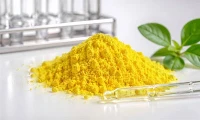
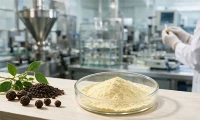
When you are formulating a premium dietary supplement, a functional beverage, or a clean-label health product, 🔵black pepper extract powder (standardized to piperine) is often a critical component. Acting as a potent bioenhancer, it can boost the absorption of primary active nutrients like curcumin or coenzyme Q10 by up to 2000% [1].
However, choosing the right supplier for this ingredient is not always straightforward. For procurement teams and product developers, supplier selection can directly affect product consistency, regulatory requirements, and the reliability of future supply.
The lowest price does not always mean the best value in ingredient sourcing. Beyond cost, procurement teams need to consider quality consistency, regulatory compliance, supply reliability, and supplier capability.Let's walk through the actual decision-making steps you need to follow to evaluate and select the ideal black pepper extract powder supplier for your production line.

1. Define Your Purchasing Requirements Before Evaluating Suppliers
Many sourcing problems start with unclear product requirements. Before evaluating suppliers, professional buyers first define their formulation needs, quality standards, and technical specifications.
How to Choose the Right Piperine Content for Your Formula
Black pepper extract is widely used in dietary supplements due to its key active compound, piperine. However, selecting the right specification requires more than choosing a standard "95% piperine powder." Buyers need to understand the difference between extract ratios and standardized active content when evaluating suppliers.
An extract ratio such as 10:1 indicates the concentration of raw material used during extraction, but it does not guarantee the actual piperine percentage in the final extract. A standardized extract provides a defined active compound level, ensuring better consistency for formulation and quality control.
For supplement manufacturers seeking reliable bioenhancement performance and consistent dosing, high-purity standardized piperine powder is often the preferred choice. A typical specification sheet for professional buyers may include:
| Parameter | Standard Specification Baseline |
| Active Ingredient | Piperine 95.0% to 98.0% (by HPLC) [2] |
| Appearance | Fine, off-white to light yellow powder |
| Mesh Size | 100% through 80 mesh (or custom 120 mesh) |
| Moisture Content | Maximum 5.0% |
| Heavy Metals | Lead less than 2.0 ppm, Arsenic less than 1.0 ppm |
Do You Need Bulk Ingredient Supply, OEM Support, or Custom Specifications?
Your specific business model dictates the type of manufacturing partner you need. A generic trading catalog cannot adapt to complex technical requirements.

If you are an encapsulated supplement brand, standard fine powder fills your requirements perfectly. However, if you are a functional food or beverage brand, you require a supplier capable of optimizing physical characteristics-such as custom micronized particle sizing or odor-masking technology-to ensure the finished product remains palatable and visually appealing.🔵OEM Solution
2. Evaluate Supplier Manufacturing Capability Before Placing Orders
Once your technical requirements are defined, the next step is evaluating the supplier's actual production capabilities. You need to confirm whether the supplier manages key manufacturing processes in-house or relies heavily on third-party facilities.
Is the Supplier a Manufacturer or Only a Trading Company?
In the botanical extract industry, hundreds of entities act as simple brokers or trading companies. While brokers have their place for sourcing rare items, relying on them for a highly standardized active ingredient like 95% piperine adds an unacceptable layer of risk.
You need to ask for direct verification of factory ownership, production capacity, and dedicated quality control teams. A true manufacturer will gladly share verifiable media from their production floor. When auditing a supplier's media or virtual tours, ignore corporate office photos and demand to see:
✔ The raw material milling and preparation areas.
✔ Industrial stainless steel extraction tanks.
✔ Spray-drying or vacuum-drying equipment.
✔Multi-stage sieving stations and the final cGMP-compliant packaging line.
How Does the Supplier Control Batch-to-Batch Consistency?
The ultimate test of a manufacturer is not how good their initial 100-gram validation sample is, but whether the 5th metric ton you order next year matches it perfectly. Spec-drift can completely halt an automated capsule-filling line if the physical or chemical properties shift.
A reliable manufacturer eliminates variance by owning or strictly managing their raw material sourcing locations, applying uniform extraction parameters (temperature, pressure, duration), and utilizing a rigorous multi-stage standardization process.

By tracking and controlling every single link in this chain, a high-tier factory ensures that the active compound distribution, color, density, and moisture content remain identical from batch to batch.
3. Verify Quality Documentation Before Buying Black Pepper Extract Powder
In global ingredient sourcing, complete documentation is essential for ensuring regulatory compliance and quality control. A reliable supplier should provide transparent records, including COAs, testing reports, and traceability documents, before issues arise.
Which Documents Should You Request From a Black Pepper Extract Supplier?
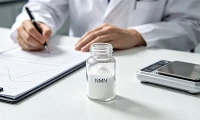
Before passing a vendor to your quality assurance department, request a complete compliance and analytical package. Never accept a simple, self-edited one-page text document. You must demand:
✔ A Comprehensive Certificate of Analysis (COA):
Covering exact active percentages, physical limits, multi-organism microbiological assays, and validated heavy metal counts.
✔ Technical Specification Sheets:
Outlining storage conditions, shelf-life data, and packaging specifications.
✔ Validated Testing Reports:
Complete multi-residue pesticide screening sheets and heavy metal quantification data.
✔ Authentic HPLC Chromatograms:
Raw analytical data tracking the purity curve of the specific batch.
How to Evaluate Piperine Testing Results?
Anyone can print "95% Piperine by HPLC" on a piece of paper. The real question is: How was that number verified?
When examining a supplier's documentation, verify their testing methodologies and laboratory credentials. High-purity piperine analysis must be conducted via High-Performance Liquid Chromatography (HPLC) rather than less precise UV-Vis spectrophotometry [3], which can mistake structural isomers (like isopiperine or chavicine) for pure piperine, artificially inflating the results [4].
Look closely at the provided HPLC chromatograms. A clean, premium extract will display a sharp, distinct, and dominant peak corresponding perfectly to the certified reference standard of piperine, with minimal background noise or secondary alkaloid peaks. Furthermore, check if the testing laboratory holds independent international accreditations or if the data can be validated by respected third-party testing giants like SGS, Eurofins, or Intertek.
4. Compare Black Pepper Extract Suppliers Beyond Price
It is a common temptation in procurement to line up Excel columns and sort by the lowest price per kilogram. In the specialized world of plant extractions, however, this strategy frequently backfires.
Why Do Black Pepper Extract Prices Differ Between Suppliers?
When a vendor quotes a price that is 30% below the market average, they have not discovered a magical efficiency; they have cut a structural corner. Variations in raw material pricing are directly driven by manufacturing integrity:
Low-cost suppliers often utilize low-grade, open-market black pepper lots that are heavily contaminated with environmental heavy metals or agricultural pesticides. Furthermore, research shows that aggressive chemical extraction using substandard industrial solvents can leave harmful residues that violate clean-label standards [5]. High-quality enzymatic or pure ethanol extraction, proper global testing validations, durable multi-layer food-grade packaging, and reasonable Minimum Order Quantities (MOQs) all carry inherent manufacturing costs.
What Is the Real Cost of Choosing an Unreliable Supplier?
Saving a few dollars per kilogram on raw materials can cost you tens of thousands of dollars downstream. Consider the true financial impact of an unreliable, low-tier ingredient partner:
✔ Failed Import Testing:
Shipments seized or destroyed at international borders due to illegal solvent residues or pesticide levels exceeding local limits.
✔ Production Line Halts:
Delayed shipping turnarounds that cascade into factory downtime, missed launch windows, and severe retail inventory penalties.
✔ Product Recalls:
Post-market testing revealing that heavy metal limits or microbial counts exceed safety margins, permanently damaging your brand equity.
✔ Customer Complaints:
Unpleasant, overly pungent, or off-spec batches that alter the flavor, aroma, or dissolution properties of your finished consumer products.
5. Assess Supplier Reliability Through Communication and Trial Orders
Before committing to a long-term contract or a massive bulk purchase, run your prospective vendor through a real-world validation process.
How Should Buyers Evaluate a Supplier Before Their First Bulk Order?
Protect your supply chain by deploying a conservative, step-by-step onboarding protocol:
Begin by reviewing their technical paperwork. If the documents pass your quality assurance screening, request a small, 50-gram verification sample from a live commercial batch. Have your internal or trusted third-party laboratory test this sample to verify that the active percentages and physical traits match the paperwork.
If the sample passes, place a small, minimal-risk trial order (such as a single 25 kg drum). Once received, run it through full-scale laboratory verification again and observe how the powder performs on your actual production machinery. Only after a supplier has proven consistent across these steps should you transition them into your bulk purchasing schedule.
What Support Should a Long-Term Ingredient Partner Provide?
A transactional vendor disappears the moment the invoice is settled. A true ingredient partner provides ongoing, comprehensive commercial and technical support. They should offer rapid response times when your regulatory team requests updated documentation, provide direct access to their internal application engineers for custom specification tailoring, and demonstrate extensive international logistics expertise to ensure smooth customs clearance and predictable freight delivery times.
6. Practical Example: How to Evaluate a Supplier's Manufacturing Capabilities
To better understand how supplier evaluation works in practice, let's look at the key capabilities buyers should examine when working with an established ingredient manufacturer. These factors include production experience, quality systems, documentation support, and supply chain reliability.
Manufacturing and Quality Support
When evaluating a manufacturer's infrastructure, look for facilities designed around modern global quality systems. Botanical Cube operates a production network backed by certified cGMP compliance and comprehensive ISO22000 food safety management protocols.

Their manufacturing layout separates extraction, concentration, purification, and packaging into distinct clean-room zones to completely eliminate cross-contamination risks. Furthermore, every single batch is accompanied by transparent, fully traceable testing trails-including precise HPLC chromatograms-ensuring your quality assurance team has everything required for instant internal approval.
Supporting Different Buyer Requirements
A reliable ingredient supplier should have the production capacity and supply chain stability to support long-term business growth. Botanical Cube combines stable raw material sourcing, scalable manufacturing capabilities, and flexible order support to meet the needs of different B2B customers.
Whether your manufacturing process calls for standardized bulk powder drums for high-speed capsule encapsulation, specialized physical processing for customized product blending, or tailored protective packaging sizes to integrate smoothly into your existing warehouse management flow, a high-tier partner aligns their technical capabilities directly with your operational realities.
Conclusion: How to Select the Right Black Pepper Extract Powder Supplier
Successfully sourcing black pepper extract powder requires a methodical approach that balances product performance against strict risk management:
✔ Define Your Specifications:
Explicitly map out your target active piperine percentages, desired physical particle sizes, and regional compliance baselines.
✔ Verify Manufacturing Capabilities:
Confirm the supplier operates a direct, fully auditable production facility rather than acting as a simple broker.
✔ Review Quality Documentation:
Mandate clear, independent testing trails, certified heavy metal counts, and clean extraction solvent metrics.
✔ Compare Total Value:
Look past the initial price per kilogram and account for the massive downstream costs of production delays or quality recalls.
✔ Build a Long-Term Cooperation:
Protect your pipeline by utilizing sample validations and small trial orders to verify real-world consistency.

Need Black Pepper Extract Powder Specifications or Samples?
For procurement teams and product developers evaluating 🔵black pepper extract suppliers, reliable technical information is essential before moving forward. Botanical Cube can provide detailed product specifications, batch COAs, HPLC testing reports, sample support for formulation evaluation, and flexible bulk supply solutions based on your product requirements.
If you are developing a new supplement, functional food, or other health product, our team can help you review suitable specifications, testing requirements, and sourcing options. Contact our ingredient specialists at 🔵sales@botanicalcube.com to discuss your project.
References
[1] Shoba, G., et al. (1998). "Influence of piperine on the pharmacokinetics of curcumin in animals and human volunteers." Planta Medica, 64(4), 353-356. (This landmark clinical trial demonstrated that combining 20 mg of piperine with 2 g of curcumin increased bioavailability in humans by 2000% with no adverse side effects).
[2] United States Pharmacopeia (USP). "Official Monograph for Black Pepper Extract." USP-NF. (Establishes the international reference baseline requiring high-purity botanical extracts to be standardized explicitly via active component percentages rather than raw concentration ratios).
[3] Kozukue, N., et al. (2007). "Analysis of piperine and its isomers in white and black pepper by HPLC." Journal of Agricultural and Food Chemistry, 55(6), 2086-2091. (Validates that High-Performance Liquid Chromatography (HPLC) is the only accurate method to differentiate pure active piperine from other secondary components).
[4] Hamrapurkar, P. D., et al. (2011). "Quantitative HPTLC and HPLC determination of piperine in commercial formulations." Journal of Chromatographic Science, 49(8), 589-593. (Highlights the high error margin found in low-cost UV-Vis testing methods, which frequently overstate active purity by misidentifying structural impurities).
[5] European Food Safety Authority (EFSA). "Compendium of botanicals reported to contain naturally occurring substances of concern." EFSA Journal. (Outlines the strict limit requirements for environmental contaminants, heavy metal exposure, and volatile organic solvent residues allowed in food and supplement raw ingredients).