


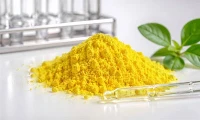
For supplement manufacturers, sourcing 🟡pure berberine powder involves more than checking a box on a Certificate of Analysis (COA). While a 97% HPLC figure looks perfect on paper, it doesn't guarantee manufacturing efficiency or regulatory safety. Lower-tier suppliers often compromise on documentation and compliance, leading to batches contaminated with synthetic adulterants or heavy metals exceeding California Prop 65 limits.
Protecting your brand requires a supplier who prioritizes consistent quality and reliable supply stability over the lowest price-because a single production-line clog or a regulatory recall costs far more than any initial "savings."

Common Risks When Sourcing Berberine Powder
| Risk | Potential Impact on Your Business | Prevention Strategy |
| Unstable Purity & Assay | Inconsistent active dosage in finished products; potential regulatory non-compliance. | Require HPLC verification and batch-to-batch consistency records. |
| Missing Testing Documents | Shipment seizures at customs; inability to pass third-party brand audits. | Establish a mandatory document checklist (COA, MSDS, Solvent Residue, Heavy Metals) prior to ordering. |
| Poor Powder Flowability | Friction during high-speed capsule filling, resulting in weight variation and machine downtime. | Define physical parameters like mesh size and bulk density in your product specification. |
| Synthetic Adulteration | Brand damage and legal liability if labeled as "natural" but containing synthetic chemical markers. | Request Carbon-14 (C14) testing and alkaloid fingerprinting. |
| Price-First Selection | High risk of receiving blended, highly-contaminated, or solvent-heavy industrial-grade batches. | Evaluate the total cost of quality, balancing unit price with compliance security. |
1. Formulation & Application: Which Type of Berberine Fits Your Dosage Form?
Before auditing a supplier's certificates, you must audit the material's physical behavior. In the B2B world, the most successful brands understand that formulation determines the ingredient spec, not the other way around. If a powder lacks the consistency to run smoothly on your production line, it becomes a bottleneck rather than a benefit. Protecting your manufacturing efficiency starts with ensuring that every kilogram of berberine is physically compatible with your process.
Berberine HCl vs. Berberine Sulfate: Solubility and Sensory
ProfilesThe vast majority of commercial supplement products utilize Berberine Hydrochloride (Berberine HCl) due to its historical precedence and stable crystalline structure. However, it exhibits poor water solubility-approximately 1.5 to 2.0 mg/mL at 25°C [1]. If your team is developing a functional beverage, a liquid shot, or a fast-melting gummy, Berberine HCl's low solubility and intensely bitter, lingering metallic taste present significant formulation challenges.
In contrast, Berberine Sulfate offers significantly higher water solubility, dissolving at roughly 30 to 35 mg/mL under identical conditions [1]. This makes the sulfate form much easier to incorporate into liquid delivery systems. However, because berberine is naturally bitter, liquid formulations require advanced taste-masking technologies, such as cyclodextrin complexation or liposomal encapsulation, to block the bitter receptors on the tongue. For standard two-piece hard shell capsules or tablets, Berberine HCl remains the industry standard due to its superior dry-state stability.
Physical Properties Affecting Runability: Particle Size and Bulk Density
When manufacturing capsules or tablets at high speeds (e.g., 80,000 capsules per hour), the physical performance of the powder is just as critical as its chemical purity. Poor powder flowability leads to uneven filling, weight variation, and frequent machine stoppages.
✔ Particle Size (Mesh Size):
Standard fine berberine powder is typically milled to 80 mesh or 100 mesh. While fine powders are excellent for homogeneous blending in complex formulas, they can be highly cohesive, prone to static buildup, and dusty. If you are experiencing high friction or static in your capsule-filling hoppers, you should request a coarser, granulated grade (typically 40 to 60 mesh) specifically designed for direct compression or high-speed encapsulation.
✔ Bulk Density:
Pure Berberine HCl powder generally features a loose bulk density of approximately 0.35 to 0.45 g/mL and a tapped density of 0.50 to 0.65 g/mL. If your target dosage is 500 mg per capsule, a low bulk density means you will need a larger capsule size (such as Size 00 or even 000), which increases raw packaging costs and makes the finished product harder for consumers to swallow. Partnering with a manufacturer who can adjust bulk density through controlled physical milling or granulation is a massive advantage.
We frequently collaborate with formula developers to match the physical characteristics of the powder to their manufacturing setup. For instance, we can provide custom granulated berberine powder with optimized bulk density specifically for high-speed tablet presses, minimizing your formulation trial-and-error.

2. Source & Extraction: Navigating Compliance and Impurity Risks
Once the physical specifications are set, you must address regulatory compliance. The botanical origin and extraction method of your berberine directly dictate its impurity profile, solvent residues, and international market viability.
Botanical Origins: Berberis aristata vs. Other Species
Berberine can be extracted from several distinct plant species, each carrying different regulatory and market dynamics:
✔ Berberis aristata (Indian Barberry / Tree Turmeric):
This is the gold standard for North American and European markets. Its root and stem extracts are widely recognized, highly documented, and typically have the smoothest path through regulatory compliance audits.
✔ Coptis chinensis (Goldthread / Huang Lian):
Highly prized in Traditional Chinese Medicine (TCM) for its incredibly high natural berberine yields. However, due to its high cost and medicinal demand in Asia, it is rarely used for mass-market Western dietary supplements.
✔ Phellodendron amurense (Amur Cork Tree) & Berberis vulgaris:
Often used as alternative sources, but they may face distinct regulatory scrutiny depending on the target country's novel food guidelines or natural health product regulations.
✔ Heavy Metals & Prop 65:
Plants like Berberis aristata absorb minerals and heavy metals from the soil. If your finished product is sold in California, it must comply with extremely stringent Proposition 65 safe harbor levels (Maximum Allowable Dose Levels):
- Lead (Pb): < 0.5 mcg/day
- Arsenic (As): < 10 mcg/day
- Cadmium (Cd): < 4.1 mcg/day
Assuming a standard daily supplement dosage of 1,000 mg of berberine, your raw material must maintain heavy metal levels far below standard USP limits (which typically allow up to 3.0ppm of lead). To meet Prop 65 requirements comfortably, you should source powder with lead levels verified at less than 0.5 ppm and arsenic at less than 1.0 ppm.
The Natural vs. Synthetic Debate: Detecting Adulteration
Due to price pressures, some low-cost suppliers dilute natural plant extracts with cheap, chemically synthesized berberine (often synthesized from o-nitrobenzaldehyde). To protect your brand from labeling fraud and regulatory recall, you must verify the material's natural origin.
The only foolproof way to detect synthetic adulteration is through Carbon-14 radiocarbon analysis [2]. Natural plants absorb atmospheric CO2 yielding a modern radiocarbon signature (measured as Percent Modern Carbon, or pMC, which should be close to 100%). Synthetic materials derived from petroleum-based precursors contain zero 14% (pMC). Furthermore, High-Performance Liquid Chromatography (HPLC) alkaloid profiling can map the natural "fingerprint" of the plant, ensuring that secondary alkaloids naturally present in the root (such as palmatine and jatrorrhizine) are present in the correct biological ratios rather than being entirely absent, which is characteristic of pure synthetic copies.We mitigate these risks by sourcing exclusively from verified wild-crafted or sustainably farmed botanical bases.
We run routine HPLC fingerprinting on every raw material batch to guarantee 100% natural botanical origin, backed by complete transparency.
3. Supplier Auditing: Red Flags Beyond the COA
A Certificate of Analysis is merely a sheet of paper; a true audit evaluates the factory, the quality systems, and the testing methodologies behind that paper.
Quality Systems and Certifications
When auditing a manufacturer, look for international quality standard alignments:
✔ cGMP (Current Good Manufacturing Practice):
Ensures the facility follows strict FDA 21 CFR Part 111 regulations for dietary supplements.
✔ ISO 22000 / FSSC 22000:
Verifies comprehensive food safety management systems from farm to fork.
✔ Third-Party Lab Validations:
Confirm the supplier regularly calibrates their HPLC and ICP-MS equipment, and validates their internal testing against accredited, independent labs (such as Eurofins, SGS, or NSF).
Batch-to-Batch Consistency: How We Guarantee Homogeneity
Natural botanicals inherently vary based on seasonal harvest conditions, soil quality, and rainfall. A reliable manufacturer must have standard operating procedures (SOPs) to normalize these variations. This is achieved by:
- Establishing strict raw material acceptance criteria (minimum active berberine content in the raw root before extraction).
- Utilizing large-scale blending silos to homogenize multiple extraction runs into a single, uniform master batch (often up to 2 to 5 tons per lot).
- Monitoring critical control points (CCPs) during concentration and crystallization to maintain an identical, bright yellow crystalline color and prevent heat-induced degradation.
At Botanical Cube, we manufacture botanical extracts with a focus on seamless production integration. Our team ensures that every batch meets the required chemical assay while maintaining the physical consistency necessary for high-speed encapsulation and tableting. We provide the documentation and the material stability your supply chain demands. Unsure about your current supplier's purity? Request our 'Berberine Quality Comparison Report' or get a free sample for your lab's independent C-14 verification.🟡Request for sample


4. What Documents Should Buyers Review Before Placing a Bulk Order?
Before wiring payment for a bulk order, your quality assurance (QA) team must establish a comprehensive regulatory dossier. Do not wait for your shipment to arrive at customs to realize you are missing critical paperwork.
Sourcing Document Checklist
Always demand and review the following documents before placing a commercial order:
- Product Specification Sheet: Outlines all physical, chemical, and microbiological limits.
- Batch-Specific COA: Must show actual numerical results for assay, heavy metals, and microbiology-not merely "conforms."
- HPLC Chromatogram: Visual proof of purity, showing a clean, sharp peak for berberine without unexpected impurity peaks.
- Residual Solvent Statement: Clearly listing all solvents used in processing and their verified remaining levels.
- Allergen & GMO-Free Statements: Essential for meeting modern consumer labeling demands.
- TSE/BSE Free Statement: Confirms no animal-derived processing aids were used.
- Stability Data Summary: Showing the ingredient remains active and within specification over its recommended shelf life (typically 24 to 36 months when stored properly).
By verifying a pre-shipment sample against these documents on a small scale, you protect your production schedules from unexpected, costly failures.
5. How to Compare Different Pure Berberine Powder Suppliers?
In the raw ingredient market, low prices are often a symptom of underlying compromises. Understanding how price correlates with quality allows you to make an informed, risk-adjusted purchasing decision.
Why Is The Lowest Price Not Always The Best Choice?
A supplier offering a price significantly below the market average is likely cutting corners in ways that directly increase your operational risk:
✔ Blending Synthetic Material:
Using cheap, petroleum-derived synthetic berberine to artificially boost HPLC purity while lowering production costs.
✔ Skipping Purification Steps:
Leaving behind elevated levels of heavy metals, toxic residual solvents (like methanol), or high microbiological counts (aerobic plate count, yeast, and mold) [3].
✔ Poor Industrial Hygiene: Operating in non-GMP compliant, dusty, or uncalibrated facilities, which increases the risk of physical cross-contamination.
Supplier Evaluation Matrix
| Factor | Sourcing Priority | Why It Matters for Your Brand |
| Purity Consistency | High | Eliminates finished product active ingredient assay failures. |
| Testing Documentation | High | Guarantees seamless regulatory audits and customs clearance. |
| Production Capacity | High | Prevents supply chain bottlenecks and out-of-stock disasters. |
| Minimum Order Quantity (MOQ) | Medium | Offers inventory flexibility for product launches and cash flow management. |
| Unit Price | Medium | Must be balanced against the total cost of potential quality failures. |
6. Why Choose a Verified Pure Berberine Powder Manufacturer?
When you buy from a verified manufacturer rather than an unverified trading intermediary, you gain direct access to technical support, customizable material characteristics, and transparent supply chain traceability.
What to Expect From Botanical Cube
As an experienced manufacturer of high-purity botanical extracts, we don't just supply raw powder-we provide manufacturing peace of mind. Our team understands the fine balance between physical performance on your machinery and chemical purity in your analytical assays.For supplement brands sourcing premium Berberine HCl, we offer:
✔100% Natural Extract:
Derived exclusively from high-grade Berberis aristata roots, verified by HPLC and compliant with global clean-label standards.
✔ Rigorous Impurity Control:
Heavy metals and residual solvents are kept strictly below USP/EP standards to ensure effortless compliance with California Prop 65.
✔ Tailored Physical Specifications:
Customizable particle size distributions (80 mesh to coarser direct-compression granulations) and adjusted bulk densities to fit your specific encapsulation or tableting machinery.
✔ Transparent Documentation:
Every batch is shipped with a comprehensive, audit-ready package, including third-party testing validations.
We operate with transparent communication, stable lead times, and flexible shipping options to keep your production runs on schedule.
Choosing the right t 🟡pure berberine powder is a systematic process of risk management. By prioritizing formulation compatibility, validating natural origins and impurity limits, auditing physical manufacturing capacity, and securing a complete documentation trail, you protect your brand from manufacturing delays, legal liabilities, and compromised product efficacy.
Need Berberine Powder Specifications or Sample Evaluation?
To support your formulation development or supply chain stability, Botanical Cube provides comprehensive technical data including standard specification sheets and HPLC assay reports. We offer 100g free samples specifically for factory trial runs to ensure physical compatibility with your machinery. Our engineers are also available to consult on solubility and physical granulation requirements to help optimize your production efficiency. To request a sample or discuss your specific technical requirements, please contact our team directly at 🟡sales@botanicalcube.com.
Referenced
[1] Solubility & Crystalline Profiles of Berberine Salts: Journal of Pharmaceutical Sciences, Vol. 101, Issue 11. Study analyzing the thermodynamic solubility and chemical stability of berberine hydrochloride versus berberine sulfate in aqueous and physiological media.
[2] Radiocarbon (C14) Analysis for Natural Ingredient Authentication: Journal of Agricultural and Food Chemistry. Research demonstrating how carbon isotope ratio mass spectrometry reliably distinguishes biogenic plant-derived alkaloids from petroleum-derived synthetic counterparts.
[3] Quality Control and Heavy Metal Limits in Herbal Extracts: United States Pharmacopeia (USP) General Chapter <2232> (Tensile/Elemental Impurities in Dietary Supplements) & California Proposition 65 Safe Harbor Levels.