




Fisetin and quercetin are both plant-derived flavonoids used in supplement development, but choosing between them requires more than comparing their reported benefits. The right choice depends on the product you want to develop, the evidence behind your intended claims, the formulation requirements, and the quality of the raw material you plan to source.
As a fisetin manufacturer, I see raw material selection as an important part of product development, not just a purchasing decision. A high assay result alone does not tell you everything you need to know about an ingredient. The analytical method, batch-to-batch consistency, formulation compatibility, documentation, and total cost per serving also matter. In this article, I'll compare fisetin and quercetin across these practical considerations, explain what to check before placing a bulk order, and help you assess whether fisetin is the right fit for your supplement.

1. Which Ingredient Fits Your Product Pipeline?
Before looking at price per kilogram, you need to understand what these molecules actually do in a formulation and how consumers perceive them.
1.1 Fisetin vs. Quercetin: Biological Focus & Efficacy Profile
Fisetin C15H10O6 and quercetin C15H10O7 are structurally near-identical flavonols, differing by a single hydroxyl group at position 5. However, their primary commercial positioning differs substantially in market applications:

Fisetin (typically extracted from Cotinus coggygria) has captured the spotlight in the longevity sector because of its potency as a standalone senolytic agent-meaning it selectively targets and helps clear senescent "zombie" cells. Preclinical screening from the Mayo Clinic identified fisetin as the most potent natural senolytic among tested flavonoids. In recent clinical trials, intermittent high-dose fisetin supplementation reduced senescent cell markers by 41% [1].
Quercetin (commonly sourced from Sophora japonica), on the other hand, is the ultimate workhorse flavonoid. It is widely recognized for its broad-spectrum antioxidant, anti-inflammatory, and histamine-regulating properties. In human trials, quercetin combinations show proven efficacy in lowering systemic inflammatory markers like C-reactive protein (CRP) [2].
1.2 Ingredient Comparison
The following matrix highlights key operational parameters required during early stage formulation:
| Evaluation Parameter | Fisetin (Standard Extract) | Quercetin (Standard Extract) | Procurement Verification Point |
| Botanical Source | Cotinus coggygria (Smoke Tree) | Sophora japonica (Pagoda Tree) | Confirm Latin species & plant part |
| Standard Purity | 98.0% HPLC | 98.0% HPLC | Audit testing methodology (HPLC-DAD) |
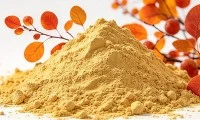
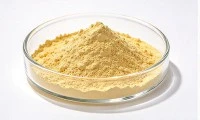
| Powder Appearance | Fine orange / yellow-orange powder | Fine yellow / yellow-green powder | Visual inspection & batch consistency |
| Primary Indication | Senolytic clearance, brain health | Immune defense, anti-inflammation | Regulatory claim alignment |
| Bioavailability | Low baseline (<10%) | Low baseline (<10%) | Evaluate liposomal or complexed forms |
| Est. Bulk Price | $80.00 - $200.00 / kg | $30.00 - $80.00 / kg | Commercial cost analysis per serving |
1.3 Single-Ingredient vs. Synergistic Complex
Rather than choosing one over the other, many modern product developers opt for a dual-action stack. Research demonstrates that combining fisetin's deep senolytic clearance with quercetin's broader anti-inflammatory scaffold creates a complementary mechanism of action [3]. Market trends reveal a steady increase in combined "Longevity Stacks" that command premium retail margins.
2. Bioavailability & Processing: Resolving Formulation Bottlenecks
A brilliant scientific rationale is useless if the raw material cannot survive manufacturing or human digestion.

2.1 The Bioavailability Dilemma: Standard Powder vs. Modified Solutions
Both compounds suffer from rapid phase II liver metabolism and poor aqueous solubility. Standard powders frequently yield low oral absorption in the human digestive tract. To overcome this without inflating ingredient costs excessively, contract manufacturers co-administer these raw materials with absorption enhancers such as piperine (black pepper extract) or integrate them with lipid carriers like MCT oil [4].

2.2 Manufacturing Feasibility: Particle Size, Flowability, and Stability
Physical parameters dictate processing speeds during tableting or capsulation. Specify these requirements with your raw material supplier prior to mass production:
- Mesh Size: 80 to 100 mesh ensures homogeneous blending with excipients.
- Bulk Density: Maintained between 0.40g/ml and 0.65g to avoid hopper bridging.
- Loss on Drying (LOD): 5.0% to prevent powder caking during storage.
3. Quality, Compliance & Sourcing: Evaluating Supplier Capabilities
Never assume that two "98% purity" spec sheets represent equivalent quality.
3.1 Audit Checklists: Testing Standards and COA Verification
When your quality assurance team reviews a batch COA, confirm compliance across these core specifications:
| Testing Parameter | USP / EP Target Standard | Test Methodology |
| Active Assay | 98.0% - 102.0%(Dried basis) | HPLC |
| Heavy Metals (Total) | 10 ppm | ICP-MS |
| Lead (Pb) | 0.5 ppm | ICP-MS |
| Arsenic (As) | 0.5 ppm | ICP-MS |
| Cadmium (Cd) | 0.1 ppm | ICP-MS |
| Mercury (Hg) | 0.1 ppm | ICP-MS |
| Microbial Plate Count | 1000 CFU/g | USP |
| Yeast & Mold | 100 CFU/g | USP |
| E. coli / Salmonella | Absent in 10g | USP |
4. Supply Chain & Commercial Terms: Cost Calculation
Procurement decisions depend on actual cost per serving rather than pure price per kilogram.
4.1 Formulated Cost Calculation Formula
Use the following formula to estimate raw material costs per finished unit:
Cost per Serving (USD) = Raw Price per Kg (USD) × Dosage per Serving (mg) / 1,000,000
4.2 Raw Material Cost Matrix
The table below illustrates sample dosage economics across both ingredients:
| Ingredient | Raw Price / kg | Standard Daily Dose | Raw Material Cost / Serving |
| Quercetin 98% | $50.00 / kg | 500 mg | $0.025 USD |
| Fisetin 98% | $120.00 / kg | 100 mg | $0.012 USD |
| Fisetin 98% (High Dose) | $120.00 / kg | 500 mg | $0.060 USD |
| Dual Stack (Fisetin + Quercetin) | Complex Blend | 100 mg F + 500 mg Q | $0.037 USD |
5. Botanical Cube: Your Reliable Partner for High-Purity Flavonoid Ingredients
If you are evaluating sourcing options for an upcoming product launch, Botanical Cube Inc. offers a fully verified supply chain.
5.1 Standardized Pure Powders Tailored for Scalable Manufacturing
At Botanical Cube Inc., we supply high-purity, batch-consistent botanical ingredients engineered for high-speed automated manufacturing lines:
- Botanical Cube Fisetin 98%: Derived from natural Cotinus coggygria, fully tested via HPLC.
- Botanical Cube Quercetin 98%: Sourced from premium Sophora japonica, meeting stringent USP/EP heavy metal standards.

5.2 Complete Regulatory Documentation & Sample Support
We provide complete documentation required for regulatory clearance, including batch-specific COAs, Technical Data Sheets (TDS), Safety Data Sheets (SDS), Allergen Statements, and Process Flowcharts [5]. To support your bench-scale trials, we provide complimentary trial samples shipped via express courier within 3 to 5 business days.
6. Next Steps for Formulators & Procurement Managers
Whether you are designing a single-ingredient cognitive supplement or an advanced dual-action senolytic complex, securing high-grade, batch-consistent raw materials is the first step.Comparing Fisetin and Quercetin for Your Next Formulation? Before choosing an ingredient, confirm your target specification, dosage form, testing requirements, and destination market.
Share your intended application and estimated quantity with Botanical Cube to discuss the relevant product specifications, available documentation, and sample options.Contact our technical sales team today at sales@botanicalcube.com to request full specification sheets, recent COAs, and complimentary test samples for your bench-scale trial.
References
[1] Kirkland, J. L., et al. (2024/2026). Human trial evaluating intermittent high-dose fisetin supplementation on senescent cell clearance and biomarker reduction. EBioMedicine / Mayo Clinic Research Group. (Referenced in Section 1.1, Paragraph 2)
[2] European Journal of Clinical Nutrition. (2022). Quercetin supplementation and systemic inflammatory markers (CRP and IL-6): A systematic review and meta-analysis of randomized controlled trials. (Referenced in Section 1.1, Paragraph 3)
[3] Tchkonia, T., & Kirkland, J. L. (2020). Targeting cellular senescence with senolytics: From preclinical research to clinical translation. Journal of Internal Medicine, 288(5), 518-536. (Referenced in Section 1.3, Paragraph 1)
u Bucha – Sklep Konopny CBD
[4] Shoba, G., et al. (1998). Influence of piperine on the pharmacokinetics of curcumin and related dietary flavonoids in animal and human models. Planta Medica, 64(4), 353-356. (Referenced in Section 2.1, Paragraph 2)
[5] Botanical Cube Inc. Internal Quality Control Guidelines. (2026). Standard Operating Procedures for Batch Documentation and Analytical Verification. Technical Documentation Department. (Referenced in Section 5.2, Paragraph 1)